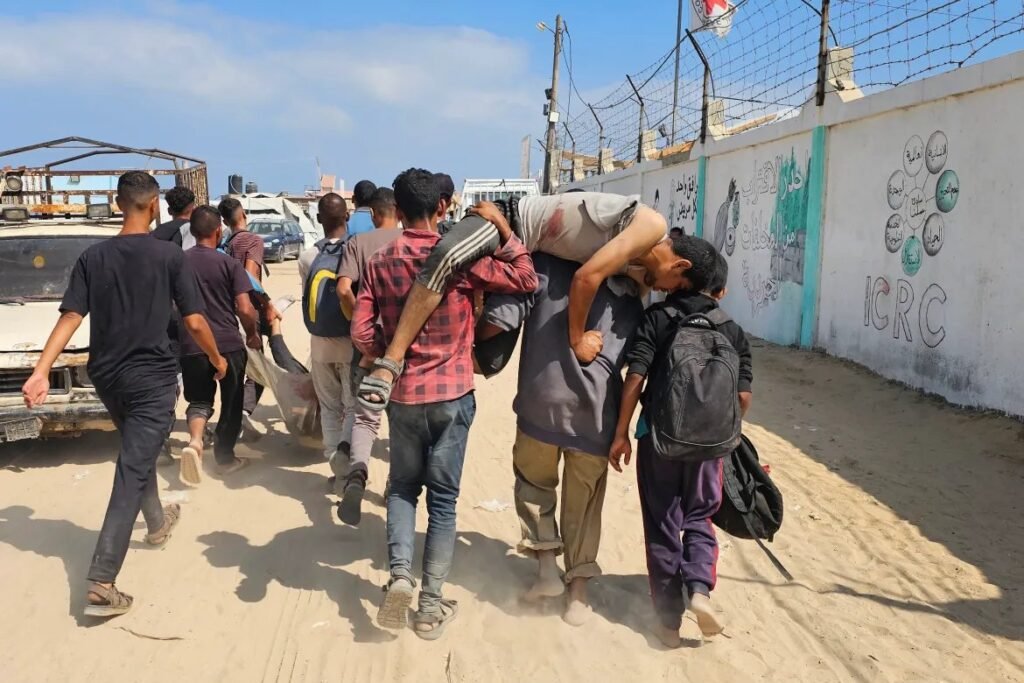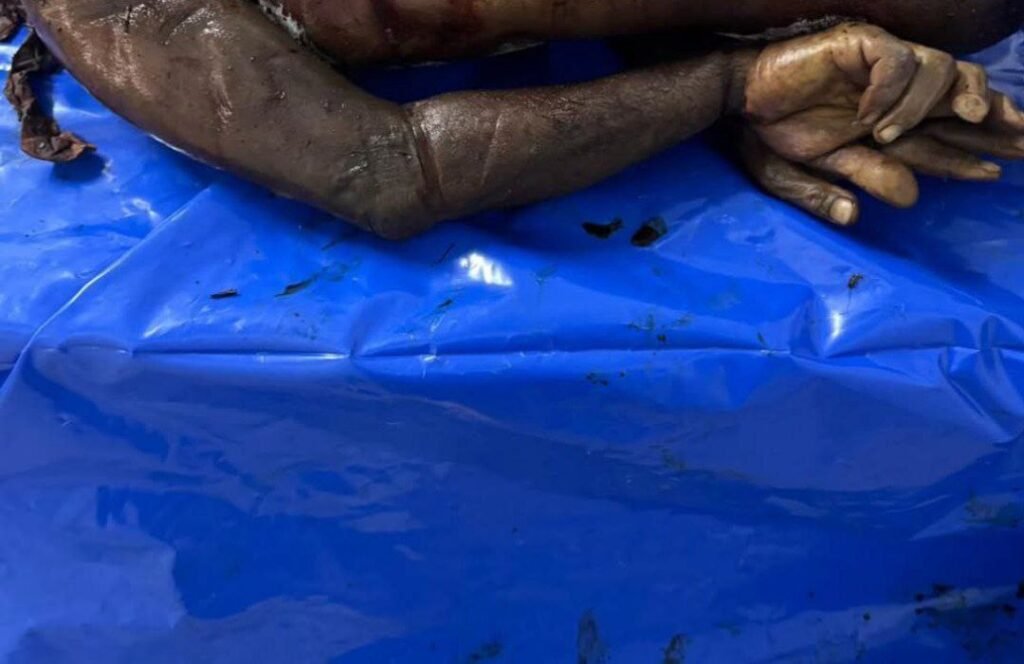
Gaza Herald_ At a time when Israeli authorities promote themselves internationally as pioneers of humanitarian medicine and boast of record-breaking achievements in organ donation, a far darker reality continues to surface, one that implicates the occupation in grave violations against Palestinian bodies, both in life and in death. Behind the accolades and global applause lie disturbing patterns: the prolonged detention of Palestinian bodies, violations of their sanctity, and growing evidence that organs may have been removed without consent, in blatant breach of international humanitarian law.
As the world marked the International Day of Solidarity with the Palestinian People and their prisoners on January 31, renewed attention returned to one of the most painful and unresolved issues facing Palestinian families: the fate of the bodies of martyrs withheld by Israel. Testimonies from families, medical professionals, and human rights institutions increasingly suggest that this practice goes far beyond arbitrary detention. What is emerging instead is a picture of a systematic policy carried out under near-total international silence.
A Martyr Tortured, a Body Without Answers
Yasmin al-Barsh, the wife of Palestinian orthopaedic doctor Adnan al-Barsh, who was killed under torture in Israeli custody in April 2024, has not ruled out the possibility that organs were taken from her husband’s body. Shortly after his death, his remains were transferred to Israel’s Abu Kabir forensic institute, a facility known for autopsies and forensic research. His body remains withheld to this day.
For Yasmin, the transfer of the body, combined with Israel’s refusal to release it or provide any medical or forensic documentation, raises grave concerns. The family has received no official explanation, no autopsy report, and no clarification regarding what was done to the body. Instead, they are left with unanswered questions and a deepening fear that the remains of their loved one were subjected to violation after death.
Health Officials Question the ‘Record Numbers’
Dr Munir al-Barsh, director-general of Gaza’s Ministry of Health, has openly challenged Israel’s claims of record-high kidney donations, questioning where these organs are coming from. He pointed out the striking contradiction between Israel’s international self-promotion as a leader in organ donation and its long-standing policy of withholding Palestinian bodies, sometimes for years, without transparency or oversight.
According to Dr. Al-Barsh, documented cases exist in which bodies were returned to families with missing organs, no forensic reports, and no opportunity for families to question or challenge what had occurred. He stressed that Palestinians do not oppose organ donation as a principle, but they categorically reject the transformation of Palestinian bodies into instruments of exploitation or propaganda.
The absence of transparency and the denial of independent international monitoring, he argued, make suspicion not only reasonable but unavoidable. For this reason, he called for an independent international investigation capable of uncovering the full truth and holding those responsible to account.
Laith Abu Muailiq: Questions That Refuse to Fade
Among the cases reinforcing these concerns is that of Laith Abu Muailiq, killed on October 7, 2023. Israeli authorities held his body before being returned to his family later that month as part of a ceasefire-related exchange.
His mother has stated that the real shock did not come at the moment of receiving her son’s body, but upon seeing his condition. She noticed extensive surgical stitching in sensitive areas that had no apparent medical justification. As with other families, no autopsy report or official explanation was provided.
For the family, the unexplained incisions and the lack of documentation intensified fears that organs may have been removed during the period of detention. The fact that the body was returned as part of an exchange does not, his mother insists, erase the family’s right to the truth or excuse the violation of bodily sanctity. The dignity of the dead, she said, is not negotiable and cannot be subordinated to political arrangements.
A Pattern That Points to Systematic Abuse
The suspicions surrounding organ theft are not based on isolated testimonies. Rather, they are reinforced by a series of interlinked practices that together form a disturbing pattern.
First among these is Israel’s long-standing policy of detaining Palestinian bodies in so-called “cemeteries of numbers” or refrigerated morgues. This practice deprives families of timely burial and blocks any independent medical or legal oversight, sometimes for months or years.
Second is the routine transfer of bodies to Israeli forensic institutes, particularly Abu Kabir, without family consent, notification, or the release of medical reports explaining the purpose or findings of examinations.
Third is the repeated return of bodies bearing unexplained surgical marks or stitching, documented by numerous families, including that of Laith Abu Muailiq. These signs point to invasive procedures that go far beyond standard forensic examination.
Compounding these concerns is the systematic denial of autopsy and medical reports, stripping families of their right to knowledge, objection, or accountability, an outright violation of international medical norms.
Human rights documentation has also pointed to specific organs, including corneas, being removed in some cases. These files have been compiled and forwarded to the Palestinian authorities with the intention of presenting them before international courts as potential war crimes.
The contrast between Israel’s celebrated donation statistics and the complete opacity surrounding the sources of those organs further deepens legal and ethical concerns, particularly when an entire population of Palestinian victims is denied even post-mortem protection.
Cemeteries of Numbers: Death Without Identity
Palestinian advocacy groups have documented at least 776 Palestinian bodies currently held in Israeli “cemeteries of numbers” and morgues, including dozens of children and prisoners. During the most recent assault on Gaza, Israeli forces reportedly exhumed more than 250 graves, an act widely condemned as a severe violation of the sanctity of the dead and a fully constituted war crime under international law.
Calls have intensified for the immediate and unconditional release of all detained bodies, an end to this policy, and unrestricted access for international institutions to detention and forensic facilities. Palestinian dignity, advocates stress, is not subject to negotiation, whether in life or in death.
International Law Under Assault
Legal experts have warned that the detention of bodies, interference with remains, and alleged organ removal constitute serious violations of international humanitarian law, including the Geneva Conventions and the Rome Statute of the International Criminal Court.
According to international law scholar Raed Abu Badawiya, these practices amount not only to war crimes but potentially to crimes against humanity. He emphasised that international law is explicit: bodies of the dead must be respected, protected, and buried with dignity. Any violation of this obligation is prosecutable under international jurisdiction.
The lack of independent international oversight, he warned, has allowed these violations to become systematic rather than exceptional, making accountability both urgent and unavoidable.
Celebrated Records, Silenced Crimes
These revelations come in the wake of Israel being celebrated for achieving global records in kidney donation, with international institutions applauding what has been framed as a humanitarian success. Yet this celebration stands in stark contrast to the silence surrounding Palestinian bodies, held, violated, and returned without answers.
This glaring contradiction exposes a profound double standard: a system that rewards Israel for humanitarian claims while leaving credible allegations of crimes against Palestinian bodies uninvestigated. Until these practices are confronted with transparency and accountability, the question will persist: whose bodies are paying the price for these so-called records?