Gaza Herald_ What happened to Gaza’s health sector was not an unfortunate byproduct of war, nor the result of institutional weakness or logistical failure. It was the outcome of a deliberate strategy. Hospitals were not simply overwhelmed; they were dismantled. Doctors were not merely exhausted; they were killed, detained, or forced into exile. Clinics were not collateral damage; they were erased. Today, as limited medical evacuations resume through Rafah, the world risks mistaking emergency exits for solutions, while the real crime, the systematic destruction of Gaza’s healthcare system, continues largely unaddressed.
Rafah Reopens, but the Crisis Remains
Following the partial reopening of the Rafah crossing between Gaza and Egypt, global attention briefly shifted toward the evacuation of a small number of wounded and critically ill Palestinians. While these evacuations are undeniably vital for those whose lives depend on specialized care, health advocates stress that they address symptoms rather than the disease.
The central emergency is not the lack of exit routes, but the collapse of healthcare inside Gaza itself, a collapse produced by months of sustained attacks on medical infrastructure, personnel, and supply lines during Israel’s genocidal war on the Strip.
A System Frozen in Crisis Despite the “Ceasefire”
Public health experts emphasize that conditions inside Gaza’s health sector have not meaningfully improved since the so-called ceasefire took effect. The needs remain immense, but international attention has waned.
According to health specialists, tens of thousands of Palestinians are still living with untreated injuries, amputations, infections, and chronic conditions. Reduced media coverage has translated into donor fatigue and political indifference, even as the humanitarian emergency persists at full scale.
Medicine Shortages That Kill Quietly
The absence of medical care has proven just as lethal as bombs. Before the war began in October 2023, Gaza had more than 1,200 kidney patients dependent on dialysis. Today, barely half remain alive. While some were killed directly in attacks, many more died because dialysis services were destroyed or rendered inaccessible.
Medication shortages have worsened even after the ceasefire. Essential drugs are now missing at unprecedented levels. More than half of all medicines are unavailable, while treatments for chronic illnesses are missing at even higher rates. This means hundreds of thousands of Palestinians with diabetes, heart disease, hypertension, and cancer are unable to follow basic treatment plans, often with fatal consequences.
Routine medical care has become nearly impossible. Patients cannot see doctors regularly, diagnostic tests are unavailable, and prescriptions go unfilled. Chronic illness in Gaza has become a slow death sentence.
Hospitals Reduced to Ruins
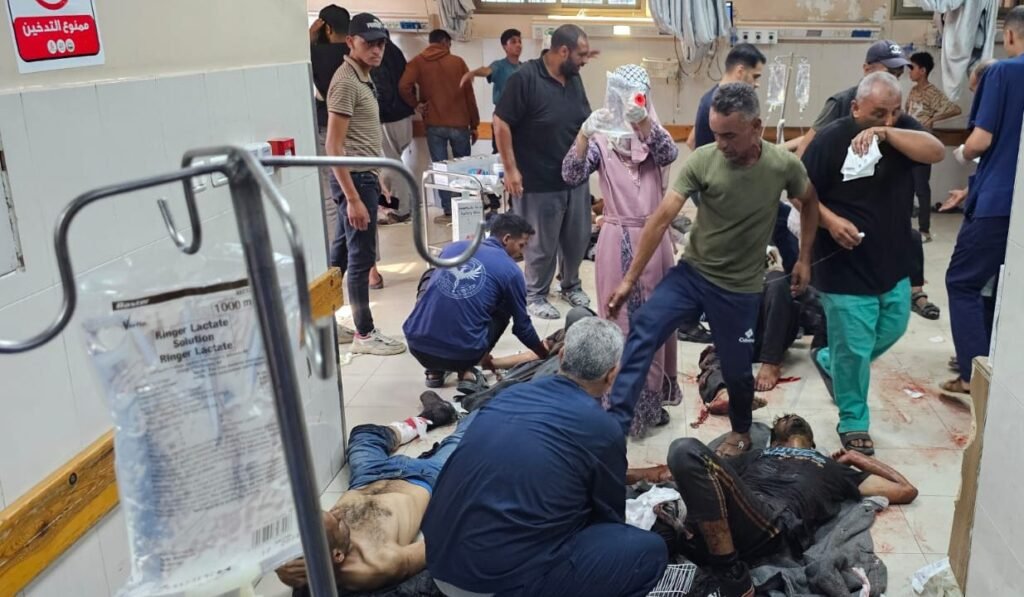
The physical destruction of Gaza’s healthcare infrastructure is staggering. More than twenty hospitals have been forced out of service, while hundreds of ambulances have been damaged or destroyed. In northern Gaza, no fully functioning hospital remains.
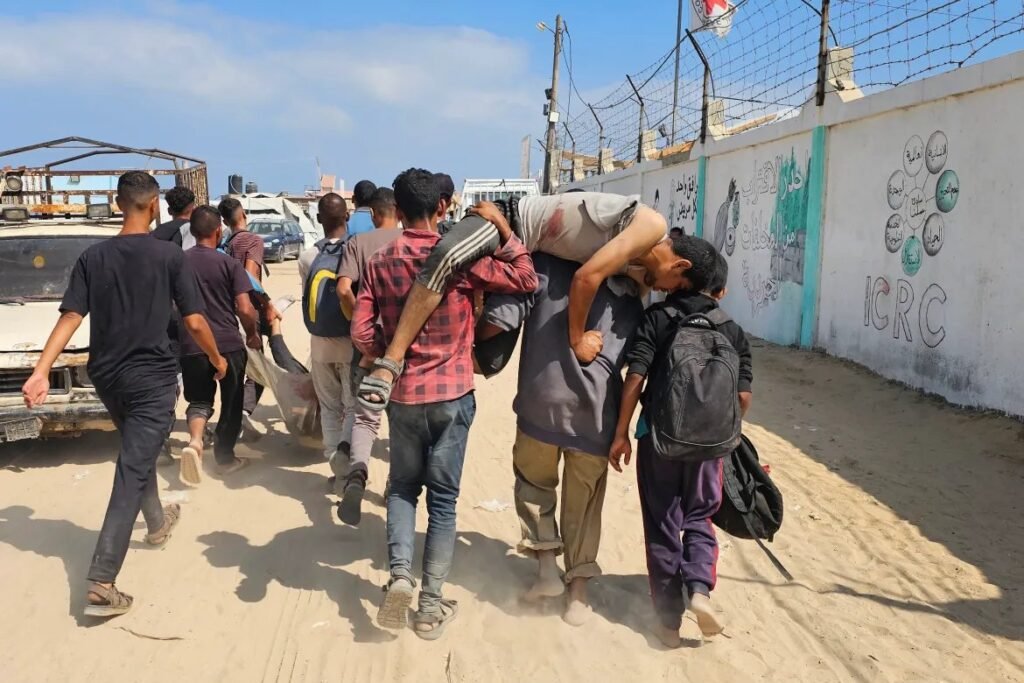
Patients are now forced to walk for hours, sometimes kilometers, to reach the few facilities still operating in Gaza City. Many do not survive the journey.
Evacuations: Necessary but Not Enough
Medical professionals argue that evacuating patients in critical condition must occur alongside serious efforts to rebuild Gaza’s health system. Transferring patients who require complex care can temporarily relieve pressure on overwhelmed facilities and allow remaining hospitals to address routine medical needs.
Broken bones, childbirth complications, infections, and chronic diseases do not disappear during war. A society cannot function when even basic healthcare is inaccessible.
Experts also stress that evacuations must be paired with guaranteed pathways for patients to return home. Medical transfer must not become a cover for permanent displacement.
Healthcare as a Target of Displacement
Beyond physical destruction, Gaza’s health sector was systematically undermined through forced evacuations and raids on medical centers. These actions were often justified by unsubstantiated claims that hospitals were being used for military purposes.
Public health scholars argue that this pattern reveals a deeper objective: dismantling the conditions necessary for civilian life. International law defines genocide not only through mass killing, but through the deliberate creation of living conditions designed to bring about a people’s destruction. The annihilation of healthcare fits squarely within that definition.
Hospitals serve as anchors of community stability. When the last clinic closes, families are forced to leave. Destroying healthcare becomes a tool of displacement, making return, reconstruction, and survival increasingly impossible.
‘De-Healthification’ as Policy
Researchers describe this strategy as the “de-healthification” of Gaza, a process aimed at rendering Palestinian life medically unsustainable. Healthcare workers, as symbols of knowledge, resilience, and social continuity, were treated as enemies. Doctors and nurses were targeted because they kept people alive.
Hospitals became spaces of resistance simply by continuing to function. As long as they stood, communities endured. Once they fell, displacement followed.
Rebuilding Amid Ruins
Despite the devastation, Gaza’s remaining health workers continue to rebuild with whatever resources they can find. Clinics are being reopened using local materials. Vaccination campaigns are restarting. Specialized surgeries, including open-heart procedures, have resumed in limited form. Maternity services are slowly being restored across the Strip.
These efforts are modest compared to the scale of destruction, but they are acts of defiance.
Healing as Resistance
Gaza’s health sector today is not just a collection of damaged buildings and missing supplies; it is a living testament to endurance under annihilation. Rebuilding healthcare is not a technical challenge alone; it is a political and moral imperative.
As long as hospitals are denied protection, medicines are blocked, and doctors are treated as targets, medical evacuations will remain a bandage on a deep, deliberate wound. True recovery begins not at the border, but with accountability, and with the recognition that destroying healthcare was never accidental.