Gaza Herald _ Once again, Gaza is being presented to the world through glossy concepts and distant blueprints, while its people remain trapped under rubble, siege, and occupation. Proposals marketed as “hope” and “reconstruction” continue to emerge without addressing the core reality: Gaza is not suffering from a lack of imagination or investment but from a sustained system of military control, blockade, and political denial. In this context, Jared Kushner’s so-called “New Gaza” plan has drawn sharp criticism for its detachment from the lived reality of Palestinians in the Strip.
NBC News: A Plan Detached From Reality
According to a detailed report by NBC News, the plan promoted by Jared Kushner, son-in-law of former U.S. President Donald Trump, lacks basic realism and directly clashes with the political and field conditions in Gaza. The network stressed that discussing large-scale reconstruction or ambitious development projects is meaningless while Israel’s occupation and long-standing blockade remain firmly in place.
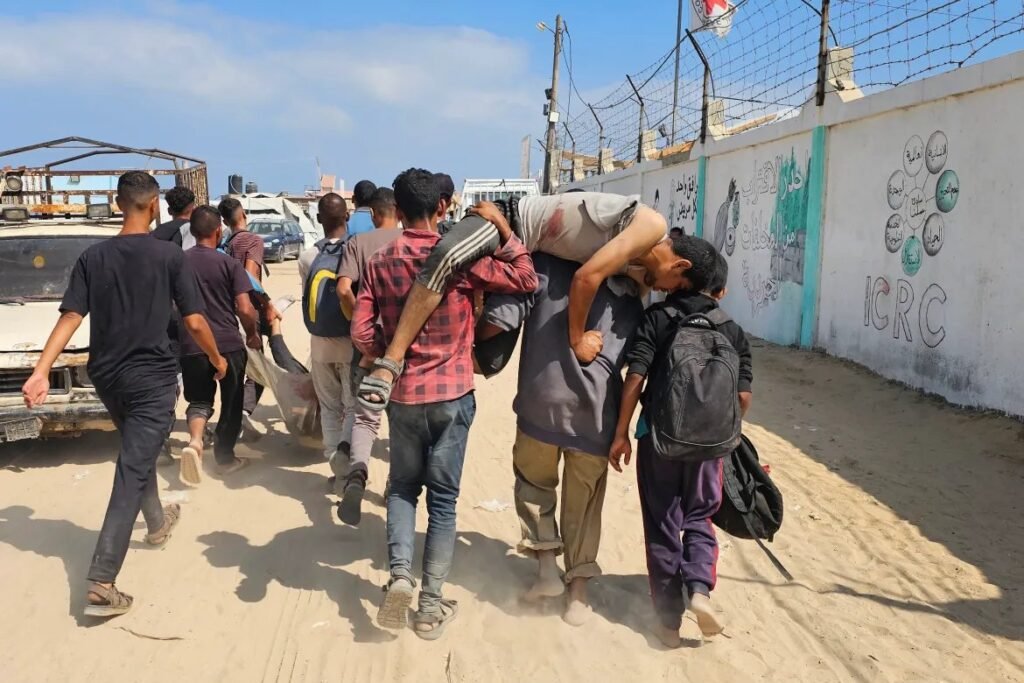
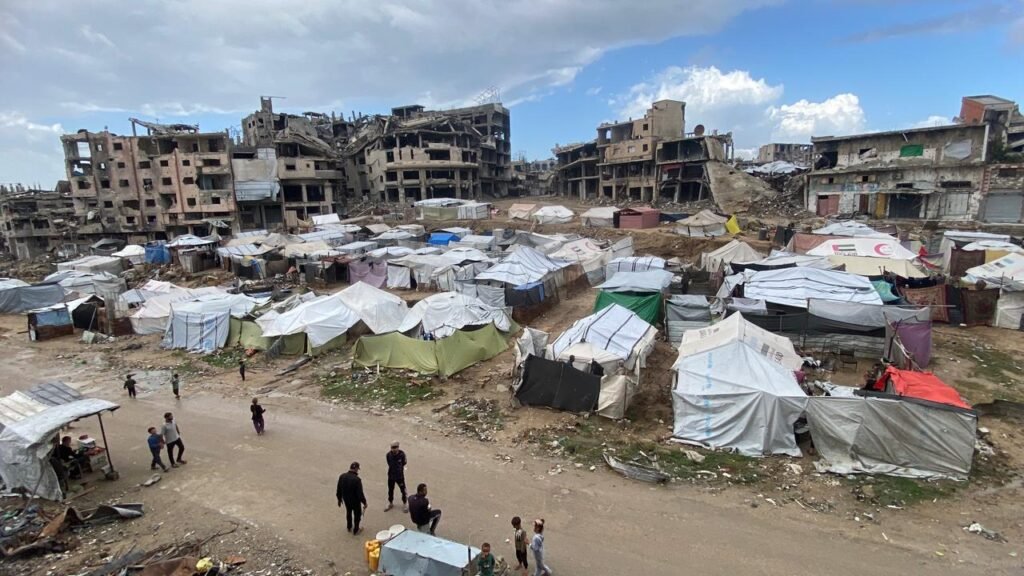
The report highlighted that after more than two years of continuous Israeli bombardment, Gaza remains devastated. Nearly two million Palestinians are still living in tents or temporary shelters, facing acute shortages of clean water, electricity, medical supplies, and basic services. Large parts of Gaza’s infrastructure have collapsed, leaving daily life defined by survival rather than recovery.
Occupation and Control: The Missing Context
NBC News emphasized that the proposed plan fails to account for Israel’s ongoing military control over significant portions of Gaza. Israeli forces currently dominate close to half of the territory, severely restricting movement, access, and any meaningful reconstruction efforts. In the absence of Palestinian sovereignty and with constant military constraints, the report noted that implementing wide-scale urban or economic projects is virtually impossible.
The plan’s proposals, including the construction of a new seaport and international airport, were described as particularly unrealistic. NBC pointed out that such ideas contradict the reality of Israel’s tight control over Gaza’s borders, crossings, and airspace, as well as its repeated obstruction of building materials and reconstruction equipment entering the Strip.
Legal and Security Doubts
The report cited international lawyer and conflict-resolution expert Nomi Bar-Yaacov, who described the core concept of the plan as “entirely unrealistic.” She argued that Kushner’s vision reflects a real-estate mindset rather than a peace-building approach, treating Gaza as a development project rather than a territory under occupation with unresolved political rights.
Bar-Yaacov added that Israel itself is unlikely to accept the construction of large numbers of high-rise buildings in Gaza, as such structures could overlook Israeli military installations near the border. From Israel’s security perspective, the report noted, these buildings would be viewed as unacceptable risks, further undermining the feasibility of the plan.
Ignoring the Roots of the Crisis
The NBC analysis concluded that bypassing Gaza’s political, security, and humanitarian realities while focusing on abstract reconstruction concepts exposes a deep gap between U.S. proposals and conditions on the ground. Without ending the occupation, lifting the blockade, and addressing Israel’s ongoing military actions, any development plan remains disconnected from Palestinian needs and rights.
Gaza Cannot Be Rebuilt Under Siege
For Palestinians, the problem has never been a shortage of buildings, ports, or investment promises. The problem is occupation, dispossession, and a system that denies basic freedoms while repackaging control as “development.” As long as Gaza remains under siege and subject to repeated military assault, reconstruction plans risk becoming tools for managing the crisis rather than ending it.
No Future Without Justice
Kushner’s “New Gaza” proposal, like many before it, illustrates a recurring international failure to confront the root causes of Palestinian suffering. Development without freedom is not peace, and reconstruction without justice is not recovery. Gaza’s future cannot be designed in conference halls or rendered through artificial images while its people are denied safety, sovereignty, and dignity. Any genuine path forward must begin with ending the occupation, lifting the blockade, and recognizing Palestinians as a people with rights, not a problem to be managed.