Gaza Herald – Seven months after a US-mediated ceasefire was announced in Gaza, the agreement remains deeply undermined by repeated Israeli violations across attacks and humanitarian and border-related dimensions. While hostilities have decreased compared to the peak of the war, the scale and consistency of reported breaches have kept the humanitarian situation in Gaza in a state of acute crisis.
Despite the truce, Israeli occupation forces have carried out near-daily attacks across the Gaza Strip. According to figures compiled by the Gaza Government Media Office, thousands of violations have been documented since the ceasefire took effect in October 2025, including airstrikes, artillery shelling, and shootings.
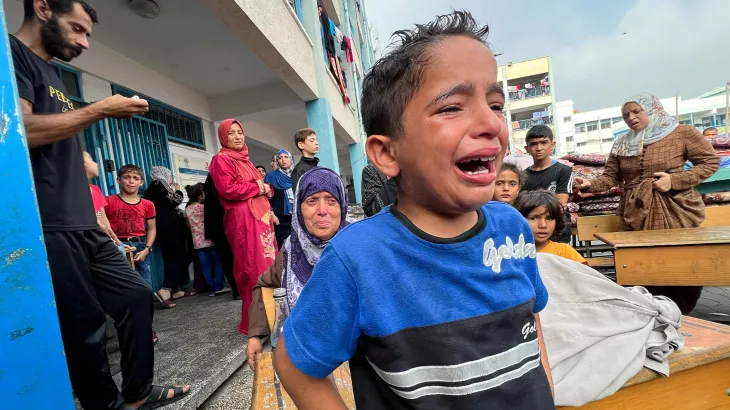
Palestinian health authorities report that hundreds of civilians have been killed during the ceasefire period, including children, with thousands more injured. Reported incidents include strikes on residential areas, displacement camps, civilian gatherings, and targeted attacks in both northern and southern Gaza. Fishermen and coastal civilians have also been repeatedly targeted by Israeli naval fire.
In several cases, Israeli occupation forces have conducted deadly raids and detentions, further escalating tensions despite the formal ceasefire framework.
A central element of the ceasefire agreement was the freezing of frontlines pending further political phases. However, Israeli occupation forces have reportedly expanded what is locally referred to as the “Yellow Line,” designating large areas of Gaza as restricted military zones.
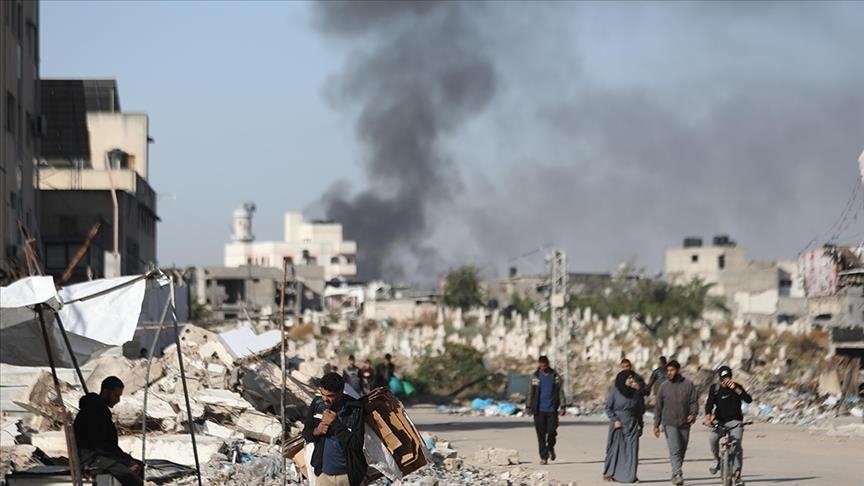
At the time of the agreement, Israeli control covered just over half of the territory. Since then, that footprint has occupied significantly, pushing the civilian population into increasingly confined areas. This expansion has been accompanied by widespread restrictions on movement and near-daily demolitions of homes and civilian structures, in breach of the ceasefire terms.
The ceasefire agreement included provisions to significantly increase humanitarian aid flows into Gaza. However, UN monitoring and humanitarian organizations report that Israel has not met the required levels of aid entry.
Instead of the agreed volume of hundreds of trucks per day, deliveries have averaged far lower, with only a fraction of the required food, fuel, shelter materials, and medical supplies entering the enclave.
Restrictions have particularly affected tents, mobile housing units, medicines, and critical medical equipment, worsening already severe shortages. Aid agencies warn that these limitations have prolonged food insecurity and raised fears of renewed famine conditions.
Additionally, Rafah crossing with Egypt was expected to reopen under the ceasefire framework to allow medical evacuations and civilian movement. However, it remained largely closed for months following the agreement.
When partially reopened, movement remained tightly restricted, with strict daily limits on entry and exit that were frequently not met in practice. Many Palestinians requiring urgent medical treatment abroad have been unable to leave, with health officials linking the restrictions to preventable deaths among patients unable to access care.
Reports also indicate continued detonations of residential buildings and infrastructure across parts of Gaza, including areas that were supposed to be protected under the ceasefire arrangement. Independent analyses have documented thousands of destroyed or damaged structures during the ceasefire period alone, further deepening the scale of displacement and housing loss.
While the ceasefire was intended as a pathway toward a broader political settlement, including reconstruction, prisoner exchanges, and potential withdrawal arrangements, progress has stalled. Key provisions remain unimplemented, and mutual accusations of violations have eroded trust between the parties.
With continued attacks, restricted humanitarian access, and unresolved political terms, the ceasefire remains fragile. Humanitarian agencies warn that without full compliance and sustained de-escalation, conditions in Gaza risk further deterioration despite the formal end of large-scale warfare.