
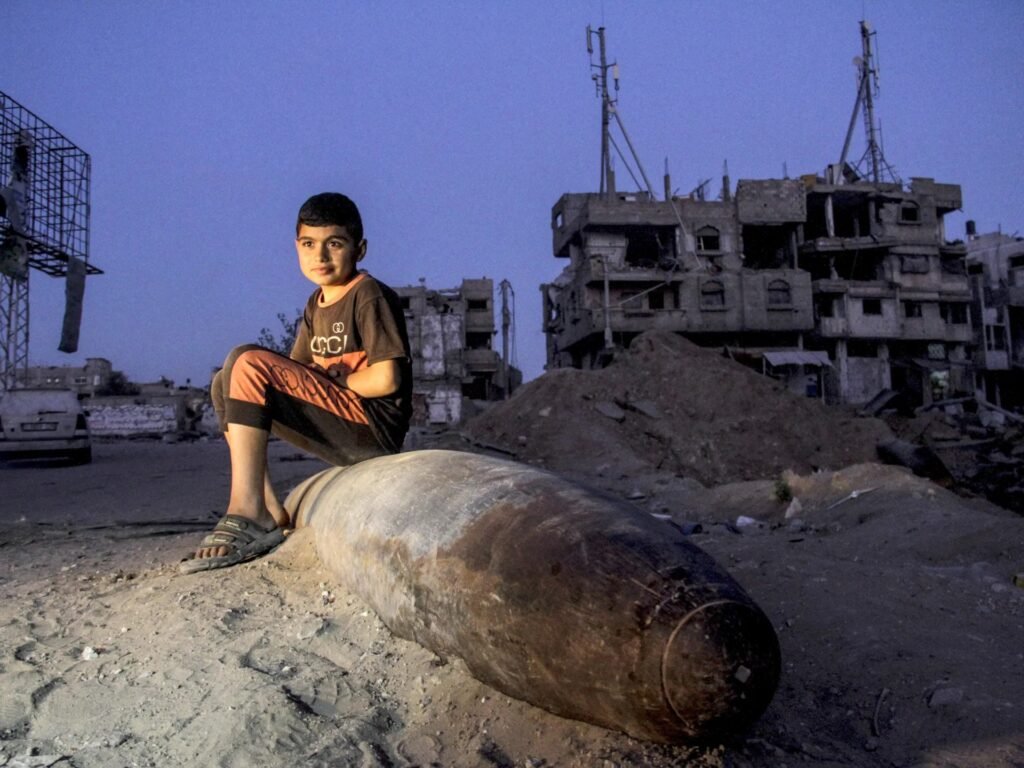
Gaza Herald- The Gaza Center for Human Rights has warned of the serious and escalating dangers posed by the continued presence of thousands of unexploded munitions across the Gaza Strip, resulting from ongoing Israeli military attacks over the past 29 months.
The rights group stressed that these remnants of war have become a direct, daily threat to civilian life and are severely hindering relief and reconstruction efforts.
In a press statement issued on Saturday to mark the International Day for Mine Awareness (4 April), the centre noted that the intense bombardment has left behind vast quantities of unexploded shells, missiles, and explosive materials. These are now buried beneath the rubble of destroyed homes, scattered across streets, farmland, and residential areas, making any civilian movement extremely hazardous.
The statement highlighted repeated incidents of explosions occurring while residents attempt to clear debris or inspect their damaged homes, resulting in deaths and serious injuries, including among children. It warned that the persistence of such conditions effectively prolongs the conflict’s impact and entrenches an unsafe environment that obstructs any return to normal life.
Estimates indicate that between 65 and 70 million tonnes of rubble have accumulated from the destruction of homes, infrastructure, and vital facilities. Within this debris lie approximately 71,000 tonnes of explosive remnants, including more than 20,000 unexploded munitions, effectively acting as dormant, lethal hazards. These figures are particularly alarming given the Gaza Strip’s limited geographical area and the high population density, exacerbated by displacement and widespread destruction.
According to Gaza’s Ministry of Health, at least seven people, including five children, have been killed and 49 others injured by unexploded ordnance during the war—though these figures are likely underreported. Other estimates suggest that more than 400 injuries have occurred.
The center emphasized that the presence of such munitions in densely populated civilian areas constitutes a clear violation of international humanitarian law, which obliges parties to conflict to minimize harm to civilians and to address and remove the dangers posed by war remnants once hostilities cease.
It further noted that local capacities are severely limited and insufficient to deal with the scale of explosive remnants due to a lack of specialized equipment and technical expertise. This places additional risks on civil defense teams and humanitarian workers operating on the ground.
The Gaza Centre for Human Rights called on the international community to act urgently by deploying specialized international teams to assess and safely neutralize unexploded ordnance. It also urged the entry of necessary engineering equipment without restriction and called on Israeli authorities to disclose maps and data regarding the types and locations of munitions used.
Additionally, the center stressed the importance of launching widespread public awareness campaigns about the dangers of suspicious objects, particularly targeting children, to prevent further casualties.
It concluded by affirming that civilian protection does not end with a ceasefire and that leaving thousands of explosive remnants unaddressed among the rubble represents an ongoing threat to life and personal safety, undermining any genuine prospects for recovery and reconstruction in Gaza.

