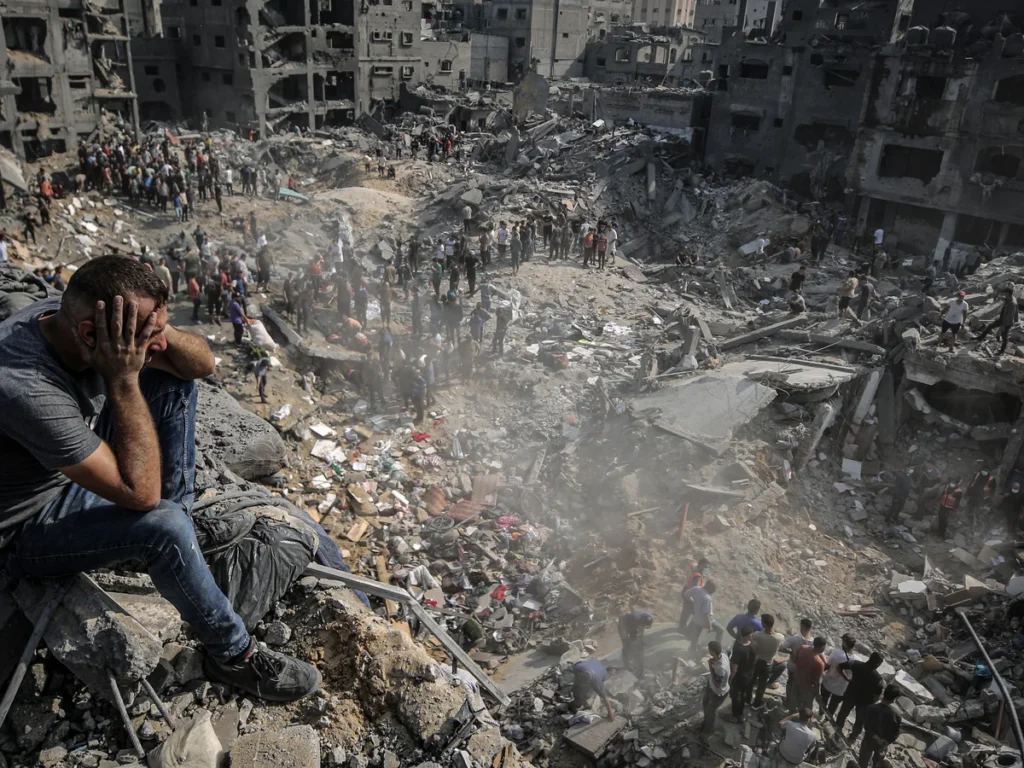
Gaza Herald_In recent months, subtle but troubling changes have appeared in several Wikipedia entries describing communities in Gaza. Localities such as Rafah, Beit Hanoun, Al Qarya as Suwaydiya, and Om al-Nasr are increasingly being described in the past tense. Places once presented as living towns are now referred to as “former” localities or described as “destroyed,” suggesting they no longer exist.
One of the most striking examples appears in the entry for Rafah, which now begins with the phrase “Rafah was a city,” accompanied by references to large-scale destruction and shifts in control during Israel’s ongoing war on Gaza. Similarly, Al Qarya as Suwaydiya is labeled as having been “destroyed in 2024,” while other communities are described as places that “once existed.”
These edits have sparked debate across social media platforms, including Reddit and X, where users have questioned both the accuracy and implications of such wording. One widely circulated post pointed out that despite Wikipedia’s phrasing, tens of thousands of Palestinians still live in Rafah today. Critics argued that describing the city in the past tense implies that it has vanished entirely, when in reality its people remain.
Wikipedia is indeed an open platform where anyone can edit articles, and its entries constantly evolve. Yet the language used on the site carries enormous influence. Millions of readers around the world rely on it as a source of neutral, authoritative information about geography, history, and global events.
Because of that influence, labeling Gaza’s towns and villages as “former” places does more than simply document physical destruction. It risks conveying something far more troubling: the suggestion that these communities, and the people who live in them, have effectively disappeared.
The Reality: Life Continues Despite Destruction
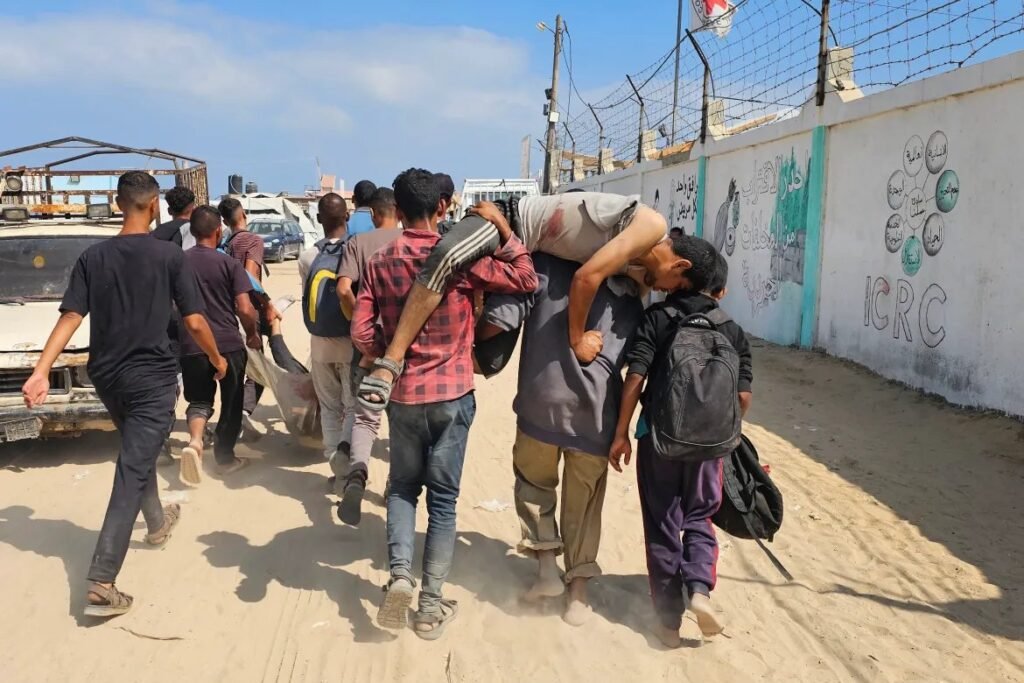
On the ground, the reality is very different. Even amid the devastation inflicted by Israel’s military campaign, many of these communities continue to exist.
Thousands of Palestinians are still living in Rafah and Beit Hanoun. Parts of Al Qarya, such as Suwaydiya and Om al-Nasr, remain inhabited. Families continue to rebuild daily life among the ruins, maintaining schools where possible, operating small markets, and preserving social and cultural networks that bind their communities together.
To describe these places as if they no longer exist ignores this ongoing reality. It erases the resilience of people who remain rooted in their homes despite war, displacement, and destruction.
Supporters of the past-tense wording may argue that it merely reflects the scale of damage suffered by Gaza’s cities. From their perspective, describing places as “former” may simply be a way to acknowledge that large portions of infrastructure, roads, buildings, and public facilities have been destroyed.
But the deeper problem lies in equating the destruction of physical structures with the disappearance of entire communities. When language suggests that devastated places are “gone,” it risks normalizing the idea that the erasure of infrastructure equals the erasure of human presence.
That is a dangerous precedent when documenting conflicts.
The American writer William Faulkner once observed that “the past is never dead. It’s not even past.” His words resonate deeply in the context of Gaza. Even after months of bombardment, Gaza’s cities remain alive through memory, culture, and the daily lives of the people who continue to inhabit them.
History offers useful comparisons. Truly abandoned sites, such as the ancient Roman city of Pompeii, are appropriately described in the past tense. But modern cities devastated by war, including Mosul in Iraq or Aleppo in Syria, are still written about in the present tense, even as their destruction is acknowledged.
Gaza’s towns deserve the same careful and accurate distinction.
Language also carries consequences for humanitarian awareness. Describing Gaza’s neighborhoods as “former” communities risks obscuring the ongoing needs of the people who still live there. Humanitarian aid, reconstruction efforts, and global advocacy depend on recognizing that these communities continue to exist and require urgent support.
Portraying them as erased can dull international attention, weaken calls for assistance, and distance global audiences from the reality faced by Palestinians struggling to survive amid the rubble.
For that reason, the shift toward past-tense descriptions must be questioned, not simply as a technical issue of wording, but as a matter of ethical responsibility in how the world documents Gaza and the lives of its people.