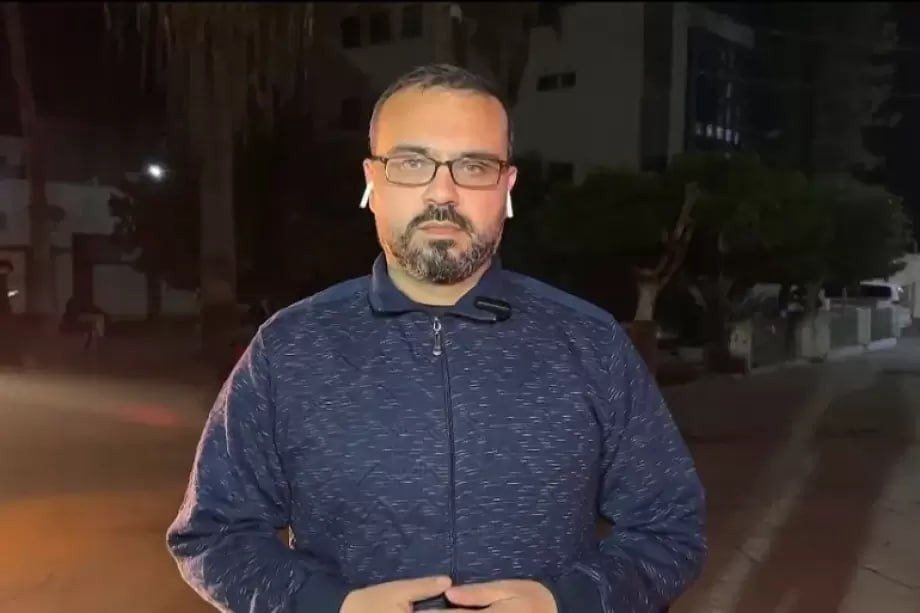
Gaza Herald—Hamas spokesperson Hazem Qassem said the movement has completed all necessary measures to hand over governing responsibilities across all sectors to the National Committee for Gaza Administration and has prepared the political, field, and administrative environment to enable the committee to begin its work in providing relief to civilians.
In a special statement to Gaza Herald, Qassem noted the existence of a follow-up committee composed of Palestinian factions, representatives of civil society, tribal leaders, and figures from international institutions aimed at ensuring a comprehensive and transparent transfer process.
The Hamas spokesperson affirmed that the Israeli occupation is preventing the committee from entering the Gaza Strip and escalating the security situation in ways that obstruct the creation of an appropriate environment for its work. He added that the “Peace Council” has not yet provided sufficient organizational, material, or financial support to enable the committee to begin its mission.
He stressed that the Peace Council must exert genuine pressure on the occupation to halt its aggression, fully reopen the Rafah crossing, and allow the committee to begin its work.
Qassem also pointed out that the occupation continues to obstruct the committee’s work and object to certain procedural details related to it, while the council has failed to provide the full and adequate support necessary to ensure its success.
He emphasized that Hamas is not imposing any conditions on the committee’s work and is committed to facilitating the transfer process, enabling its entry into Gaza, and allowing it to assume full governing responsibilities, stressing that the movement has placed no conditions in this regard.
Qassem explained that the committee was announced following national consensus and dialogue with mediators, expressing hope that it will operate professionally and technically, free from political calculations or competing interests, and that it will function as an independent national body within this framework, without external interference.
He added that the movement has taken practical steps to facilitate, not hinder, the committee’s work and that all decisions taken by governmental and administrative bodies in Gaza are guided by the principle of supporting the committee and avoiding unnecessary complications.
Qassem reiterated that enabling the committee to enter Gaza and begin relief and reconstruction operations represents an urgent national priority, given the unprecedented catastrophic conditions in the Strip following two years of war and widespread destruction.
In the same context, Qassem said the gap between what is announced within the framework of the “Peace Council” and the reality on the ground in Gaza is “large and clear,” stressing that talk of stability, sustained calm, and reinforcing the ceasefire is not reflected in actual conditions.
He explained that while the council speaks in its meetings about ending the war and ensuring a large-scale flow of aid, the reality shows continued targeting of civilians and a decline in the volume of humanitarian assistance entering the Strip.
He added that claims regarding the reopening of the Rafah crossing remain largely theoretical, amid serious violations, threats, and acts of coercion faced by civilians, in addition to ongoing demolitions, destruction, and the shifting of what is known as the “yellow line” toward western and central areas of Gaza City, reflecting the continuation of the war through different methods.
Qassem stressed that Hamas remains committed to the ceasefire agreement in full and continues to engage with mediators to inform them of ongoing violations.
He also noted ongoing diplomatic, political, and media efforts aimed at exposing these violations and holding all parties accountable for the continued breaches of the agreement.