Gaza Herald_ As the call to prayer neared sunset on Thursday, Nisreen Nassar crouched beside a crude, makeshift oven, feeding it bits of firewood and scraps of plastic to coax out enough heat to bake bread for her family’s iftar. Smoke stung her eyes as she worked, her hands moving quickly against the fading light, trying to prepare the bare minimum so her children would not break their fast hungry.
Four months after a United States-brokered so-called “ceasefire” came into effect in October, Nassar never imagined she would be spending Ramadan this way. On the same day that Donald Trump convened the first meeting of his much-publicized “Board of Peace,” she and her family were sheltering inside an abandoned school in Gaza City—one of thousands of displaced families forced to turn ruined public buildings into places of refuge. Instead of a kitchen, she cooks over an open fire. Instead of a home filled with familiar Ramadan rituals, she breaks the fast amid broken walls and dust.
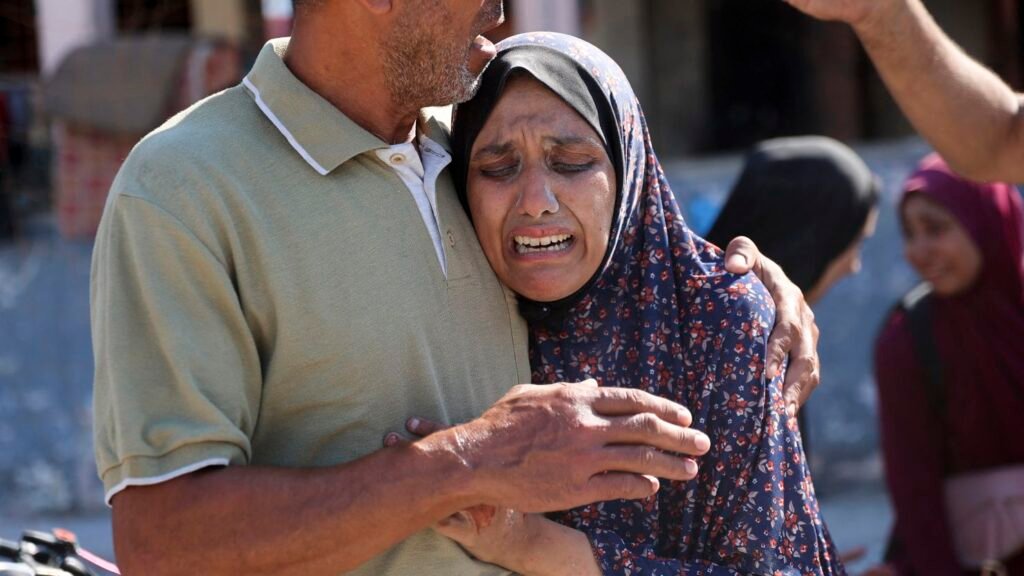
For Nassar, Ramadan has arrived stripped of its meaning. There are no lanterns, no shared meals with relatives, no sense of calm or renewal. Each day is consumed by the same questions: how to find food, how to keep the children warm at night, how to endure another round of shortages and fear. The school where they now live offers little protection from the cold or the rain, and the smell of smoke from open fires clings to everything they own.
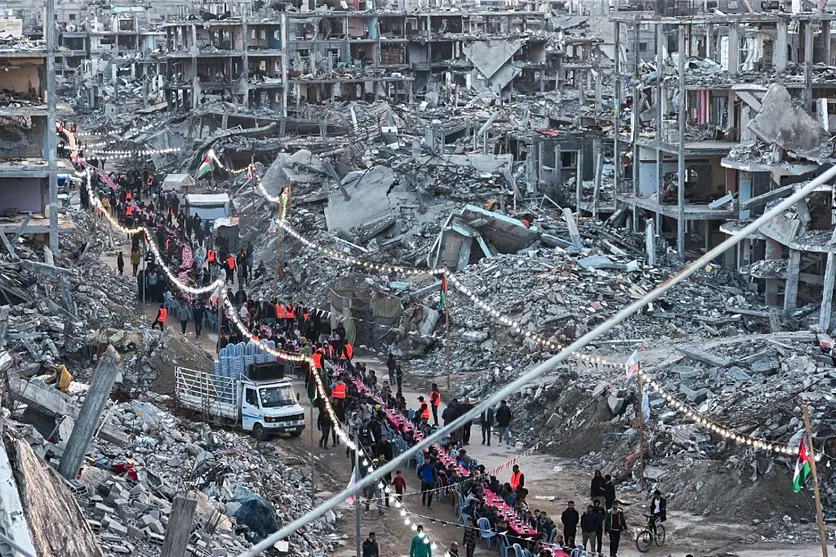
Like many families in Gaza City, Nassar’s life has been upended by Israel’s destruction of entire neighborhoods, leaving little behind but rubble and memories. The “ceasefire” has not brought stability or recovery; it has only frozen families in a state of prolonged suffering. Aid remains scarce, homes remain uninhabitable, and daily survival has replaced any notion of normal life.
In Gaza City, Ramadan is no longer a season of mercy and togetherness. For families like Nisreen Nassar’s, it has become another chapter in a long ordeal—marked not by joy or respite, but by displacement, hunger, and the quiet resilience of people trying to endure the holy month amid devastation.