Gaza Herald- Two months have passed since a long-awaited ceasefire was announced, yet Gaza, that small, tormented strip of land, remains trapped in a grinding cycle of crises with no real relief in sight.
The noise of weapons may have faded slightly, after months in which genocide and relentless killing drowned out life itself, but this quieter moment is only an echo of a place still groaning under unbearable wounds.
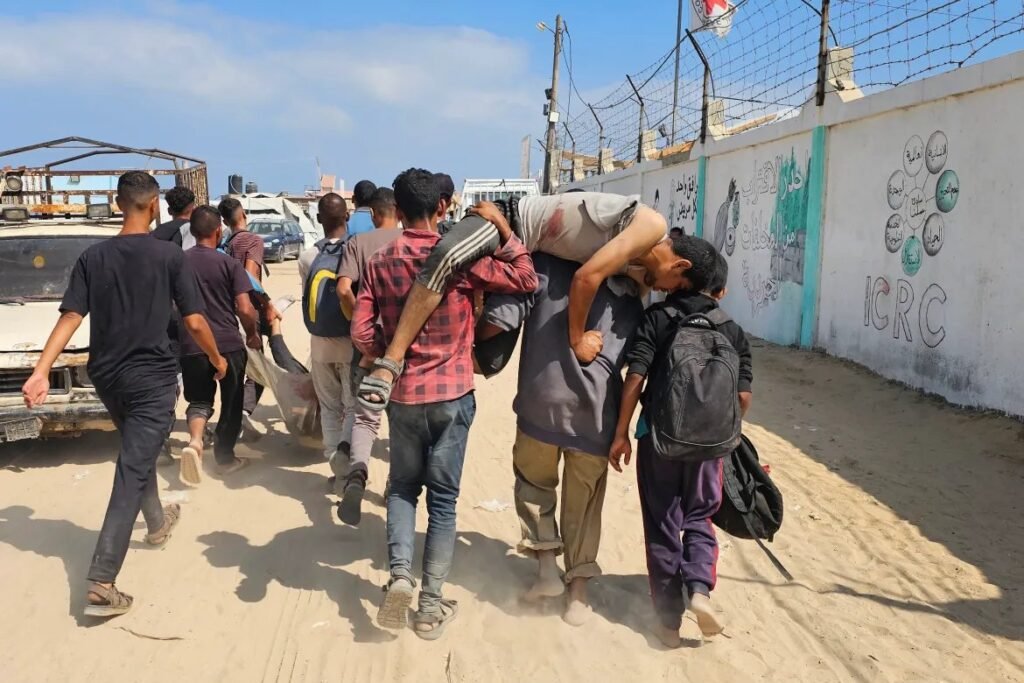
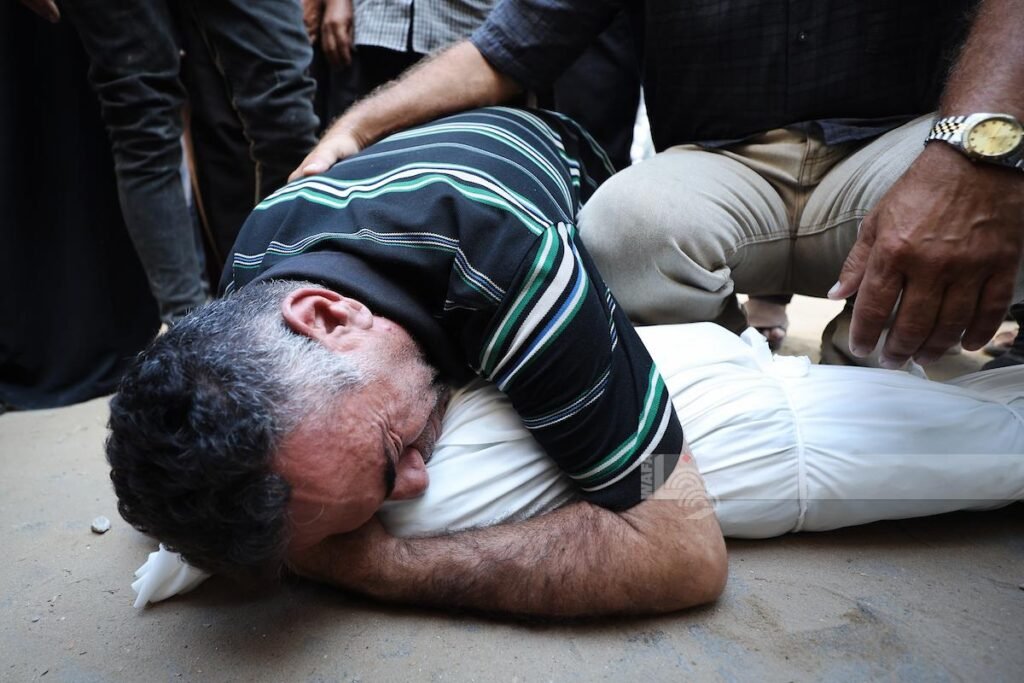
The war’s voice may have softened, but its consequences remain loud in every detail of daily life. Destruction haunts every corner, expanding with continued Israeli violations. Fear and sorrow cling to faces that have grown accustomed to living under skies strained with danger.
The devastation inflicted by this genocidal war did not stop at homes and infrastructure; it has seeped into the souls of people, confiscating even the simplest signs of hope. Amid this mountain of rubble, people still search for a glimpse of normal life, only to find themselves trapped in conditions with no end in sight.
Streets once alive with movement have turned into pale, exhausted spaces where people struggle with severe shortages of water and electricity. Children fight to access their right to education after their schools were torn apart, and doctors are forced to perform miracles despite a crippling shortage of medicine and medical supplies.
And although the ceasefire brought a brief breath of hope, reality insists on keeping Gaza’s residents confined within the boundaries of suffering. This is not written out of emotion or sympathy alone; even Western media and international human rights organisations document this truth daily.
A Dangerous Illusion
The British newspaper The Guardian wrote that despite the ceasefire, the term “truce” has begun creating a dangerous illusion that life is returning to normal for Palestinians trapped within the remaining 42% of Gaza still accessible, the narrow land behind the “yellow line” imposed by the occupation.
The paper highlighted Israel’s ongoing violations of the US-brokered ceasefire agreement even as the humanitarian crisis worsens and misery deepens across every aspect of life.
According to the newspaper, since the announcement of the ceasefire on October 10, Israeli forces have killed more than 360 Palestinians, including at least 70 children, according to a UN official.
Even with the decline in casualties compared with the previous two years, an average of seven Palestinians are still being killed every day, a rate equivalent to active conflict zones anywhere else in the world.
The Guardian also cited Amnesty International’s position that the occupying state continues to commit acts of genocide, and that the word “truce” falsely suggests a return to normal life in Gaza.
The paper stressed that Gaza’s population is living through a humanitarian catastrophe:
2.2 million Palestinians are crowded into just 42% of the Strip, where nine out of ten people are homeless, and 81% of homes are destroyed or severely damaged.
Winter has made everything worse. Rain has flooded camps, tents have collapsed, sewage has overflowed, and fears of disease outbreaks grow by the day.
The War Has Not Ended
The American magazine The Nation stated that the war in Gaza has not ended; it has merely changed shape.
The reality is simple: Gaza has been denied the right to heal. The rubble remains, the sick continue to suffer, prisoners have not returned home, and the grip of the occupation tightens.
A real ceasefire, the magazine wrote, would mean open borders, reconstruction, and a return to life, none of which is happening. What exists instead is a deliberate paralysis, a disguised punishment presented as calm.
After two years of genocide, Donald Trump’s ceasefire deal has not ended the suffering, even if it has eased its intensity. The suffocating blockade imposed by Israel makes sustainable recovery impossible.
For many in Gaza, the ceasefire has brought no relief. Instead, it has exposed the cruelty of leaving people to face their fate alone. Many now feel their suffering is not a temporary condition but a destiny.
The magazine highlighted that patients are among the worst affected. According to the World Health Organization, more than 16,500 people, including thousands of children, require urgent medical care that Gaza cannot provide.
Hunger and Disease Threaten Gaza
Nestor Owomuhangi, the UN Population Fund’s representative to Palestine, currently visiting Gaza, said that most families remain crammed into overcrowded shelters where hunger and disease threaten them daily.
Speaking to the press, he said the ceasefire was desperately needed, but it is not the end of the war for women and girls, not physically, not emotionally, and not economically.
He added that Gaza’s residents are holding their breath, suspended between survival and uncertainty. More than 57,000 families are now led by women, many of whom are in extremely vulnerable conditions with no income to support their children.
Owomuhangi described families standing in line for hours to obtain food and water, cooking over open fires, washing in buckets, and sleeping under damp blankets.
People are no longer asking for homes, education, or adequate food; they are asking for a tent, a small heater, and a source of light.
“Expectations have collapsed,” he said.
“Those who once asked for homes and schools are now asking for a dry tent, a small heater, and a bit of light.”
He added that only one-third of health facilities are partially functioning, all are short-staffed, overloaded, and lacking basic supplies. Medicines are scarce. Neonatal units are overcrowded. Yet the medical teams continue working despite enormous human loss.
Owomuhangi stressed that Gaza’s health system is still standing only because its workers refuse to abandon it. Rebuilding the sector requires restoring and equipping destroyed health facilities, ensuring a steady flow of medicine and supplies, and rebuilding a shattered medical workforce.
Despite the bleakness of the situation, Gaza remains a living testament to endurance and willpower.
Its exhausted city continues to fight for life under impossible conditions.
And even if faint, the hope for a better tomorrow remains a flame that cannot be extinguished.