Gaza Herald – Every day, Palestinian citizen Bilal races against time, carrying an oxygen cylinder on his exhausted shoulders and walking long distances in a difficult journey to save his 60-year-old father, Alaa Al-Harrani, who now feels death is closer than ever.
Under the shade of a tent in the Mawasi area of Khan Younis, Alaa Al-Harrani waits desperately for a dose of air that might grant him enough breath to continue living.
Speaking in a broken voice weakened by illness and shortness of breath, Alaa says: “Sometimes I wish for death because of the exhaustion and pain. I feel as though someone is pulling the air away from me. If the oxygen is delayed even for an hour or less, I will be gone.”
This is the reality of thousands of patients who fight every day for a single breath under a suffocating siege that narrows every life path and weighs heavily on their final breaths.
Emergency Rooms and Deadly Waiting
Inside emergency rooms, the tragedy appears even harsher. Nurse Bahaa Al-Nims recounted the case of a kidney failure patient whose oxygen saturation dropped to 69%, forcing medical teams to connect him to a temporary manual oxygen cylinder while waiting for his turn for emergency dialysis in a desperate attempt to keep him alive.
Scenes like this have become a daily reality inside Gaza’s hospitals, where treatment has turned into a race against time and oxygen cylinders have become the last hope for survival.
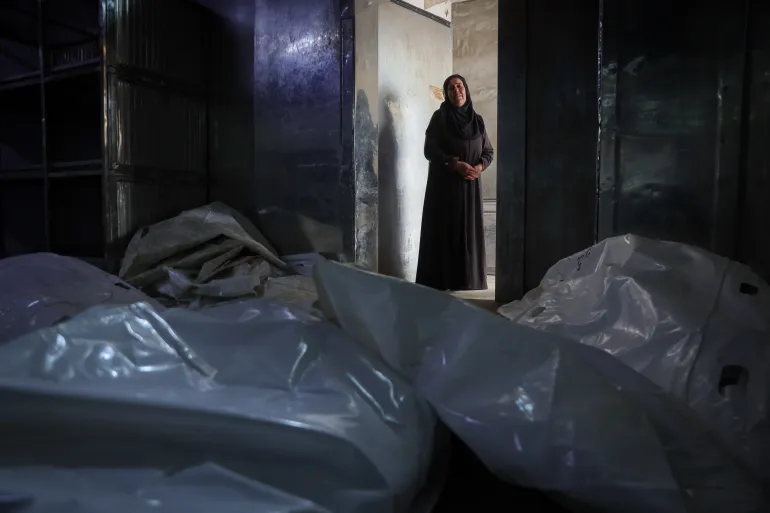
Patients no longer fear death alone; they fear the moment the oxygen stops, the moment their final breath could become another number added to the long record of war victims.
Oxygen Stations.. Another Target of War
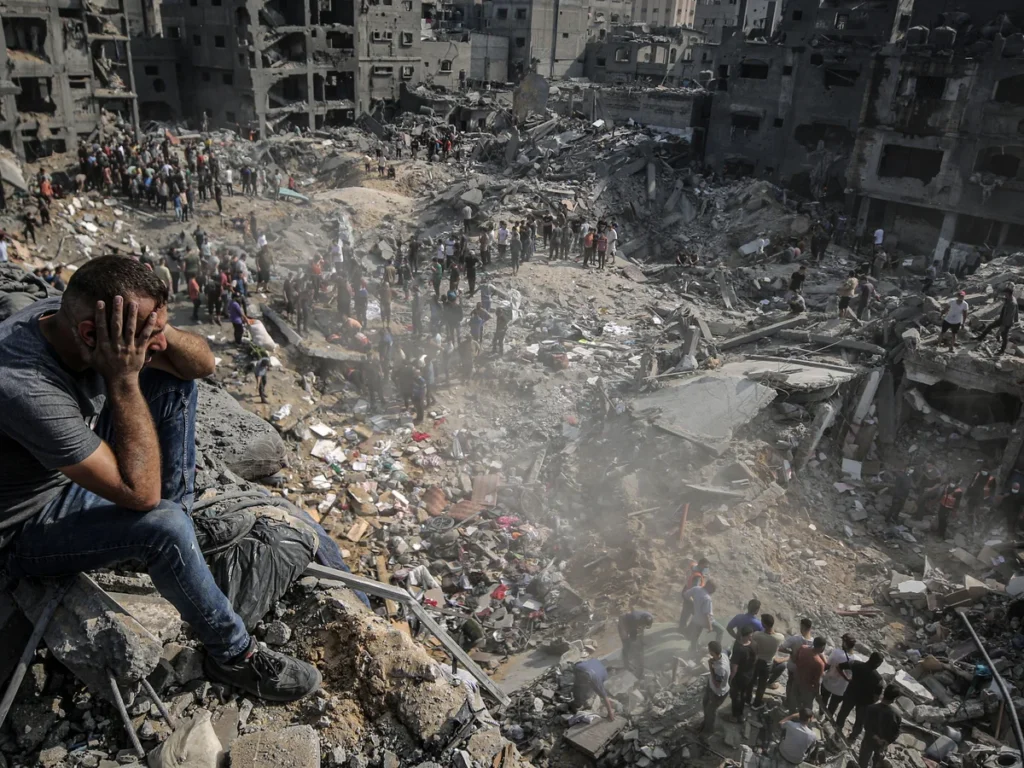
Israeli bombardment has not been limited to homes and infrastructure, but has extended to the lifeline of hospitals themselves.
According to Gaza’s Ministry of Health, Israeli occupation forces have destroyed 22 oxygen stations out of a 34 that once supplied hospitals with medical oxygen. The remaining stations continue to operate intermittently amid severe exhaustion and a critical shortage of spare parts, which Israel has blocked from entering Gaza for the past two and a half years.
This shortage does not simply mean damaged equipment; it practically means threatening the lives of thousands of patients whose breathing depends on these stations, from intensive care patients to premature infants inside incubators.
“A Death Sentence” Haunting Patients
Inside Nasser Medical Complex, maintenance official Ismail Abu Nimer confirmed that the continued breakdown of oxygen stations has cast catastrophic consequences over operating rooms, intensive care units, maternity wards, and neonatal incubators, where newborn babies rely on a constant oxygen supply to stay alive.
Primitive Attempts to Save Lives
For his part, Dr. Khalil Al-Daqran, spokesperson for Al-Aqsa Martyrs Hospital, said that Israel has systematically and directly targeted Gaza’s healthcare system since the beginning of the war.
He explained that the remaining oxygen stations have been attacked for more than two and a half years without any real maintenance due to the ban on spare parts, leaving them vulnerable to sudden shutdown at any moment, something he described as “a death sentence” for thousands of patients.
Facing this collapse, medical teams have resorted to primitive methods, most notably manually transporting oxygen cylinders from one hospital to another. These temporary solutions fail to meet even the minimum actual needs, especially in neonatal and intensive care units.
Urgent Appeal
Al-Daqran stressed that the limited medical aid Israel allows into Gaza remains insufficient and non-essential, while blocking what he described as the “vital nerves” of hospitals, including oxygen stations, electricity generators, and imaging equipment.
He issued an urgent appeal to mediators, humanitarian organizations, and the international community to pressure for the immediate entry of medical equipment and spare parts, emphasizing that every hour of delay means the loss of more lives.
Thus, in Gaza, a silent war continues that is no less cruel than the bombardment itself,a war in which life is reduced to breaths slowly pulled from the chests of patients, infants, and the elderly amid the near-total collapse of the oxygen system inside exhausted and besieged hospitals.