Gaza Herald_The latest proposal presented by former UN envoy Nikolay Mladenov under the so-called “Gaza Peace Council” is being promoted internationally as a roadmap toward stability, reconstruction, and long-term peace in Gaza. Yet for many Palestinians, the initiative does not resemble a genuine peace process. Instead, it appears to be another attempt to impose political surrender on a population that has already endured mass destruction, displacement, starvation, and years of blockade.
Presented before the UN Security Council, the proposal links Gaza’s reconstruction directly to the gradual disarmament of Palestinian factions. At the same time, it outlines plans for an Israeli military withdrawal, the deployment of an international stabilization force, the restructuring of Gaza’s governing institutions, and the rebuilding of police and security structures.
According to Mladenov, “disarmament in Gaza cannot happen overnight but must take place gradually according to a timeline and under international supervision.” He further insisted that “no Palestinian group will be asked to hand over its weapons to Israel. Weapons are not surrendered to the enemy but to the Palestinian state represented by the National Committee for the Administration of Gaza.”
While such statements may sound balanced to international audiences, Palestinians see a much darker reality beneath the diplomatic language. The proposal arrives after years of devastating war, during which Gaza’s civilian population paid the overwhelming price while the international community largely failed to stop Israel’s military assault.
Reconstruction Turned Into Political Leverage
At the heart of the proposal lies a dangerous equation: reconstruction in Gaza will move forward only if political and military conditions are met.
The roadmap explicitly connects international funding and rebuilding efforts to progress on disarmament and security restructuring. It states that large-scale reconstruction cannot sustainably advance in areas where “parallel armed structures” continue to exist.
For Palestinians, this effectively transforms humanitarian relief into a political bargaining tool.
Homes destroyed by Israeli airstrikes are no longer treated as an urgent humanitarian issue requiring immediate rebuilding. Hospitals devastated during the war are not presented as a moral emergency demanding rapid restoration. Instead, reconstruction becomes conditional, delayed until Palestinians comply with international political demands.
This approach ignores a basic moral principle: civilians should never be collectively punished while political negotiations continue.
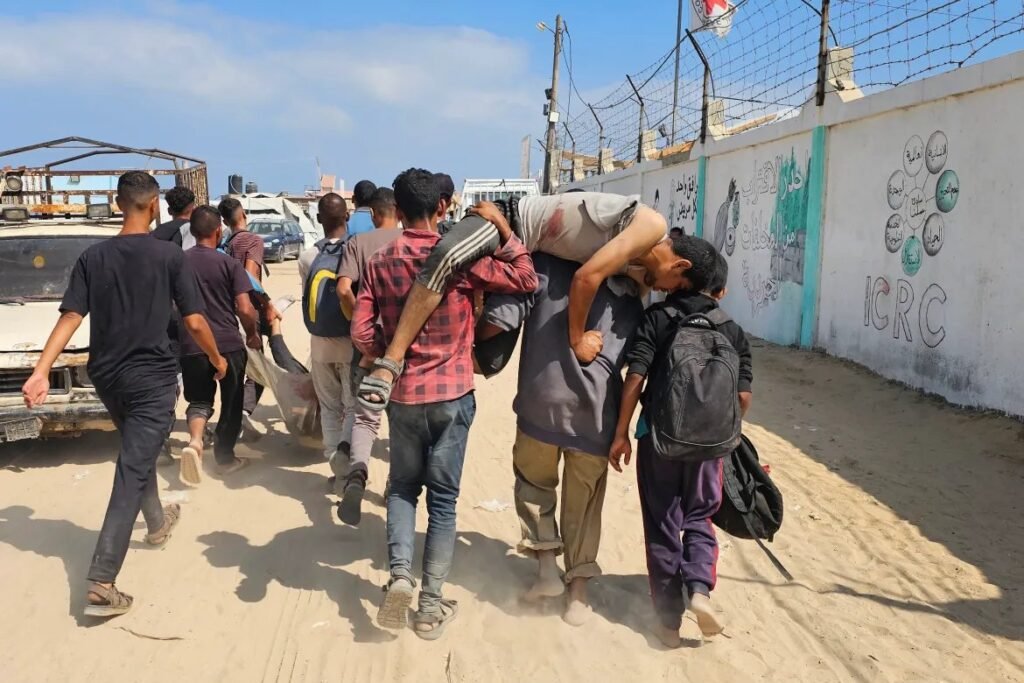
Millions of Palestinians in Gaza remain displaced. Entire families are still living in tents, damaged schools, or among the rubble of destroyed neighborhoods. Access to clean water, food, electricity, fuel, and medical treatment remains severely restricted. Yet instead of prioritizing unconditional humanitarian recovery, the roadmap presents reconstruction as a reward that must first be earned politically.
For many Palestinians, this is not peacebuilding. It is coercion.
Gaza’s Catastrophic Reality
Even Mladenov himself acknowledged the scale of Gaza’s devastation during his Security Council briefing.
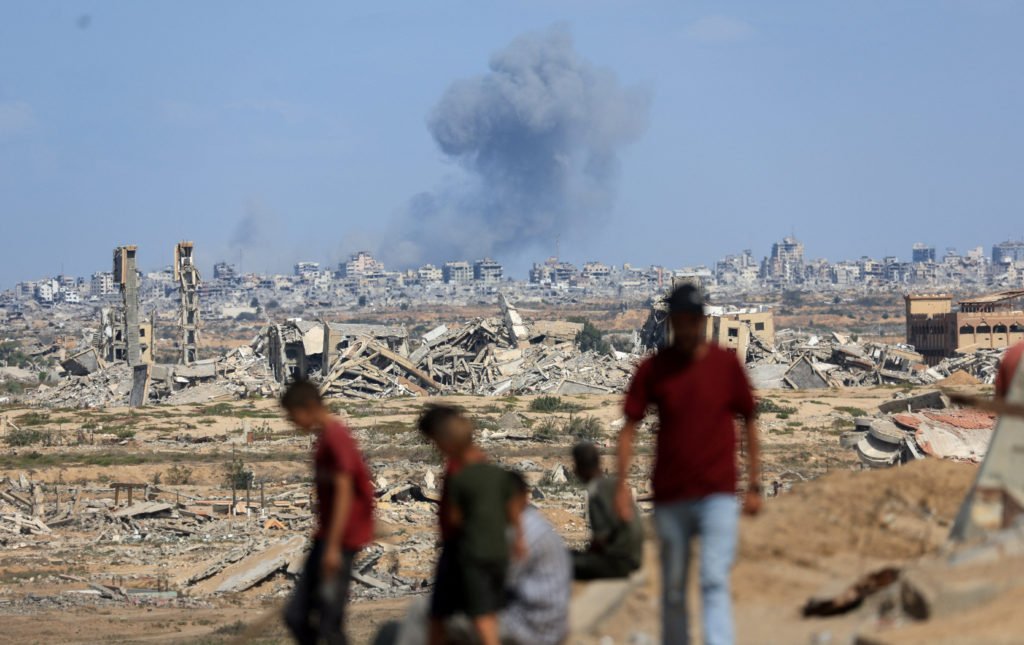
He stated that nearly 80 percent of Gaza’s buildings have been damaged or destroyed. Millions of tons of rubble still cover residential areas, schools, hospitals, and roads. Most of Gaza’s population remains without permanent shelter, surviving in overcrowded camps or temporary structures while facing widespread unemployment, water shortages, and the collapse of healthcare services.
But even these descriptions fail to fully capture the reality Palestinians continue to endure daily.
Gaza today is not merely suffering from a humanitarian crisis. It is experiencing the systematic destruction of civilian life. Children grow up surrounded by ruins and trauma. Parents search endlessly for food and medicine. Entire communities have disappeared from the map after repeated bombardment.
Under these conditions, Palestinians increasingly question why the international community continues to speak about “security arrangements” before addressing basic human survival.
The people of Gaza do not need lectures about governance while they remain trapped under blockade. They need safety, freedom of movement, functioning hospitals, clean water, and the right to rebuild their lives without foreign conditions attached.
The Burden Is Always Placed on Palestinians
One of the most striking aspects of the proposal is that the overwhelming burden of implementation falls once again on Palestinians.
The roadmap repeatedly emphasizes Palestinian obligations: disarmament, restructuring security forces, integrating police, ending armed activity, and reorganizing governance structures. Meanwhile, Israeli obligations are presented in vague language tied to “verified progress” on Palestinian compliance.
Mladenov stated that Israel would carry out “a gradual withdrawal from Gaza according to an agreed timeline, with verification of progress in disarmament and security-related issues.”
But Palestinians have heard similar promises for decades.
Israeli withdrawals have repeatedly been tied to political conditions that continuously shift or expand. Ceasefire agreements are announced while military raids, restrictions, and attacks continue. International guarantees are offered while Palestinians remain under siege.
Even after the latest ceasefire framework entered into force, Palestinian officials and humanitarian organizations documented repeated Israeli violations that reportedly killed hundreds of Palestinians and injured thousands more.
Yet despite this reality, international pressure continues to focus overwhelmingly on Palestinian armed groups rather than on ending the blockade, halting military operations, or guaranteeing Palestinian rights.
This imbalance is one of the central reasons many Palestinians reject such proposals outright.
Why Hamas Rejected the Plan
Hamas strongly rejected the report presented by Mladenov, accusing it of adopting the Israeli narrative and ignoring Israel’s ongoing military actions and humanitarian restrictions.
The movement stated that it remains committed to ceasefire agreements despite repeated Israeli violations. It also emphasized its willingness to transfer civilian governance responsibilities to a national Palestinian administrative body.
According to Hamas, preparations had already been completed for the National Committee for the Administration of Gaza to assume civilian duties. The movement argued that Israel itself was preventing the committee from fully operating inside Gaza.
However, Hamas rejected any framework that conditions reconstruction on surrendering weapons under foreign pressure.
For many Palestinians, the issue extends beyond Hamas itself. The broader concern is that Palestinians are continuously asked to surrender leverage and political agency while the root causes of the conflict remain untouched.
Occupation continues. The blockade remains in place. The Palestinian movement is restricted. Settlements continue expanding elsewhere in the occupied Palestinian territory. Yet international discussions often reduce the entire crisis to one issue alone: Palestinian weapons.
This framing strips Palestinians of their political reality and recasts them solely as a “security problem” to be managed.
Disarmament Without Sovereignty
For Palestinians living under occupation and blockade, disarmament is not viewed through the same lens as it is in Western diplomatic circles.
To many in Gaza, weapons are tied not only to armed struggle but also to the belief that Palestinians have the right to resist occupation and defend themselves after decades of displacement, siege, and military assault.
Whether one agrees with armed resistance or not, many Palestinians see calls for disarmament before achieving sovereignty as fundamentally unjust.
Disarmament without freedom does not create peace. It creates vulnerability.
Without guarantees of Palestinian statehood, freedom of movement, protection from military assault, and an end to occupation, many fear that Gaza would simply become more exposed to future attacks while lacking any means of deterrence.
This is why large segments of Palestinian society remain deeply skeptical of international initiatives that focus first on weapons while postponing justice indefinitely.
Humanitarian Aid Cannot Replace Freedom
International actors often speak of humanitarian aid as though it alone can solve Gaza’s crisis. But humanitarian assistance cannot replace political rights.
Food parcels cannot substitute for freedom. Temporary shelters cannot replace permanent homes. International donations cannot erase the trauma of repeated wars.
Palestinians in Gaza are not merely seeking survival. They are seeking dignity.
A population that has endured years of siege, destruction, and displacement cannot be expected to accept endless temporary solutions while the political reality responsible for its suffering remains intact.
Real peace requires more than ceasefires and reconstruction conferences. It requires confronting the structures of occupation and inequality that continue to define Palestinian life.
Peace Requires Justice
Even Mladenov acknowledged that Gaza risks becoming permanently shattered and dependent on aid if meaningful reconstruction does not begin soon. Yet the roadmap itself keeps millions of civilians trapped in political limbo while negotiations continue over security arrangements and disarmament mechanisms.
A sustainable peace cannot emerge from coercion, starvation, or political exhaustion.
Stability cannot be built by forcing an occupied and devastated population to choose between survival and surrender.
Any serious path forward must address the root causes of the conflict: occupation, blockade, forced displacement, collective punishment, and the denial of Palestinian self-determination.
Peace is not simply the absence of armed resistance. Real peace requires freedom, dignity, equal rights, accountability, and justice.
Until Palestinians are treated as a people entitled to liberty and self-determination, rather than merely a security issue to be managed, no roadmap, no council, and no international conference will bring lasting peace to Gaza.