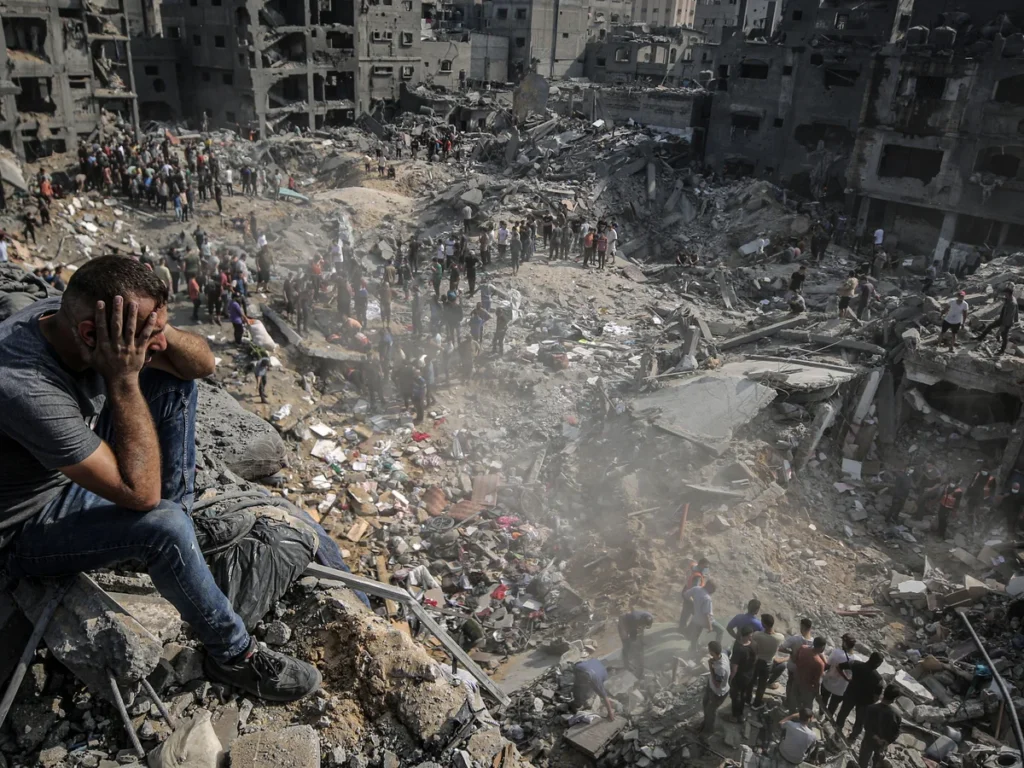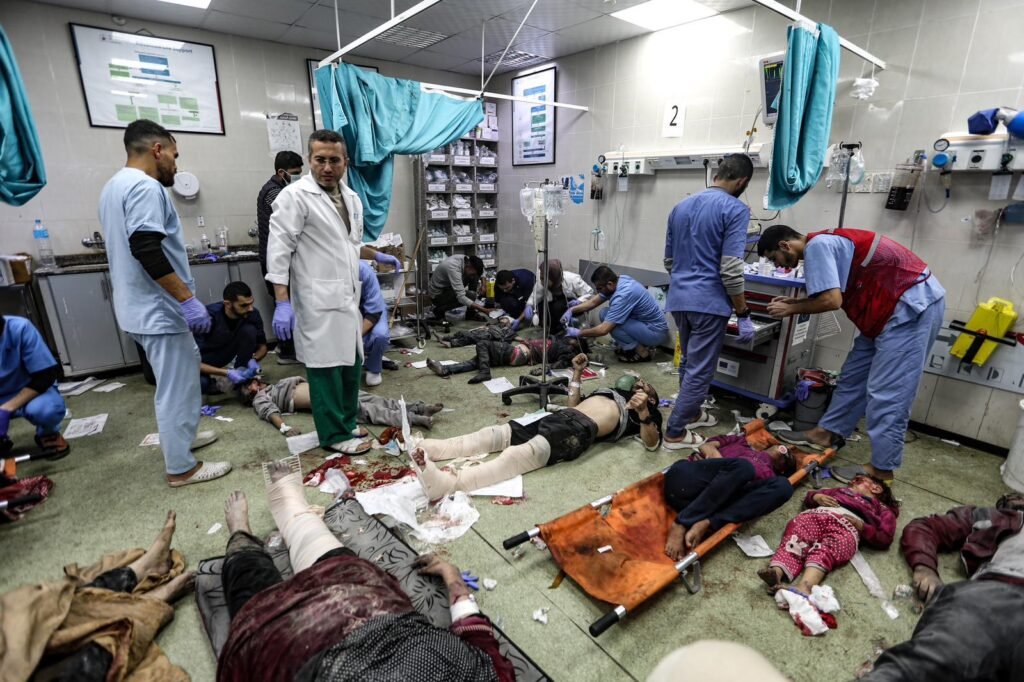
Gaza Herald – As the world debates diplomacy and ceasefire formulas, Gaza’s hospitals are fighting a far more immediate battle: survival itself.
The latest warning from the United Nations Office for the Coordination of Humanitarian Affairs confirms what Palestinian doctors, patients, and humanitarian workers have been saying for months: Gaza’s healthcare system is operating under catastrophic pressure. Hospitals are running without sufficient medicine, fuel, spare parts, or medical equipment, while thousands of wounded civilians continue arriving under relentless bombardment.
But reporting this as merely a “humanitarian crisis” risks concealing the political reality behind it. What is happening to Gaza’s health sector is not a natural disaster. It is the result of sustained Israeli genocide, blockade, and systematic deprivation imposed on a besieged civilian population.
Since October 2023, dozens of hospitals and medical centers across Gaza have been destroyed, damaged, or forced out of service. According to the United Nations and the World Health Organization, repeated attacks on healthcare facilities, ambulances, and medical infrastructure have pushed the system toward collapse. Doctors are now expected to perform surgeries without reliable electricity, intensive care units struggle to operate with limited fuel, and patients with chronic illnesses are left waiting for treatments that may never come.
Behind every statistic lies an unbearable human reality.
Cancer patients denied travel permits. Children waiting for surgeries unavailable inside Gaza. Families searching desperately for clean water while disease spreads through overcrowded shelters. Medical staff working for days without rest while hospitals overflow with the wounded. In many cases, survival itself has become dependent not on medical science, but on whether generators can continue running for another hour.
The destruction extends far beyond hospitals. Gaza’s water infrastructure has also been devastated, leaving most families dependent on trucked water deliveries that themselves rely on fuel and damaged machinery. Humanitarian agencies warn that these attacks may soon become impossible if spare parts and maintenance supplies remain blocked.
This creates a cycle of collapse: damaged water systems fuel disease outbreaks, disease outbreaks overwhelm hospitals, and hospitals themselves lack the resources to respond. The result is not only a healthcare emergency, but the gradual dismantling of the conditions necessary for civilian life.
What makes the situation even more alarming is the normalization of these conditions within international discourse. Warnings about “pressure,” “shortages,” and “operational challenges” often sanitize realities that would provoke global outrage elsewhere. A hospital functioning without medicine, electricity, anesthesia, or protection is not a functioning hospital. A healthcare system repeatedly bombed while denied resupply is not merely under strain, it is under Israeli attack.
The denial or delay of medical permits further deepens the crisis. According to the World Health Organization, more than one-third of requests by Gaza patients seeking treatment outside the Strip were rejected or left pending during the first months of this year. For critically ill patients, these bureaucratic barriers are often death sentences disguised as administrative procedures.
This reality raises urgent moral and legal questions for the international community.
International humanitarian law is explicit: hospitals, medical personnel, ambulances, and civilian infrastructure must be protected during war. Collective punishment and the obstruction of humanitarian relief are prohibited. Yet despite repeated documentation by UN agencies and humanitarian organizations, the destruction continues with little meaningful accountability.
The consequences will not disappear when the bombing stops.
A generation of children is growing up amid trauma, malnutrition, untreated illness, and collapsing sanitation systems. Medical education has been disrupted. Healthcare workers have been killed, displaced, or psychologically exhausted. Rebuilding physical infrastructure alone will not repair the long-term human devastation inflicted on Gaza’s society.
For Palestinians, the collapse of healthcare is not an isolated crisis separate from the wider war. It is part of a broader system of siege and collective deprivation that turns access to medicine, water, electricity, and movement into instruments of control.
And yet, despite everything, Gaza’s doctors, nurses, paramedics, and humanitarian workers continue operating under conditions that would break most healthcare systems in the world. They continue treating the wounded, comforting families, and preserving fragments of dignity amid destruction.
Their endurance should not become an excuse for international inaction.
Because resilience is not a substitute for justice. And humanitarian concern without political accountability only prolongs catastrophe.
The world now faces a simple moral test: whether Gaza’s collapsing hospitals will remain another headline briefly acknowledged and forgotten, or whether the deliberate destruction of civilian life will finally provoke consequences beyond statements of concern.