Gaza Herald- British-Israeli analyst Daniel Levy has warned that Israel’s actions in southern Gaza suggest a deliberate strategy to remove Palestinians from the territory forcibly.
In an interview with Al Jazeera, Levy, president of the U.S./Middle East Project, stated that humanitarian concerns do not drive Israel’s concentration of food aid distribution in the south of Gaza but instead form part of a broader plan to manipulate the region’s demographics.
GHF: Aid as a Tool of Displacement
“Those who believed the Gaza Humanitarian Foundation (GHF) was merely a cruel gesture underestimated its real purpose,” Levy said. “The way these aid centers are positioned reveals a calculated effort to corral Palestinians into the southernmost part of Gaza, an area that originally housed just 200,000 people.”
He emphasized that the area cannot realistically support Gaza’s entire population of 2 million, because “supporting them there is not the goal.”
Levy concluded that Israel aims to use Rafah as a stepping stone in a campaign of ethnic cleansing, systematically displacing as many Palestinians as possible from their homeland.
The Gaza Humanitarian Foundation (GHF) has faced strong criticism from United Nations agencies and international relief organizations.
According to the UN and numerous aid groups, there are already well-established mechanisms capable of delivering emergency assistance to Palestinians in Gaza. In contrast, the GHF is widely viewed as an unqualified, politically driven initiative lacking both the infrastructure and experience necessary to reach over two million people in desperate need.
Speaking at the UN Security Council, UN humanitarian chief Tom Fletcher condemned the GHF for narrowing aid to just one area of Gaza while ignoring severe humanitarian needs elsewhere. “It turns assistance into a political tool and makes hunger a weapon,” he said. “This is not a genuine relief effort. It’s a cynical diversion, a cover for more violence and forced displacement.”
Humanitarian Principles Undermined
Humanitarian leaders also argue that the GHF’s approach contradicts fundamental humanitarian principles.
In a public statement, the International Committee of the Red Cross (ICRC) expressed deep concern over the plan. “We fear the proposed mechanism won’t permit aid to be delivered according to the core values of neutrality, impartiality, and independence,” the ICRC said. “We cannot operate within any framework that undermines those values or limits how we conduct our mission.”
A joint declaration from 11 humanitarian and rights-based organizations firmly rejected the creation of the GHF. They described it as: “An initiative steered by Western military and security figures with close political ties, carried out in coordination with the Israeli government. All while Gaza remains under complete siege. The project excludes Palestinians entirely from both its planning and execution.”
This exclusion, combined with Israeli oversight and the military’s planned presence around aid delivery points, as confirmed by U.S. Ambassador to Israel Mike Huckabee, has intensified Palestinian fears. Many believe the GHF could further entrench Israeli control over the flow of humanitarian assistance in the Gaza Strip.
Aid as a Coercive Weapon
According to the United Nations, the Gaza Humanitarian Foundation risks turning aid into a tool of coercion, potentially triggering large-scale displacement.
Under the GHF plan, food and essential supplies would be distributed solely from southern and central Gaza. The UN has warned that this setup could compel Palestinians living in the north to move south in search of life-saving assistance, effectively forcing them to relocate.
The International Committee of the Red Cross underscored that humanitarian relief must remain neutral and apolitical. “Aid must never be militarized or politicized,” the ICRC declared. “Doing so undermines the core principle of impartiality, where assistance is provided based solely on human need, not political calculations.”
Critics within the aid community have also flagged the GHF’s model as grossly inadequate.
“The proposed aid volumes under this plan simply do not match the catastrophic level of need in Gaza,” the ICRC noted. “People are suffering on a massive scale. What’s urgently required is immediate, unrestricted access for humanitarian supplies.”
Currently, Gaza’s established aid network includes approximately 400 functioning distribution points, with local agencies well-equipped to manage large-scale delivery. By contrast, the GHF would rely on only a handful of heavily controlled sites, forcing civilians to travel long distances, often on foot, to collect limited supplies.
“The issue here isn’t a matter of logistics,” said a coalition of 11 aid and human rights groups. “It’s about deliberate starvation being used as a weapon.”
Humanitarian Groups and the UN Sound the Alarm
Multiple humanitarian organizations and UN agencies have raised alarm over Israel’s GHF initiative. While the Gaza Humanitarian Foundation is framed by Israeli authorities as a mechanism to deliver aid, critics argue that it functions as a tool of control.
The aid distribution hubs are heavily militarized and often require biometric scans or screening for access. Meanwhile, aid convoys to northern Gaza, where hundreds of thousands remain, have been systematically obstructed or bombed. This has fueled claims that humanitarian infrastructure is being weaponized to force population transfer under the guise of relief.
Hundreds Killed Near Aid Zones
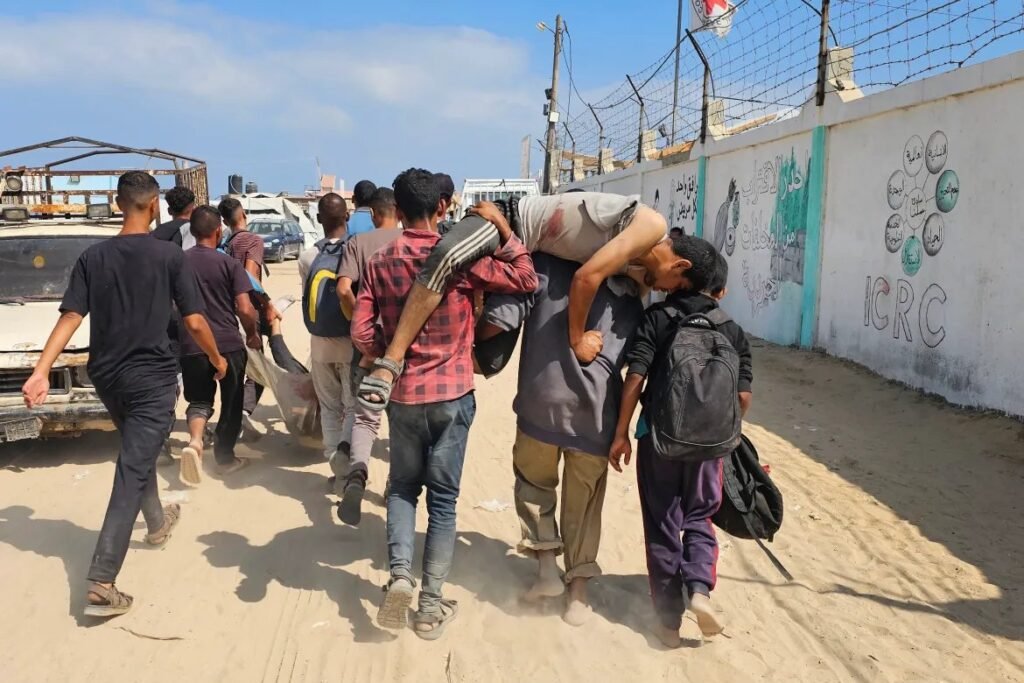
The Government Media Office in Gaza announced on Thursday that the number of Palestinian aid seekers killed by the Israeli army has risen to 773, with 5,101 injured and 41 missing.
In a statement, the office said that the Israeli military has been targeting starving civilians near the distribution centers of what it called the “American-Israeli aid” since the beginning of its operation on May 27, resulting in this heavy toll.
The number of victims targeted by the Israeli occupation near these so-called “death traps” has reached 773 martyrs, 5,101 wounded, and 41 missing, the statement read.
The office strongly condemned what it described as the ongoing crimes committed by the Israeli army against starving Palestinians.
It held Israel and the countries involved in the war, primarily the United States, the United Kingdom, France, and Germany, legally, morally, and historically responsible for participating in and supporting a campaign of genocide against civilians in the Gaza Strip.
The office called on the international community and all free nations to pressure Israel to open the crossings, lift the blockade, and allow the entry of humanitarian aid into Gaza before it is too late.
Rafah Overwhelmed: A City on the Brink
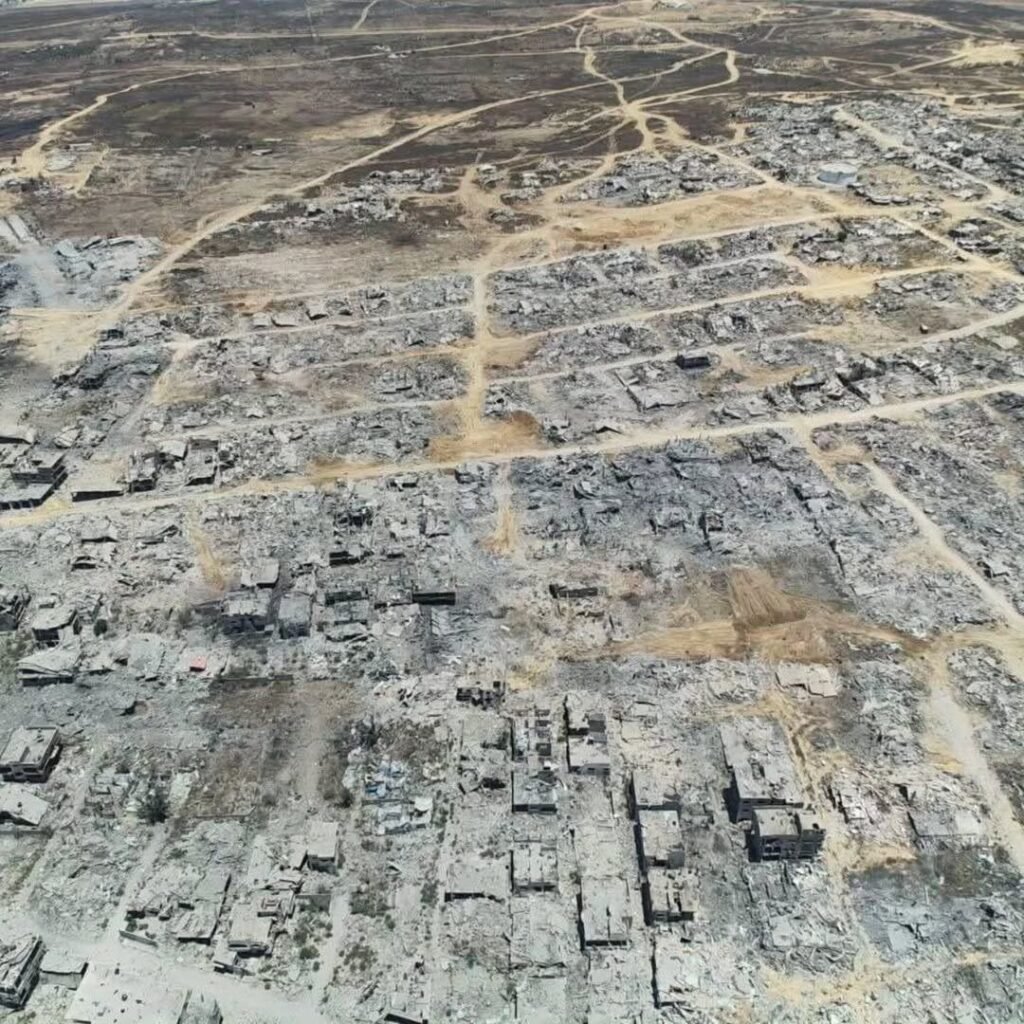
Satellite images and eyewitness accounts have confirmed the massive concentration of displaced Palestinians around Rafah, where tents and makeshift shelters have overwhelmed the limited space.
The city, which previously accommodated only 200,000 residents, now struggles under the weight of millions seeking refuge from relentless bombing campaigns in the north.
Basic services like water, sanitation, and healthcare are virtually nonexistent. Yet, international efforts to create humanitarian corridors or distribute aid more equitably across the Strip have been blocked or ignored by Israel.
Legal Experts Warn of War Crimes
Legal experts have warned that the intentional displacement of a population under armed conflict, particularly when linked to demographic manipulation or land seizure, constitutes a war crime under international law.
The Rome Statute of the International Criminal Court clearly defines “forcible transfer” as a prosecutable offense. Several international human rights organizations, including Amnesty International and Human Rights Watch, have begun gathering evidence that may support legal proceedings against Israeli officials involved in planning or executing these policies.
The growing body of evidence has strengthened calls for accountability and international intervention. For many Palestinians, what is unfolding in Rafah is not a humanitarian operation but a calculated strategy of erasure, one that seeks to redraw Gaza’s map by forcibly removing its people.
Levy’s warning echoes the fears of countless displaced families: that their suffering is not collateral damage but the intended outcome of a policy designed to empty Gaza of its native population.