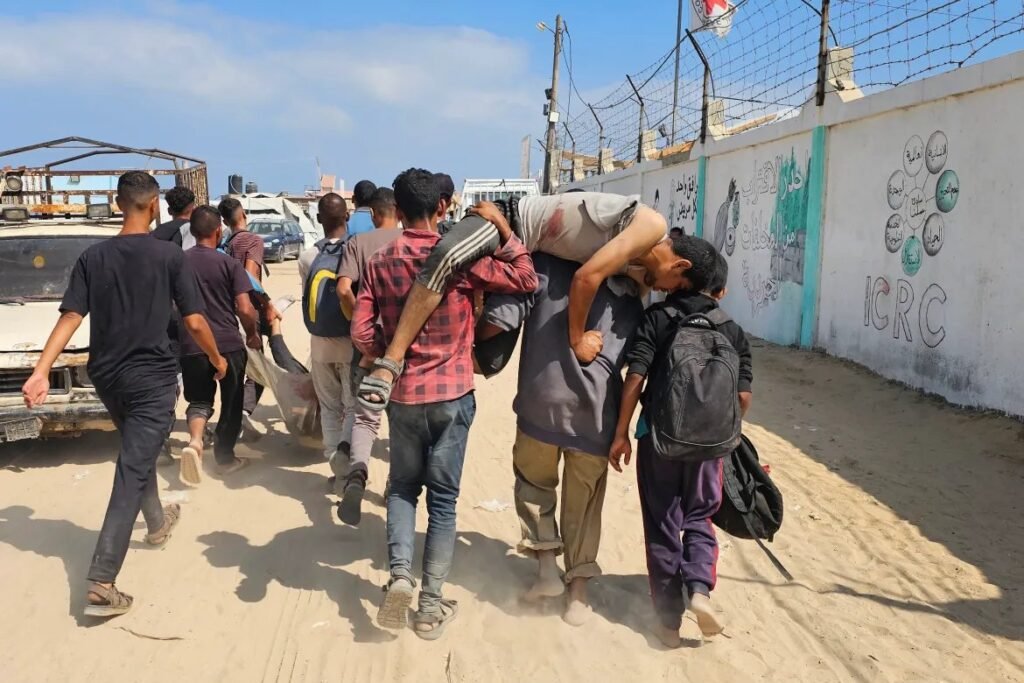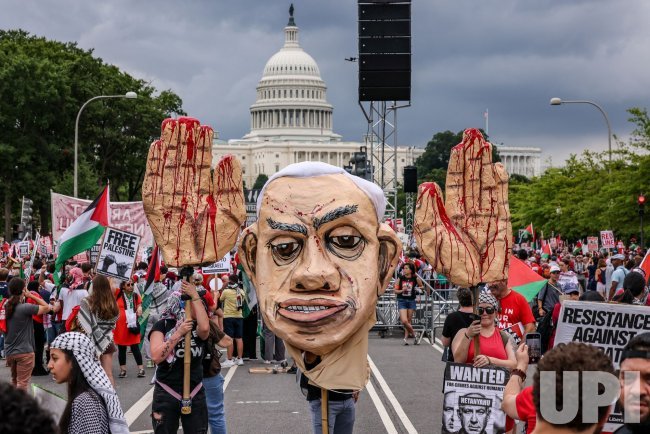
GAZA Herald- As the people of Gaza endure one of the most brutal and prolonged military assaults in recent history, new evidence sheds light on how political calculations in Tel Aviv may have directly fueled their suffering. Far from being a war waged purely for security or defense, credible findings suggest that Israeli Prime Minister Benjamin Netanyahu deliberately extended the war to serve his own political agenda, ignoring military advice, silencing dissent, and manipulating institutions, all while Gaza’s civilian population paid the heaviest price.
This report draws from an in-depth investigation by The New York Times, which conducted interviews with more than 100 officials across Israel, the United States, and the Arab world, and reviewed dozens of confidential records and documents. What emerges is a damning portrait of a leader who placed his political survival above the lives of thousands, including both Israeli soldiers and countless Palestinian civilians.
Warning Signs Ignored
One key revelation is that in July 2023, while Netanyahu was hospitalized, a senior Israeli general presented him with an alarming intelligence assessment. It warned that groups like Hamas had observed Israel’s internal divisions, especially the chaos sparked by Netanyahu’s controversial judicial overhaul, and were preparing to exploit the situation.
Despite the warnings, Netanyahu pushed forward with judicial changes, fueling further instability. The report suggests that this internal discord helped convince Hamas that the moment was ripe for a large-scale offensive, a decision that would erupt into war months later.
Manipulating Blame and Power
Following the 7 October Hamas attack, Netanyahu reportedly moved quickly to deflect blame and consolidate power. His close aides directed pro-government influencers to blame the military leadership for the intelligence failures, while working behind the scenes to suppress any damaging leaks.
Incredibly, Netanyahu’s team also prevented the Israeli army from recording official wartime meetings and even conducted surveillance sweeps on senior military officials, including then-Chief of Staff Herzi Halevi, in search of hidden listening devices.
Later, Netanyahu’s inner circle allegedly altered archival records of his first phone calls on the day of the attack and leaked sensitive material to foreign press outlets in an attempt to discredit critics, including families of hostages held in Gaza.
From Gaza to Tehran
At the war’s outset, Netanyahu appeared cautious, canceling a planned large-scale strike on Hezbollah and avoiding a direct confrontation with Iran. But nearly a year later, after a series of unexpected intelligence successes, including assassinations of senior Hezbollah figures, he shifted course.
The Israeli army, under Netanyahu’s orders, invaded Hezbollah’s southern Lebanon stronghold and destroyed a significant portion of its arsenal. Israel also managed to dismantle large sections of Iran’s air defense network.
With Tehran weakened, Netanyahu launched what has become the defining military operation of his career, a direct assault on Iran. The campaign was celebrated in Israel as a strategic victory, and polls show Netanyahu’s party gained more support than at any time since October 2023.
This investigation reinforces what many in the Arab world have long believed: that the devastation in Gaza is not only a consequence of Israeli military doctrine, but also of cold political maneuvering by a leader desperate to cling to power. As the rubble mounts and Palestinian lives continue to be shattered, Netanyahu’s calculated prolonging of the war lays bare the extent to which Palestinian suffering has been instrumentalized for domestic political gain. If justice is to be served, international accountability must extend beyond battlefield tactics and address the political decisions that made this war not only possible, but longer and bloodier than it ever needed to be.