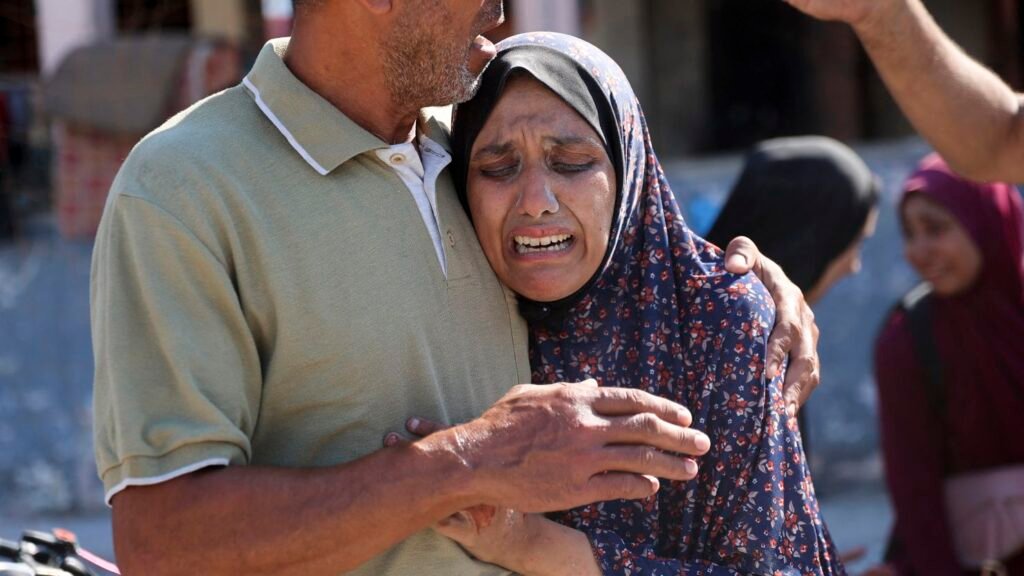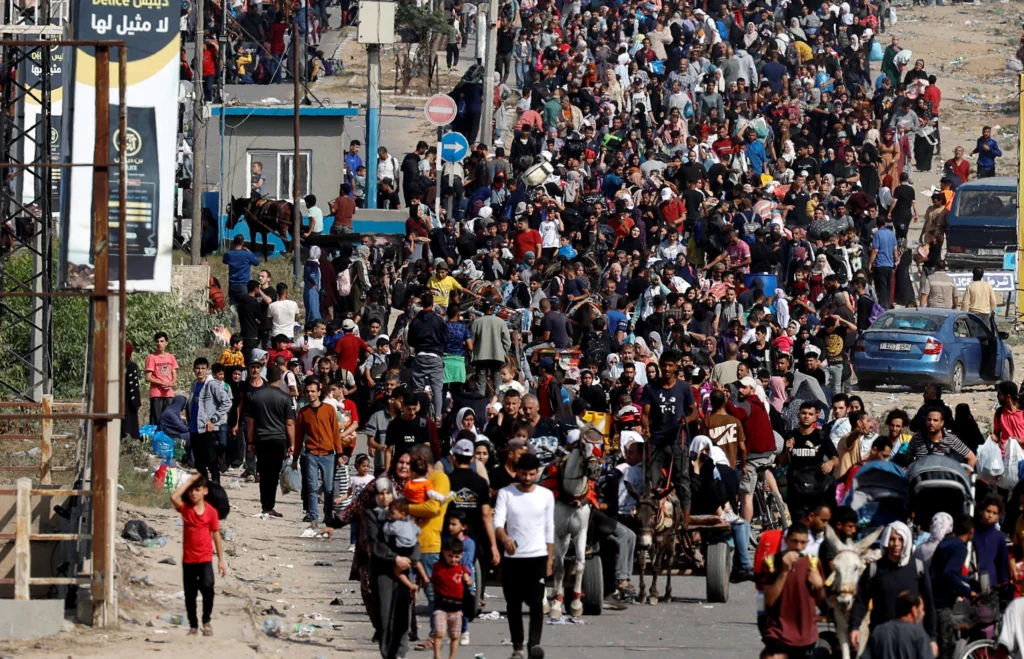
Gaza Herald – In a move that has drawn fierce international condemnation, Israeli Defense Minister Yisrael Katz has unveiled a deeply controversial plan to relocate hundreds of thousands of displaced Palestinians into a tightly controlled camp in the devastated city of Rafah. Branded by Israel as a “humanitarian city,” the proposed site is raising alarms among legal experts and human rights defenders, who warn it may constitute a crime against humanity and a dangerous step toward the forced depopulation of Gaza.
A Camp Under Military Control
In a closed briefing with Israeli media, Katz outlined a plan that would place the new encampment under direct control of the Israeli occupation army. Entry would be subject to strict military screening, but once inside, Palestinians would not be allowed to leave. The first phase aims to move around 600,000 Palestinians, mostly those already displaced to the Mawasi area, with broader intentions to gradually relocate Gaza’s entire civilian population.
Israeli newspaper Haaretz reported that Katz confirmed the existence of a wider “displacement plan,” a statement that has heightened fears among observers of an orchestrated population transfer. According to The Guardian, the proposal could mark the beginning of a large-scale demographic engineering effort.
Israeli human rights lawyer Michael Sfard did not mince words, calling the initiative “a crime against humanity.” Sfard explained that forcibly moving a population within or out of an occupied territory during armed conflict is a grave violation of international law. “These people are not leaving freely,” he said. “Under duress, displacement becomes not only illegal—it becomes a war crime.”
Political Timing and Global Repercussions
The announcement comes as Israeli Prime Minister Benjamin Netanyahu visits Washington for high-level talks with U.S. President Donald Trump, amid ongoing efforts to reach a ceasefire in Gaza’s 21-month-long war. Katz suggested that construction on the encampment could begin during any temporary truce, while Netanyahu has reportedly been in contact with third countries to explore the possibility of accepting Palestinian refugees.
Despite Israeli claims that any departure would be voluntary, Netanyahu’s remarks at the White House—where he stated that Palestinians “choose” to leave—have fueled controversy. Human rights organizations argue that no such choice exists under siege, hunger, and daily bombardment.
The plan is also gaining traction within the far-right segments of the Israeli government. Finance Minister Bezalel Smotrich has expressed support for reestablishing Israeli settlements in Gaza, and according to Reuters, the Israeli government has discussed with the Trump administration the possibility of creating “humanitarian transit zones” both inside and outside Gaza—a sign that the encampment may not be temporary after all.
A Warning Sign for Gaza’s Future
Legal scholars and humanitarian organizations alike view the Rafah encampment plan as a watershed moment—one that could redefine the future of Gaza and challenge the international community’s resolve. Critics say it paves the way for mass displacement under the guise of security and aid, risking the transformation of Gaza’s humanitarian crisis into a long-term demographic reshaping.
Whether the world will act in time to prevent what some have termed “an engineered exodus” remains to be seen. For now, the residents of Gaza are left facing not only bombs and starvation, but the looming threat of being permanently pushed from their homeland.