Gaza Herald – The Palestinian Journalists Syndicate (PJS) has documented a sharp escalation in Israeli violations against Palestinian journalists during June, recording 89 violations targeting journalists, media workers, and journalism students amid continued attacks on press freedom.
According to a report released Tuesday by the Syndicate’s Freedom Committee, the documented violations included killings, injuries, detentions, obstruction of media coverage, attacks on media property, physical assaults, and theft.
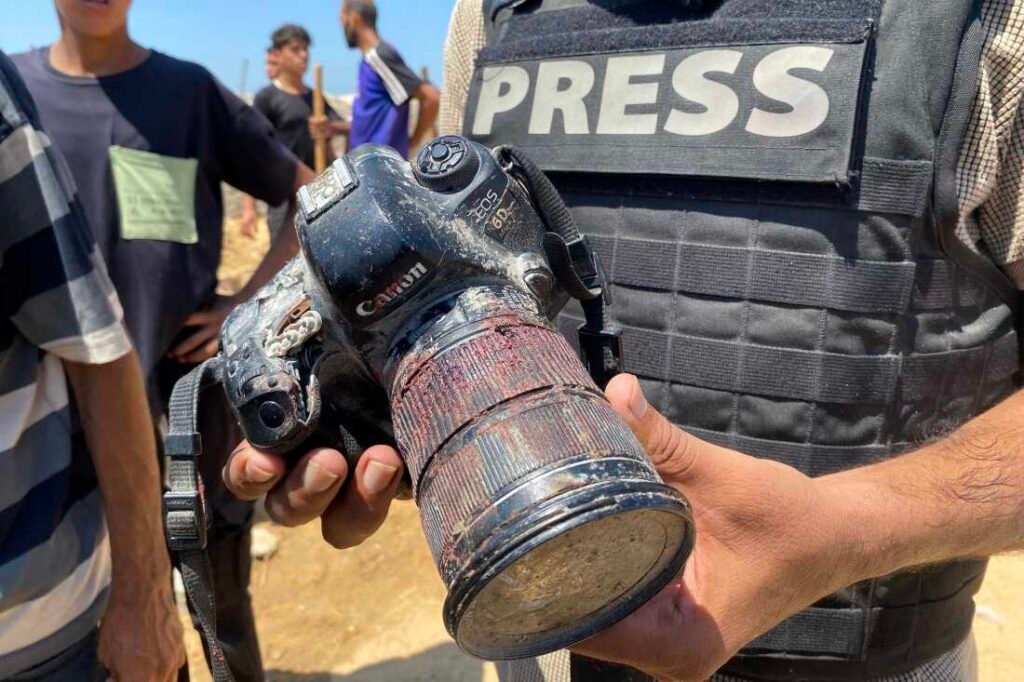
The report highlighted the killing of Al Jazeera Mubasher cameraman Ahmed Washah, who was killed when an Israeli strike targeted his family home in Al-Bureij refugee camp. It also documented journalists being wounded by live ammunition and tear gas, as well as repeated cases of suffocation while covering events on the ground.
The Syndicate said Israel was responsible for the overwhelming majority of the documented violations. Preventing media coverage was the most frequently recorded violation, with 36 separate incidents involving various methods aimed at obstructing journalists from carrying out their work.
The report also documented multiple cases in which journalists were detained during or after reporting assignments. These incidents involved searches, the confiscation of vehicles or vehicle keys, and the prevention of reporters from completing their coverage, indicating that detention is being used as a tool to disrupt journalistic work.
Additionally, the Syndicate recorded the arrest of three journalists, two women and one man, as well as a journalism student. Kidnappings took place both during field reporting and in home raids, with detention extended in some cases.
According to the report, violations intensified significantly during the second half of June, particularly between June 15 and June 29, when more than half of the documented incidents occurred, reflecting an escalation alongside intensified Israeli military operations and settlement-related activities.
The Syndicate concluded that the vast majority of the violations occurred while journalists were actively performing their professional duties, underscoring the direct targeting of media coverage rather than journalists being incidentally caught in wars.