Gaza Herald _For the past 1,000 days, Gaza has been without a reliable electricity supply. What was once considered a service disruption has evolved into a humanitarian crisis, making daily life increasingly unbearable as soaring summer temperatures intensify hardships for Gaza residents.
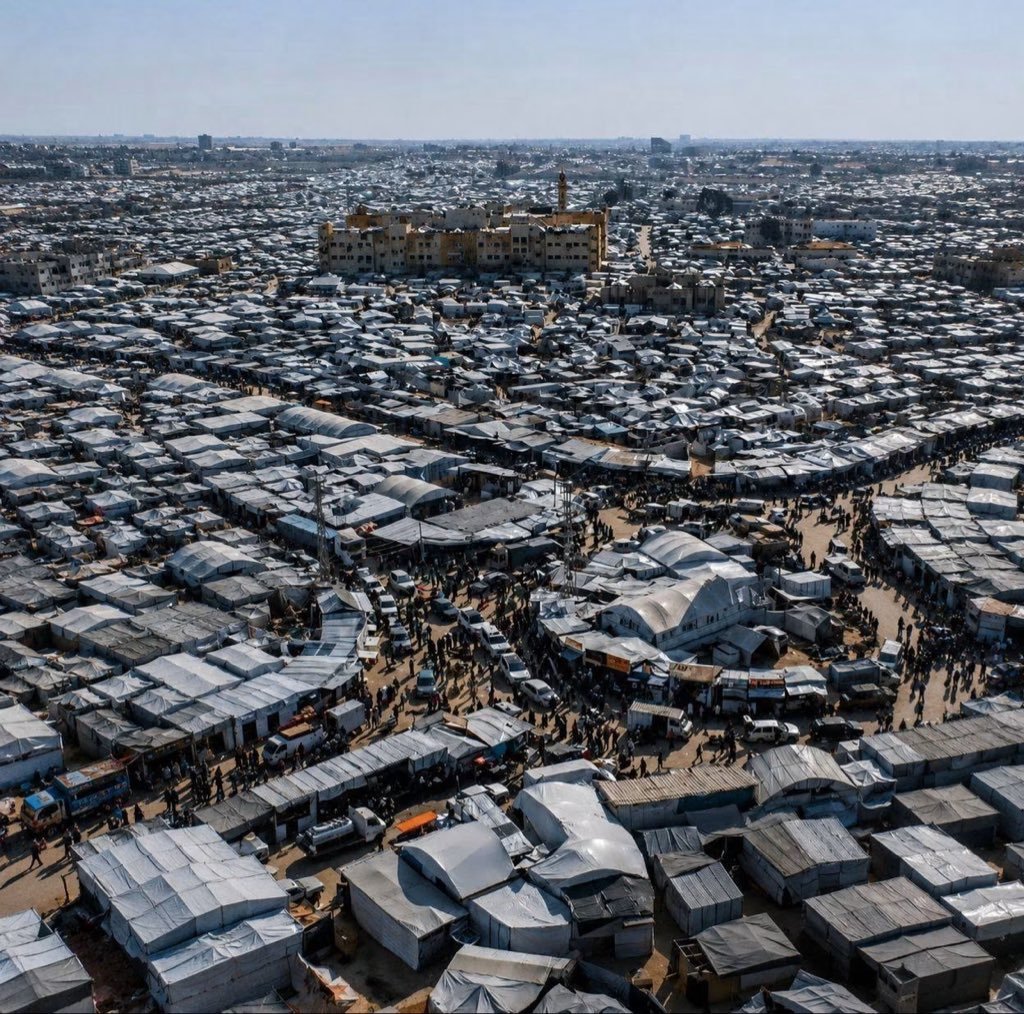
Families already displaced by the war now find themselves trapped inside sweltering tents during the day and surrounded by complete darkness at night. Access to electricity has become a luxury that few can afford, turning even the most basic tasks into daily challenges.
Costly Alternatives Leave Many Behind
As the power outage continues, many Palestinians have turned to generators and solar panels in an attempt to restore limited access to electricity. But for most families, those alternatives remain financially out of reach.
Private generators require expensive fuel, while solar energy systems cost far more than many households, already stripped of their livelihoods by the war, can afford.
Umm Ibrahim, a displaced resident in Gaza City, said even a few hours of electricity now consume a significant portion of her family’s income. She explained that electricity generated through private generators costs about 35 shekels per kilowatt, a price she says most families cannot sustain.
“Charging our phones or running a fan requires careful planning and long waits,” she said. “Electricity is no longer a convenience; it has become essential for survival.”
Tents Turn Into Ovens
In the al-Mawasi displacement area west of Khan Younis, Alaa Abu Shammala lives in a tent with no cooling system. During the hottest hours of the day, he moves from one patch of shade to another as the tent becomes unbearably hot.
He said no generator networks are serving the area, leaving solar power as the only alternative. However, the high cost means many displaced families remain without access to electricity.
“The heat inside the tent is unbearable,” he said. “It feels like we’re trapped inside a room that’s on fire, with no way to cool it down.”
Power Shortages Threaten Livelihoods
The electricity crisis has also taken a heavy toll on workers whose livelihoods depend on powered equipment.
Abu Shammala, who works as a barber, said his biggest concern is keeping his electric hair clippers charged. Battery-operated clippers have become both scarce and prohibitively expensive, with prices rising from about 100 shekels before the war to nearly 3,000 shekels today.
“If my clippers stop working or the battery runs out, I can’t work,” he said. “That means losing my only source of income.”
Darkness Engulfs Displacement Camps
When the sun sets, Gaza’s displacement camps are plunged into complete darkness. With no public lighting, residents rely almost entirely on mobile phone flashlights to move through narrow pathways between tents.
Samer al-Attar, who lives in a displacement camp in Gaza City, said nighttime has become especially dangerous for children and older adults.
“We use our phone lights to get around,” he said. “But once the battery dies, we can’t see anything. Even taking children to the bathrooms at night requires someone to accompany them because of the darkness, stray dogs, and rodents.”
A Basic Necessity Turned Into a Distant Dream
Al-Attar said he lost his job after the factory where he worked shut down during the war. Installing a solar energy system is no longer an option, he explained, as the cost of solar panels and batteries has risen beyond the reach of families who have already lost their incomes.
Between the relentless summer heat and nights consumed by darkness, Gaza’s residents continue to endure life without electricity. Simple tasks, charging a phone, running a fan, or lighting a tent, have become daily struggles, adding yet another layer to the hardships imposed by nearly three years of war.