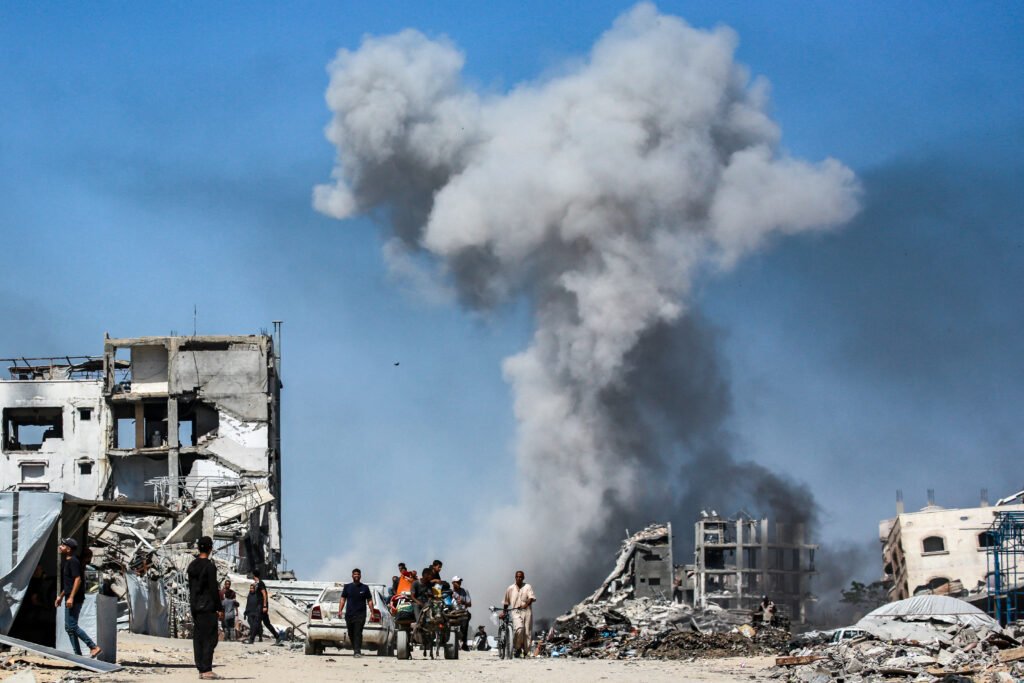
GAZA- In Gaza, where every day is a battle to survive, the culture of resistance has taken on many forms. While the world counts the dead and the wounded, Palestinians are painfully aware of what else is lost: dreams, aspirations, art, and hope. Genocide does not merely claim bodies; it extinguishes futures.
On October 18, 2023, one of Gaza’s brightest artistic voices, Mahasen al-Khateeb, was killed in an Israeli airstrike in Jabalia. The strike not only ended her life but also buried her vibrant illustrations, unfinished projects, and unfulfilled dreams. Her death serves as a haunting symbol of the thousands of lives and stories erased by the ongoing Israeli onslaught. Mahasen had become a beacon for many through her emotive and culturally rich art, portraying life, resistance, and resilience in Gaza.
Her impact extended beyond Gaza’s borders. For one admirer, her art rekindled a long-dormant dream to publish a collection of poems. Inspired by Mahasen’s work, this admirer envisioned a collaboration where her verses would be brought to life through Mahasen’s illustrations. That hope, like so many in Gaza, was extinguished before it could take form.
Mahasen was not alone. She is one of tens of Palestinian artists, journalists, and creatives killed in Israel’s campaign against Gaza. In erasing these voices, the bombardments also erase the stories, the songs, the poems, and the pictures that constitute Gaza’s cultural soul. More than 45,000 Palestinians have been killed since the beginning of this genocidal war. Behind each of these numbers is a dream cut short – a wedding postponed, a school year ended, a canvas left blank.
And yet, amid this despair, the people of Gaza continue to resist. They resist through remembrance, through storytelling, and through the very act of dreaming. Each poem written, each story told, each sketch drawn becomes a form of defiance. It is a refusal to let violence define their identity.
Gaza’s culture of resistance is not just about fighting back with weapons. It is the art of surviving against all odds. It is children scribbling in notebooks, mothers sharing bedtime stories amid bombings, artists documenting life amid death, and communities singing in shelters. It is the commitment to remember not just those who have fallen, but what they stood for.
What frightens the oppressor is not only the resilience of the people but their relentless hope. The dreams of Gaza’s people are not grand revolutions, but simple desires: to study, to marry, to paint, to grow old. Yet these aspirations challenge the status quo in their very insistence on life.
The story of Mahasen al-Khateeb is not just a tale of loss, but a testament to Gaza’s enduring spirit. Her death is a wound, but her art remains a whisper of resistance. It urges the living to carry forward the dreams of the martyred. It reminds us that even as genocide attempts to erase a people, it cannot silence the rhythm of their hearts, the creativity of their minds, or the courage of their dreams.
In Gaza, life is fragmented. Plans are made not in years or months, but in moments. But within those moments, there is love, there is art, and there is a steadfast refusal to surrender to darkness. The culture of resistance in Gaza is alive – not in monuments or museums, but in the hearts of those who keep dreaming, writing, drawing, and daring to imagine a liberated future.
As one poem closes and another begins, Gaza continues to speak – even through the silence of its rubble.