Gaza Herald – Arabian Business highlighted the initiative of Japanese national Maki Yamamoto, who seeks to enhance mutual understanding between Japan and Palestine through the art of Palestinian embroidery. Her project merges Japanese and Palestinian craftsmanship in fashion designs.
Yamamoto learned embroidery directly from Palestinian women after visiting the region multiple times. She also addressed Palestinian embroidery production under Israeli occupation in her doctoral dissertation. Initially, she knew little about Palestine beyond its reputation as a conflict zone in Japan.
Her perspective shifted during volunteer work at the Palestinian Embassy in Tokyo. She visited Palestine for the first time in 2013, touring Ramallah, Bethlehem, Nablus, Jericho, and Jerusalem. These trips exposed her to daily Palestinian life and the impact of occupation alongside Arab culture.
She explained that Palestinian embroidery carries social and historical significance rather than serving merely as a craft or fashion pattern. Historically, patterns and colors indicated a woman’s marital status, social standing, and specific village or region of origin.
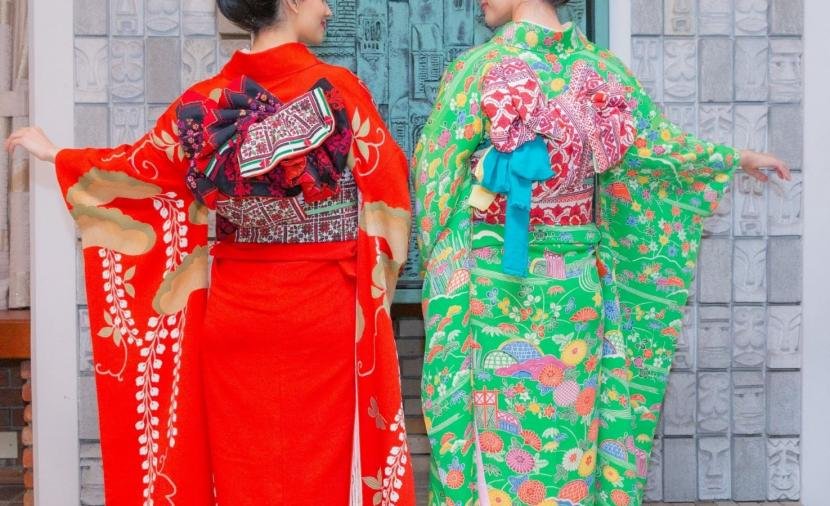
Since 2014, Yamamoto has collaborated with Palestinian female artisans, some located in refugee camps in the West Bank and Gaza Strip. The project incorporates Palestinian embroidery onto traditional belts worn with Japanese kimonos.
The belts are crafted from Syrian cotton and Japanese silk. Producing each item requires months of meticulous labor before shipping them back to Japan. The process demands high precision and sustained dedication from the artisans involved.
Yamamoto noted that the war on Gaza has complicated production efforts. Work in the Gaza Strip has currently ceased due to the ongoing conflict. Despite these challenges, she continues to display the belts at conferences, exhibitions, and Japanese fashion shows.
These events aim to support Palestinian artisans and introduce the Japanese public to Palestinian heritage. She uses these platforms to maintain visibility for the craft despite logistical hurdles caused by the regional instability.
Yamamoto emphasized that her objective extends beyond discussing the political conflict. She aims to introduce the world to the richness of Palestinian culture and respect the people who have preserved this art form across generations.
Her work serves as a bridge connecting two distinct cultural traditions through textile arts. By integrating Palestinian motifs into Japanese attire, she highlights shared values of craftsmanship and cultural preservation.
The initiative underscores the resilience of Palestinian artisans who continue their work amidst difficult circumstances. It also demonstrates how fashion can serve as a medium for diplomatic and cultural dialogue.
Through her designs, Yamamoto brings attention to the intricate details of Palestinian heritage. The project reflects a commitment to honoring artistic traditions while fostering cross-cultural appreciation and understanding globally.
This report was produced in the Gaza Herald newsroom.