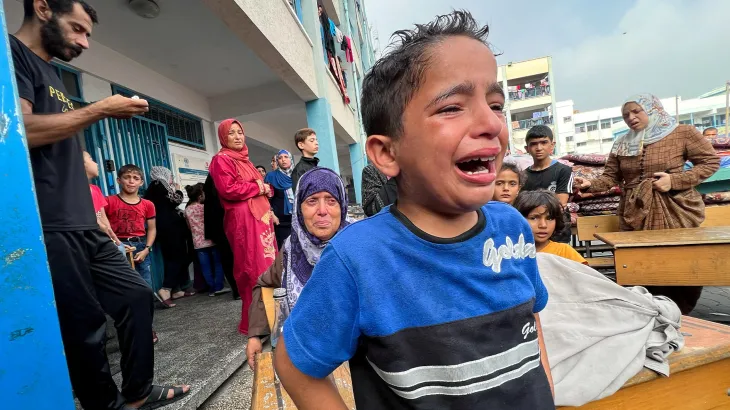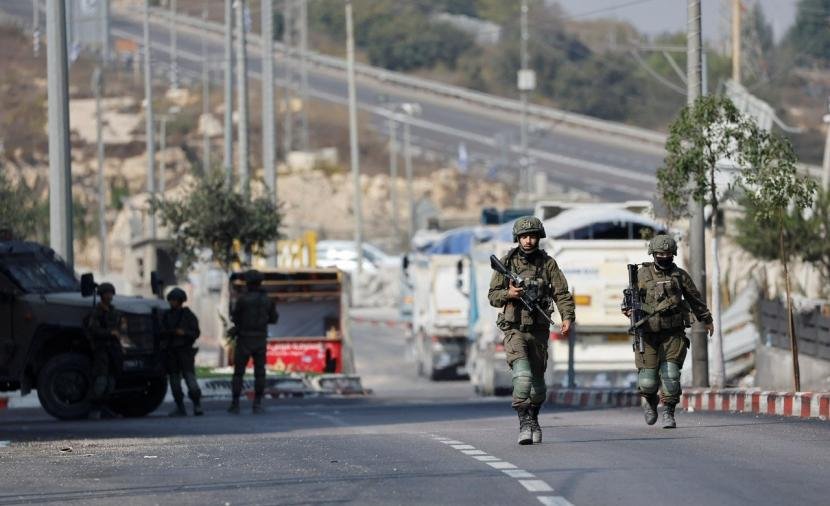
Gaza Herald – Hebon Governor Khalid Doudin reported that 537 families comprising 3361 individuals have been displaced due to ongoing Israeli military operations. The displacement affects children, pregnant women, the elderly, and patients who face difficulties accessing basic services.
Doudin stated during a press conference at the governorate office that the targeted area spans approximately 3.5 square kilometers and originally housed around 615 families. He emphasized that the siege has severely restricted movement and access to healthcare for those remaining in the zones.
Educational disruptions were also highlighted, with Doudin noting that schooling was suspended for roughly 262 thousand students across 589 schools in the province last week. Thousands of students in besieged or displaced areas remain unable to reach their classrooms.
Yousef Al-Jabari, Mayor of Hebron Municipality, confirmed that emergency plans were activated immediately. The municipality is providing free electricity and ensuring water supply to affected homes while coordinating international outreach to over 600 municipalities worldwide to document the situation.
Sufyan Al-Muhtasib, head of the support committee, detailed the demographic breakdown of the displaced, including 232 infants, 1193 children aged two to seventeen, 326 elderly persons, 147 pregnant or nursing women, 32 disabled individuals, and 213 chronic patients.
The committee distributed 755 food packages, 501 mattresses, 378 pillows, 650 loaves of bread, and various other aid items valued at over 15 thousand shekels. They are also preparing legal actions against occupation practices following consultations with local and international rights bodies.
Adnan Al-Natsha, deputy head of the Chamber of Commerce, warned that direct economic losses from closures range between 10 and 12 million shekels daily. This includes approximately one million shekels lost solely in the milk sector, with hundreds of industrial and commercial establishments at risk.
Thirteen facilities in the Frash Al-Hawa area have faced destruction or demolition. Al-Natsha cautioned that restrictions on worker and goods movement threaten production chains across Palestinian governorates.
Ahmad Al-Qassimi, head of the Businessmen’s Forum, announced efforts to identify vacant homes for alternative housing if the siege persists. He praised community initiatives and affirmed the readiness of private sector institutions to provide further support based on committee needs.
Amjad Al-Qasrawi, secretary of Fatah’s Central Hebron region, condemned the measures as collective punishment and forced displacement. He warned against targeting the Old City and areas near the Ibrahimi Mosque and settlements.
Participants concluded by stressing continued coordination among the governorate, municipality, and relief committees to secure needs for displaced and besieged families while pursuing international legal advocacy.
This report was produced in the Gaza Herald newsroom.