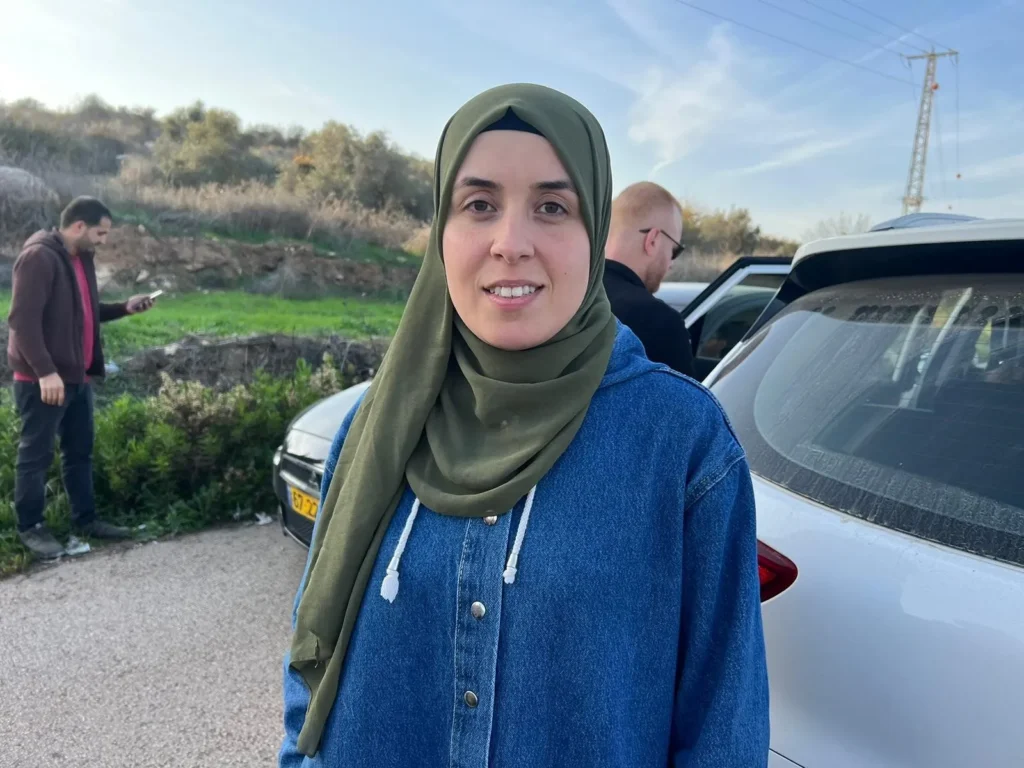
Gaza Herald – Palestinian journalist Shurooq Al-Tal, 33, is enduring harsh detention conditions following transfers between three prisons and prolonged solitary confinement. Her family and prisoner rights organizations accuse the occupation forces of targeting her for retaliation linked to her family ties.
Al-Tal is currently held at Oholei Tzedek prison in Beersheba, where her cell is under constant camera surveillance. According to her family and lawyer, she has been deprived of basic necessities and medical care, marking a significant deterioration in her detention environment.
Her mother, Munta Al-Tal, described the measures as pure revenge without justification. She emphasized that the administrative detention order, renewed for an additional four months without formal charges, reinforces the belief that these actions are deliberately aimed at punishing her daughter.
The incident began on February 5 when Al-Tal received a call from an intelligence officer requesting an interview at the Salm or Hawara military camps near Jenin and Nablus respectively. This was unusual for residents of Ramallah, who are typically summoned to Ofer camp.
When Al-Tal asked if the summons would lead to arrest, the officer stated there were no charges against her. However, during her travel to Salm camp, she received another call postponing the meeting, leading to a verbal altercation. She subsequently refused to attend.
On her return journey, soldiers stopped her at Ein Sinia checkpoint near Ramallah and took her to Muskobiya prison in Jerusalem. This marked the start of a period involving repeated transfers and isolation.
Al-Tal was moved between Muskobiya, Damioun, and Nofei Tarzia prisons before reaching Oholei Tzedek. During her stay at Damioun, she spent 14 days in solitary confinement alongside two other prisoners, allegedly due to their relatives’ leadership roles.
On August 23, she was suddenly transferred to isolation at Nofei Tarzia in Ramle hours after a lawyer visit at Damioun. Lawyers were denied access citing frequent transfers. On October 4, documents indicated a return to Damioun, but she was moved the next day to Oholei Tzedek, a facility designated for Israeli criminal inmates.
Following legal efforts, her lawyer visited her on October 14, reporting conditions after nearly 50 days of continuous isolation. The report details beatings with iron shackles causing bruises, verbal abuse, and tear gas sprayed inside her cell, resulting in significant weight loss.
Her family reports severe deprivation including food shortages, drinking discolored tap water, lack of clean clothes, and sleeping on poor bedding. Concerns are heightened regarding her previous scabies condition and lack of necessary medical treatment.
Amani Sarahna, Documentation Director at the Palestinian Prisoners Club, characterized the treatment as unprecedented targeting and a cruel experience driven by familial revenge. She noted that Al-Tal and children of Palestinian leaders, including her father prisoner Jamal Al-Tal, are targeted due to family affiliation.
Sarahna highlighted that Al-Tal’s statements to lawyers touch upon her father’s case, who also faces repeated administrative detention. She expressed concern over the transfer to a facility for Israeli criminals, noting that complicated visit procedures increase isolation and safety risks.
The club stated that isolation policies against female prisoners have tripled since the war began. Mechanisms include targeting specific cells during raids and arbitrarily transferring prisoners to isolation without explanation, cutting off external contact and imposing psychological pressure.
Amidst administrative renewals, frequent transfers, and long-term isolation, fears persist regarding Al-Tal’s physical and mental health. Her family and prisoner organizations continue to demand guaranteed legal and humanitarian rights and unrestricted lawyer access.
This report was produced in the Gaza Herald newsroom.