Gaza Herald— New assessments compiled by United Nations agencies and international partners paint a devastating picture of Gaza, where the destruction of essential infrastructure has reached unprecedented levels while humanitarian conditions continue to deteriorate.
Assessments by the United Nations Office for the Coordination of Humanitarian Affairs (OCHA), in coordination with the World Health Organization (WHO), UNICEF, and the World Bank, document extensive damage to housing, health services, water and sanitation systems, food production, transportation networks, education, and other foundations of civilian life.
The findings point to a crisis that extends far beyond individual damaged buildings. Gaza’s basic infrastructure has been systematically weakened across virtually every sector, leaving millions of people increasingly dependent on humanitarian assistance for shelter, water, food, health care, and protection.
Near-Total Destruction of Infrastructure and Shelter
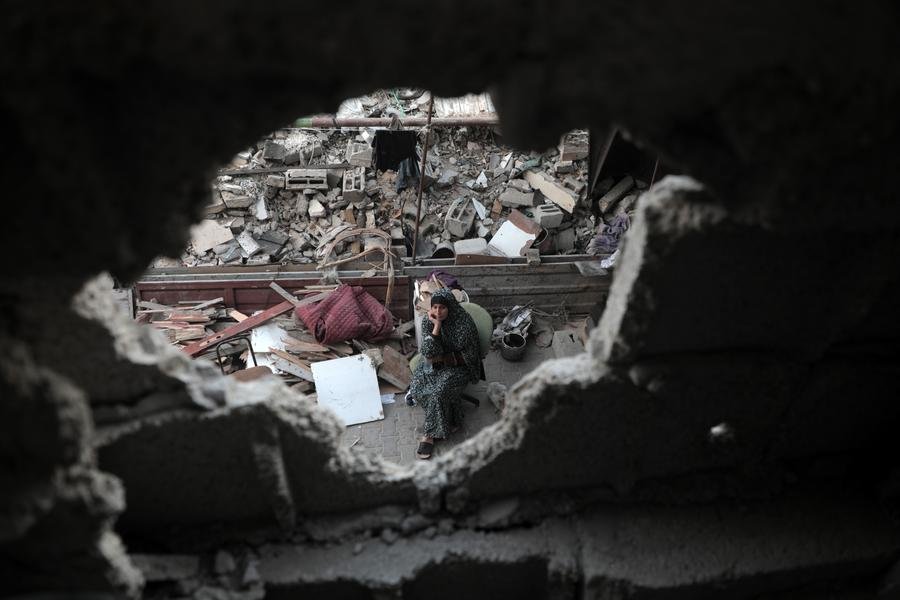
Satellite imagery and field assessments conducted by UNOSAT indicate that approximately 82 percent of all structures across the Gaza Strip have been damaged or destroyed.
The destruction has affected virtually every component of the territory’s civilian infrastructure. Approximately 92 percent of assessed commercial and industrial facilities have been damaged or destroyed, while around 90 percent of energy infrastructure, including the main electricity distribution network, has been destroyed.
The water and sanitation system has suffered similarly extensive damage. Approximately 88 percent of above-ground WASH assets and 76 percent of underground WASH infrastructure have been damaged, further undermining access to safe water and sanitation.
Gaza’s transportation and cultural infrastructure has also been devastated. Approximately 74 percent of the road network has been destroyed, with another 13 percent damaged, while 76 percent of documented cultural and heritage sites have sustained damage.
The housing crisis has left millions without adequate shelter. Approximately 1.98 million people, around 94 percent of Gaza’s population, require immediate shelter and non-food assistance. An estimated 1.2 million people are living under Critical or catastrophic shelter conditions.
Around 65 percent of households are currently living in tents or other temporary shelters, more than half of which are considered to be in poor or very poor condition.
Overall, approximately 76.6 percent of Gaza’s housing stock has been affected, representing 371,888 of the territory’s 485,361 housing units.
Aid Workers and Essential Personnel Among the Dead
The humanitarian crisis has also exacted an extraordinary toll on the people attempting to sustain essential services.
At least 596 humanitarian aid workers have reportedly been killed, including 407 men and 189 women. The total includes 402 UN and UN-contracted personnel, 393 of them serving with UNRWA, as well as 135 NGO and international NGO staff, 55 Palestinian Red Crescent Society personnel, and four International Committee of the Red Cross staff members.
The losses extend across other essential professions. More than 1,700 health workers, 262 journalists, and 145 Civil Defence personnel have also been killed.
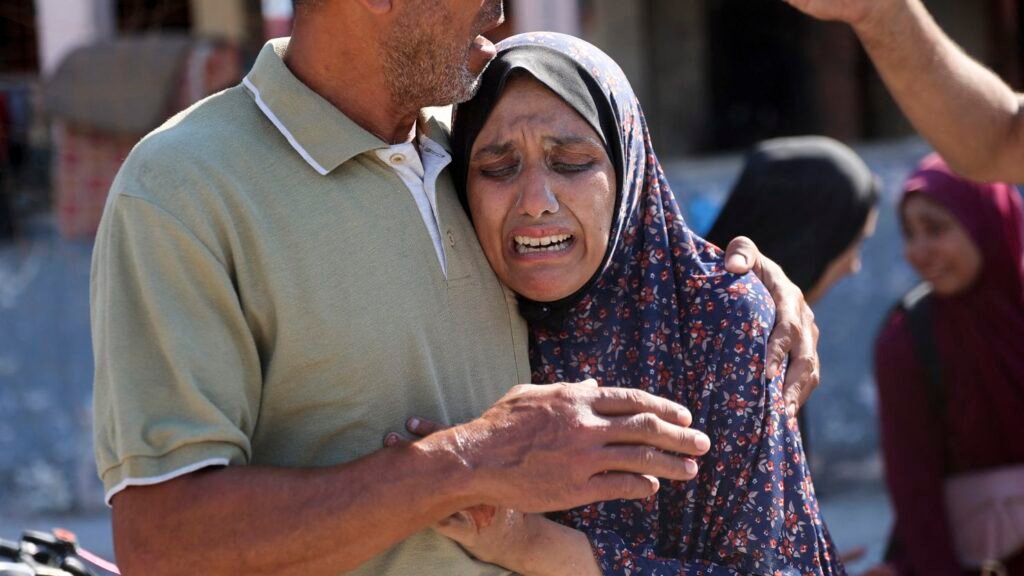
Children have borne another devastating consequence of the conflict. More than 58,000 children have reportedly lost one or both parents.
With more than one million children among Gaza’s population, virtually the entire population is estimated to require some form of protection and mental health support, reflecting the scale of psychological trauma produced by prolonged conflict, displacement, bereavement, and deprivation.
Food, Water and Public Health Conditions Continue to Deteriorate
The destruction of infrastructure has directly compounded the crisis in food security and basic living conditions.
More than 1.4 million people, approximately 67 percent of the population, are facing Crisis-level or worse acute food insecurity.
Agricultural production has also been severely constrained. Only around 3 percent of Gaza’s cropland and 16.6 percent of greenhouse areas reportedly remain both undamaged and accessible, sharply reducing the territory’s capacity to produce food locally.
The collapse of conventional energy supplies has forced families toward increasingly dangerous alternatives. Approximately 78 percent of households reportedly rely on burning waste for cooking fuel.
Water insecurity is similarly widespread. Around 90 percent of households experience moderate to high levels of water insecurity, while 37 percent survive on less than the absolute humanitarian minimum of 15 liters of water per person per day.
The deterioration of sanitation has created additional public-health risks. Skin diseases have reportedly been documented in 65 percent of surveyed households amid overflowing sewage and accumulating waste.
Education: Another Generation Shut Out
The destruction of Gaza’s educational infrastructure has left hundreds of thousands of children without conventional schooling.
Approximately 637,475 school-aged children remain completely excluded from formal, in-person education, while 93 percent of school buildings reportedly require either major rehabilitation or complete reconstruction.
The consequences extend beyond lost school days. Prolonged exclusion from education threatens children’s academic development, social development, and long-term prospects, adding another layer to the crisis facing Gaza’s younger generation.
The scale of educational destruction also mirrors the broader collapse of civilian infrastructure: schools, universities, water systems, hospitals, roads and homes have all been affected, making the restoration of education inseparable from the wider reconstruction of Gaza.
Humanitarian Access Remains a Critical Bottleneck
Even as humanitarian needs continue to expand, aid organizations face significant restrictions in reaching civilians.
Of 151 planned humanitarian missions requiring coordination with the relevant authorities, 91 were facilitated, 40 were impeded, four were denied outright, and 16 were forced to withdraw because of operational or security hazards.
The figures underscore a central contradiction in Gaza’s humanitarian crisis: needs continue to rise as the infrastructure required to meet those needs collapses, while humanitarian organizations remain constrained in their ability to deliver assistance.
Humanitarian agencies continue to call for unrestricted and sustained access to Gaza, alongside emergency funding to prevent further loss of life and maintain essential services for the civilian population.
The latest assessments ultimately reveal a crisis that can no longer be measured simply by the number of destroyed buildings. The destruction of homes, schools, hospitals, water systems, roads, agricultural land and energy infrastructure has simultaneously dismantled the systems that allow civilian life to function.
For Gaza’s population, reconstruction therefore means more than rebuilding physical structures. It means restoring the basic conditions required for people to live, access health care, obtain food and water, educate their children, and rebuild their lives after years of devastation.