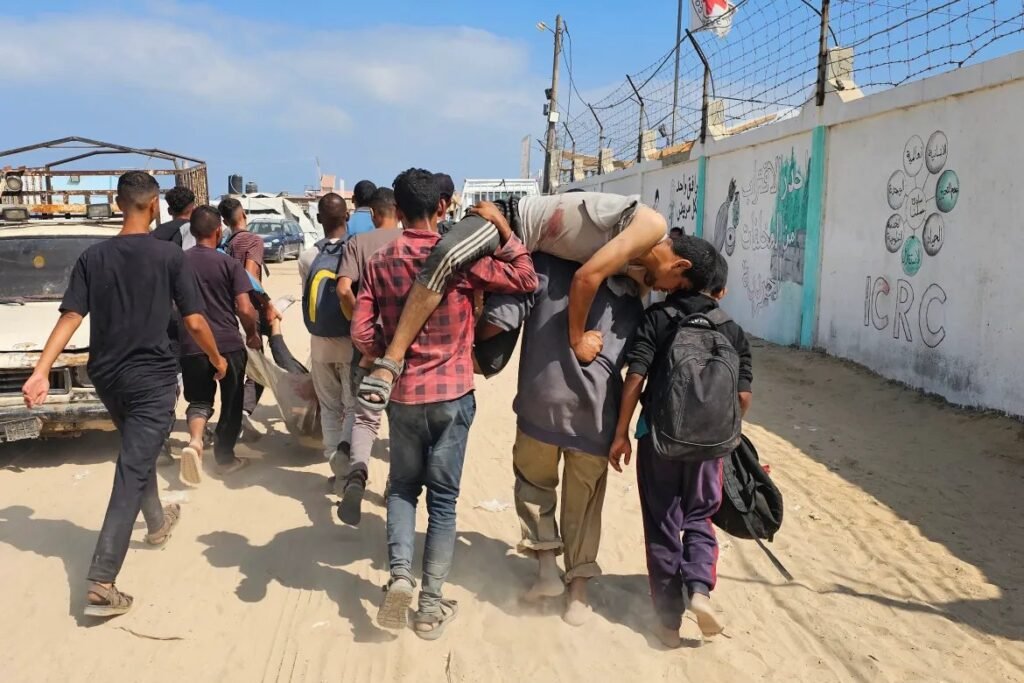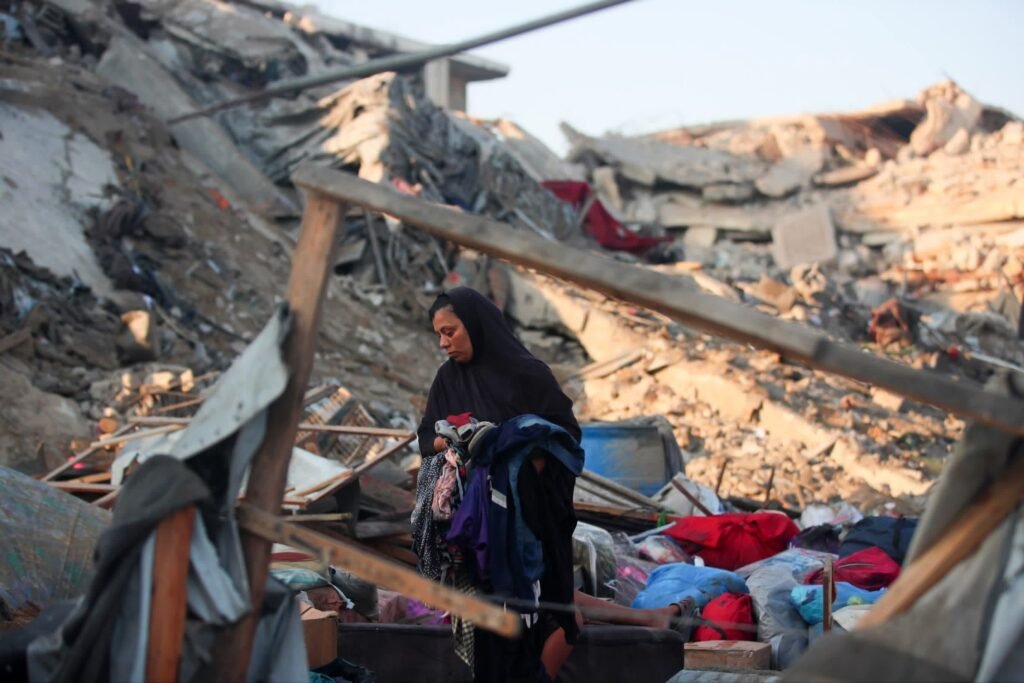
Gaza Herald: Gaza is observed from military reconnaissance feeds in the sky, from weaponized border perimeters, through the hurried lenses of international news crews, and across static satellite sweeps of flattened city blocks. But beneath this relentless tide of external imagery lies an asymmetric war of narrative control.
The central battle is no longer just about what is captured by a sensor; it is about who holds the moral and political authority to interpret the image.
For decades, Israel has mobilized an extensive state, military, and diplomatic apparatus (hasbara) designed to dictate the terms through which Palestine is understood globally. This machine relies on decontextualizing violence, reducing systematic occupation to abstract “conflict,” and stripping Palestinians of historical agency. In international media, Palestinian life is habitually framed through a lens of passive suffering or numerical attrition: casualties without histories, homes without memory, and deaths without authors.
Against this architecture of erasure, a new generation of Palestinian filmmakers in Gaza is seizing the camera not as a passive recording tool, but as an instrument of anti-colonial resistance and narrative sovereignty.
At the center of this cultural front stands the Gaza Cinema Academy. Operating under siege and amid systemic physical destruction, the Academy does not merely offer technical training; it functions as a site of political refusal, equipping young Palestinians, particularly young women, to wrest the power of representation away from external actors and return the native voice to the center of the frame.
The Frontline of Cultural Sumud
The struggle for Gaza has always been waged simultaneously on the ground and in the archive. When military operations demolish civilian infrastructure, universities, and historical records offices, the act of physical destruction is accompanied by a secondary form of violence: memory-cleansing.
When a foreign camera documents a bombed neighborhood, it records physical destruction as an isolated event through a distant, clinical, and security-centric external frame that ultimately reduces Palestinians to statistics, collateral damage, or passive victims. In contrast, when a Palestinian filmmaker embedded within that community holds the lens, the camera operates as an act of Sumud (steadfastness). This native, historical, and deeply contextual perspective captures far more than the crater; it documents the lineage of the family that built the home, the social fabric of the street, and the collective memory that outlasts the concrete. Ultimately, this distinction cuts to the very core of narrative power: while a standard press release or news package merely states that a building was struck, a Palestinian film documents the living human ecosystem within it, asserting political agency, preserving living history, and transforming an ephemeral headline into an unassailable, sovereign historical record.
This distinction cuts to the core of narrative power. A press release or news package can state that a building was struck; a Palestinian film documents the human ecosystem that lived inside it, turning an ephemeral headline into an unassailable historical record.
From Spectators to Authors of History
For generations, Western media coverage has subjected Palestinians to a dual trap: either objectified as tragic victims worthy only of humanitarian pity or rendered entirely invisible. Both outcomes achieve the same political goal: the denial of Palestinian self-determination.
Cinema created from within Gaza systematically dismantles this reduction. By documenting the daily rhythms of survival, grief, solidarity, resistance, and shared humor under extreme conditions, Gazan filmmakers reject the role of passive subjects in someone else’s document. They do not request permission from international institutions to explain their own reality; they document it on their own terms.
Projects emerging from Gaza, including works like The Voice of Hind Rajab, demonstrate how raw Palestinian testimony, when channeled through indigenous cinematic craft, breaks through the filters of international censorship and forces global audiences to confront the reality of living under siege.
Building the Sovereign Archive
The ultimate target of military destruction is often the future, the attempt to make a place unlivable and its history unremembered. When physical landmarks are erased, the film frame becomes a primary site of national preservation.
The young filmmakers of the Gaza Cinema Academy are constructing a sovereign Palestinian archive. Every scene recorded, every oral history documented, and every domestic space captured on film becomes a line of defense against historical erasure. This archive ensures that when the smoke clears, the history of Gaza will not be written by the forces that sought to flatten it, nor by outside observers who viewed it from behind armored lines.
The Palestinian camera does not claim detachment from the reality it records. Its authority stems precisely from its belonging.
Gaza is no longer merely an object to be framed, analyzed, and spoken for by others. Through the hands of its own storytellers, Gaza is taking back the lens, declaring its absolute right to define itself.