Gaza Herald_ Newly revealed documents obtained by investigative outlet Drop Site News have shed light on an increasingly contentious international effort to determine Gaza’s future, exposing what Palestinian negotiators view as a coordinated attempt to impose political conditions on a population already devastated by months of war, displacement, and humanitarian catastrophe.
The documents, which include amendments submitted by Palestinian negotiators on June 13 and a subsequent response from representatives of the so-called “Board of Peace,” provide a rare glimpse into behind-the-scenes negotiations over the future governance, reconstruction, and security arrangements of the Gaza Strip.
According to the reports, Palestinian representatives challenged several provisions contained in an international roadmap backed by figures associated with the administration of U.S. President Donald Trump and led by former United Nations official Nickolay Mladenov.
At the heart of the dispute lies a question that has shaped the Palestinian national struggle for decades: Who has the right to determine the future of Palestine?
Palestinian Objections to External Conditions
Palestinian negotiators reportedly submitted extensive amendments to the proposed framework, objecting to provisions that would effectively condition reconstruction efforts, political arrangements, and broader recovery plans on security demands centered on the disarmament of Palestinian resistance factions.
For many Palestinians, such conditions are viewed as an attempt to extract political concessions that Israel failed to achieve militarily during the war.
The documents suggest that Palestinian representatives pushed back against language they believed would undermine Palestinian sovereignty and transform humanitarian recovery into a tool of political pressure.
Sources familiar with the negotiations argue that the proposed framework risks reducing Palestinian self-determination to a process managed and supervised by outside actors while leaving key questions of occupation, accountability, and national rights unresolved.
Reconstruction Linked to Political Compliance
One of the most controversial elements reportedly concerns the linkage between Gaza’s reconstruction and compliance with political and security requirements.
Palestinian officials have long warned that rebuilding homes, hospitals, schools, and civilian infrastructure should not be contingent upon accepting externally imposed political arrangements.
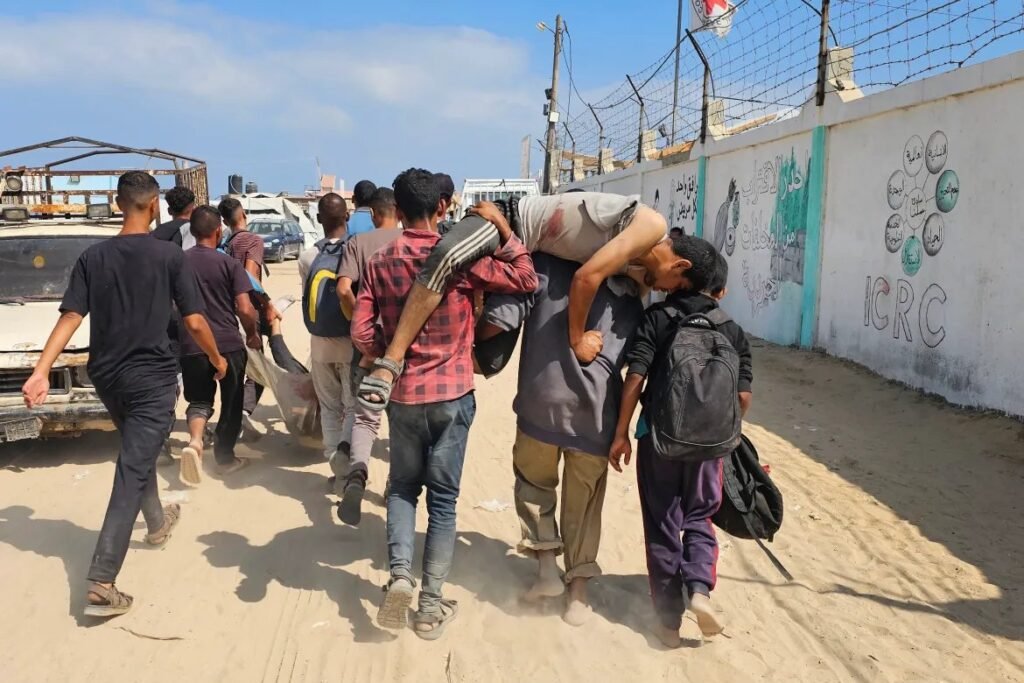
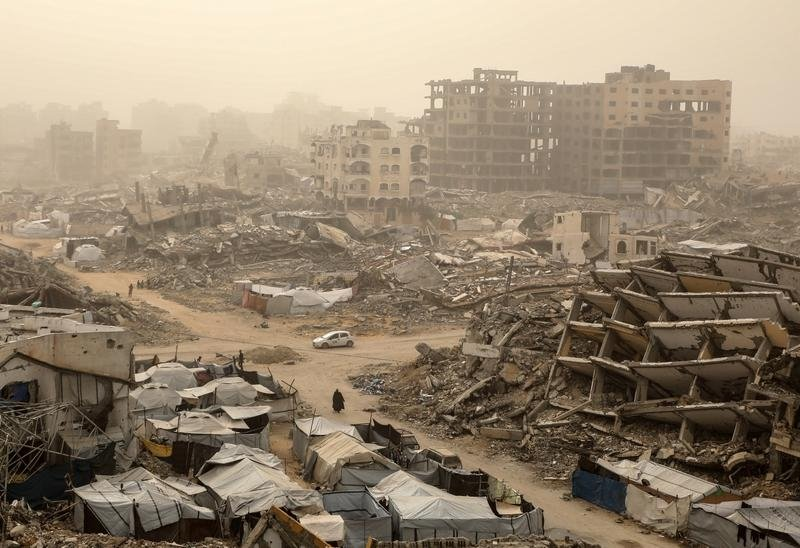
After months of widespread destruction, Palestinians across Gaza face unprecedented humanitarian challenges. Entire neighborhoods have been reduced to rubble, critical infrastructure remains severely damaged, and hundreds of thousands of people continue to struggle with displacement, food insecurity, and the collapse of basic services.
Against this backdrop, many Palestinians argue that reconstruction should be treated as a humanitarian necessity rather than a bargaining chip in political negotiations.
Concerns Over the Future Governance of Gaza
The leaked documents also highlight disagreements regarding the future administration of Gaza.
Palestinian negotiators reportedly sought revisions aimed at preserving Palestinian decision-making authority and preventing the establishment of governance structures perceived as externally controlled.
Observers note that previous international initiatives have often focused on administrative arrangements without addressing the broader political realities facing Palestinians, including the ongoing occupation, restrictions on movement, settlement expansion in the occupied West Bank, and the absence of a comprehensive political solution.
Critics of the proposed roadmap argue that any plan that ignores these underlying issues risks creating a temporary administrative framework rather than a sustainable path toward justice and stability.
Self-Determination at the Center of the Debate
The revelations have intensified concerns among Palestinian political circles that international actors are attempting to redesign Gaza’s political future without adequately respecting Palestinian national aspirations.
For many Palestinians, the issue extends beyond immediate governance questions and touches on the fundamental right of a people to determine their own political future free from external coercion.
Analysts say the documents illustrate a growing divide between international proposals focused primarily on security arrangements and Palestinian demands centered on national rights, sovereignty, reconstruction, and accountability.
As negotiations continue, the leaked exchanges suggest that the struggle over Gaza’s future is not merely about administrative structures or reconstruction projects. It is also about whether Palestinians themselves will be allowed to shape the political destiny of their homeland.
A Defining Moment
The emergence of these documents comes at a critical moment for Gaza and the broader Palestinian cause.
With ceasefire efforts remaining fragile and reconstruction needs growing by the day, the debate revealed in the leaked correspondence underscores the competing visions currently shaping discussions about the territory’s future.
For Palestinians, the central question remains unchanged: Will Gaza’s future be determined by its people, or by international powers seeking to impose conditions on a society already burdened by war, displacement, and decades of conflict?
The answer may define not only the next chapter of Gaza’s history but also the future of Palestinian self-determination itself.