
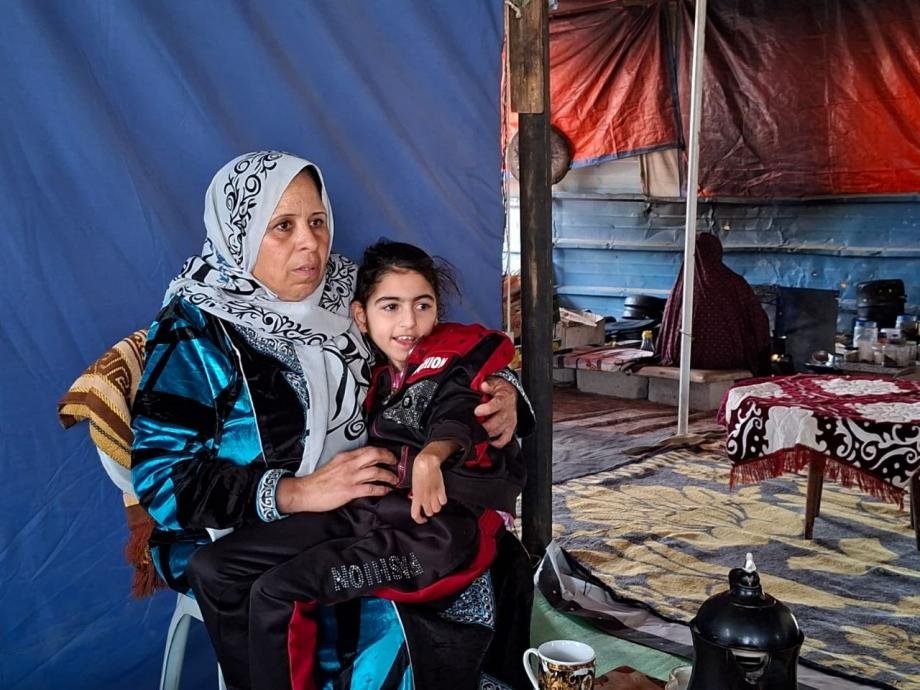
Gaza Herald – Thirteen-year-old Nariman Toutah never imagined that her life would be defined by such relentless hardship. Since infancy, when she developed meningitis that led to cerebral palsy, Nariman has lived with severe physical limitations, relying entirely on her family for care.
Over the years, her wheelchair became more than a mobility aid; it was her independence, her connection to the outside world, and a symbol of dignity in a life marked by struggle.
 That fragile sense of stability was shattered during the war on Gaza. When Israeli attacks struck Al-Zaytoun neighborhood in southeastern Gaza City, Nariman’s home was reduced to rubble. Beneath the debris, her wheelchair was lost, along with her only means of movement. From that moment on, Nariman’s condition became even more devastating; she was no longer just a child with a disability but a child forced to be carried everywhere, her already difficult life made far harsher by war.
Displacement only deepened her suffering. As her family fled from one area to another, Al-Nuseirat, Khan Younis, back to Gaza, and then to Al-Maghazi, Nariman had to be physically carried for long hours across unsafe, damaged roads and overcrowded shelters. Her father, mother, and siblings took turns carrying her, enduring exhaustion and danger at every step. The lack of basic infrastructure, inaccessible shelters, and the absence of medical and assistive support turned each journey into a painful ordeal.
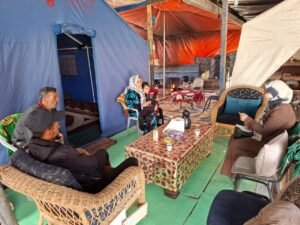
Even after a ceasefire was announced in October 2025, returning home did not mean relief. The family came back to find nothing but ruins. With no external assistance, they spent 52 days clearing debris by hand just to set up a small tent where their house once stood.
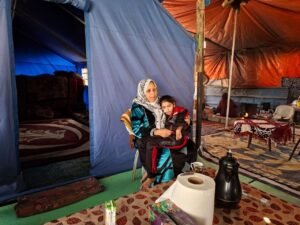 Today, they live in that fragile shelter, dangerously close to Israeli military positions, where the sounds of Israeli gunfire and explosions are constant reminders that safety remains out of reach.
Nariman’s condition continues to deteriorate under these circumstances. The trauma of ongoing attacks triggers severe seizures, while the medication she urgently needs is either unavailable or unaffordable. Necessities, such as diapers, are scarce, forcing her family to improvise under humiliating and exhausting conditions. What she needs, a wheelchair, physical therapy, and consistent medical care, are simple rights elsewhere but nearly impossible to obtain in Gaza.
Nariman’s story is not an isolated case; it reflects the broader suffering of children with disabilities in Gaza, whose lives have been further devastated by war, blockade, and systemic deprivation. Despite everything, her family continues to surround her with care and resilience, holding onto hope that one day she might regain even a small part of the life that was taken from her.

