
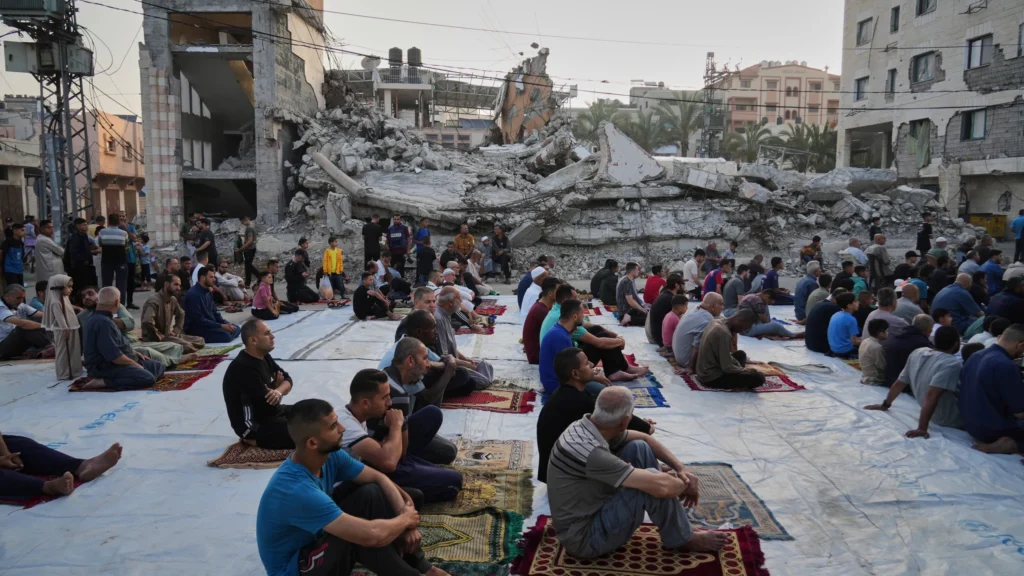
Gaza Herald- In Gaza, Eid al-Fitr arrives this year under the weight of war, displacement, and economic collapse, transforming what was once a time of joy into a fragile attempt to preserve normalcy amid crisis.
For generations, children in the Gaza Strip marked Eid mornings by visiting relatives, eagerly awaiting “Eidiya”, small sums of money that symbolized celebration and belonging. Today, that tradition has been profoundly altered, as families face severe financial hardship and a near-total collapse of liquidity.
In many households, cash gifts have been replaced with symbolic alternatives—pieces of chocolate, small bags of sweets, or inexpensive toys, reflecting both the depth of the economic crisis and families’ efforts to maintain a sense of festivity.
“Every year, I used to set aside a small amount for my children,” said Mahmoud Shreiteh, a father of several. “Now, we try to compensate with whatever we can.”
The contrast between past and present is stark. Older residents recall a time when Eid was defined by communal rituals—shared meals, neighborhood visits, and simple yet meaningful traditions. “We didn’t have much, but the joy was real,” said Ahmed Abu Mahadi, 68. “The Eidiya wasn’t about its value, it meant everything to the children.”
Today, however, the realities of war have disrupted even the most basic elements of celebration. “We try to create an Eid atmosphere, but everything feels different,” said Samer Thabet, 45. “People are focused on survival.”
Parents describe the difficulty of responding to their children’s expectations. “My children ask about new clothes and Eidiya, and sometimes I have no answers,” said one mother. “We try to make up for it with simple things, but the difference is clear.”
For children, the gap between memory and reality is especially pronounced. “My father tells me how Eid used to be,” said Sami, 10. “I wish I could live that day.” Others, like seven-year-old Reem, focus on small hopes: “I just want sweets and toys.”
Despite the hardship, many families continue to hold on to fragments of tradition. “Even if it’s just a small treat, what matters is that the children feel some joy,” said another parent.
In Gaza today, Eid is no longer measured by abundance but by resilience, the ability to preserve moments of happiness in the face of loss.

