Gaza Herald _Israel’s decision to close all crossings into Gaza after launching attacks on Iran has effectively imposed a new siege on the territory, sending food prices sharply higher and raising fears that more than two million Palestinians could once again face a severe hunger crisis.
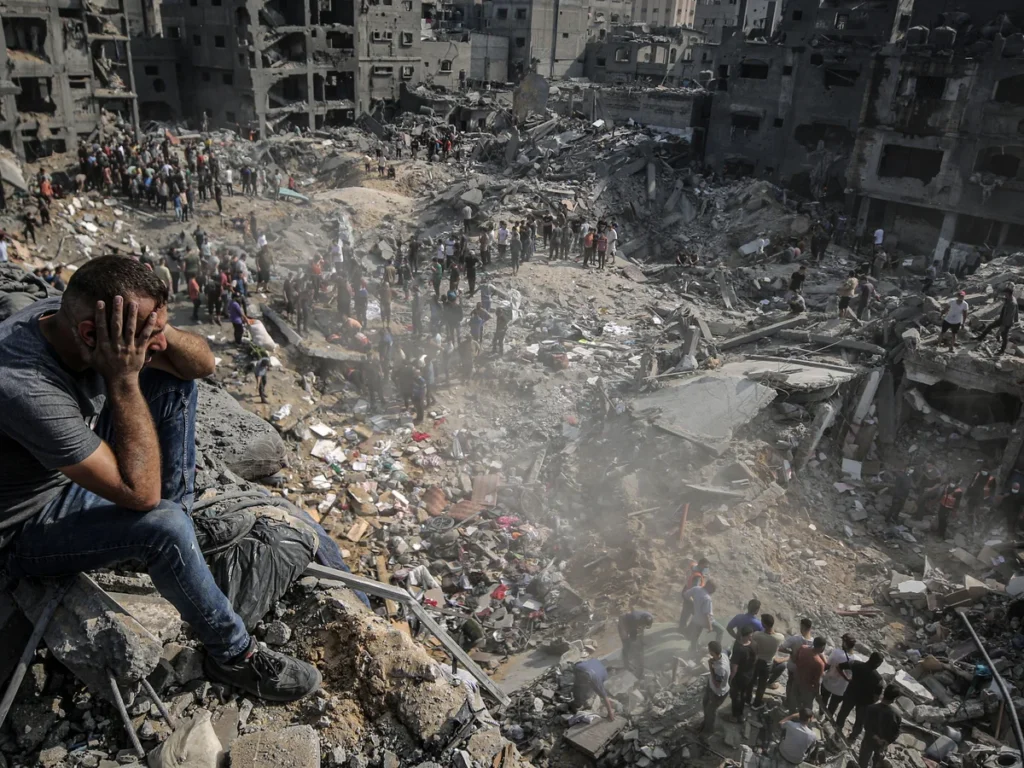
After more than two years of devastating war, and with Israeli forces controlling roughly 60 percent of the enclave, Gaza’s population now depends almost entirely on supplies entering through border crossings to meet its basic food needs.
Humanitarian organizations that provide meals to much of the population warn that the supplies they had when the regional conflict began may last only a few more days. Aid groups say that if crossings remain closed, their ability to feed hundreds of thousands of people will quickly collapse.
One major food relief organization, which currently prepares nearly one million hot meals every day across Gaza, warned that its food reserves could run out within days if deliveries are not allowed to enter the territory. The group stressed that constant shipments of food are required to keep its kitchens operating.
Food security specialists working in Gaza say the situation is extremely fragile. According to their estimates, fresh food supplies inside the territory may last only about a week. Community bakeries that distribute bread to vulnerable families reportedly have flour stocks sufficient for roughly ten days, while humanitarian aid packages may last no more than two weeks.
The latest crisis follows earlier policies that severely restricted food shipments into Gaza. Last year, a comprehensive siege combined with tight controls on aid deliveries pushed the territory into famine conditions, leaving thousands struggling to survive.
During that period, hundreds of Palestinians were also killed while attempting to reach food distribution sites run by a controversial logistics group operating mainly in Israeli-controlled areas.
As news spread that Israel had attacked Iran and closed the crossings, memories of those famine conditions quickly resurfaced. Many Palestinians rushed to local markets to buy whatever food they could find, triggering sudden shortages and sharp price increases.
The cost of basic items has surged within days. A 25-kilogram sack of flour that sold for around 30 shekels last week is now being sold for between 80 and 100 shekels. Other essential goods, including sugar, cooking oil, and baby supplies, have also doubled in price.
For many families, the fear of starvation now outweighs even the fear of renewed bombardment.
Sobhi Al-Zaaneen, a 50-year-old father of seven originally from northern Gaza, said the possibility of famine returning terrifies residents. Determined not to relive the suffering of previous shortages, he decided to buy extra food despite the rising prices.
“The return of famine is what we fear most,” he said as he headed toward the market to purchase supplies before prices increase further.
However, many people in Gaza simply cannot afford to prepare for another crisis. Years of war have destroyed homes, eliminated jobs, and drained whatever savings families once had.
Um Mohammed Hijazi, a 49-year-old mother of five whose home was destroyed during the war, said she does not have the money needed to stockpile food like some others have managed to do. Her family has already been displaced five times since the conflict began.
“I don’t have enough money to buy and store food before prices rise,” she said. “Thankfully we still have a small amount of aid that might last for a few days if the crossings remain closed.”
Some basic products have already become more difficult to find in local markets. Hijazi said she has heard that certain traders are storing their goods in anticipation of further price increases.
Humanitarian organizations stress that, as the occupying power in Gaza, Israel is legally obligated to ensure that civilians have adequate access to food. That responsibility, they say, remains in place regardless of any broader regional conflict.
Relief officials report that community kitchens have already begun shutting down due to dwindling supplies, while the cost of essential goods continues to climb rapidly.
Israeli authorities responsible for controlling the flow of goods into Gaza said shipments were halted for security reasons connected to the confrontation with Iran. Later, officials indicated that one crossing might reopen temporarily for the gradual entry of humanitarian aid.
However, little information has been provided regarding the actual amount of food currently available inside Gaza.
Israeli officials claimed that existing stockpiles in the territory could sustain the population for some time, though no figures were released to support that assertion.
Gaza shares a border with Egypt, but that crossing has remained closed to humanitarian aid since Israeli forces took control of the surrounding area in May 2024.
Humanitarian groups and Palestinian officials have repeatedly warned that essential supplies remain dangerously limited even after the ceasefire. Experts supported by the United Nations estimated late last year that nearly four out of five Palestinians in Gaza were already experiencing severe food insecurity.
Bahaa Al-Amawi, an official from Gaza’s industrial and commercial sector, said the territory currently lacks any meaningful food reserves. Years of war and the destruction of warehouses have made it impossible to maintain strategic stockpiles.
Since the ceasefire began, he explained, there has been no opportunity to rebuild supply reserves. As a result, any announcement of crossing closures immediately sparks panic among residents who still remember the trauma of famine.
“The moment people hear that crossings are closing, the market reacts instantly,” he said. “The fear comes from past experience, but the economic reality also makes the crisis worse.”
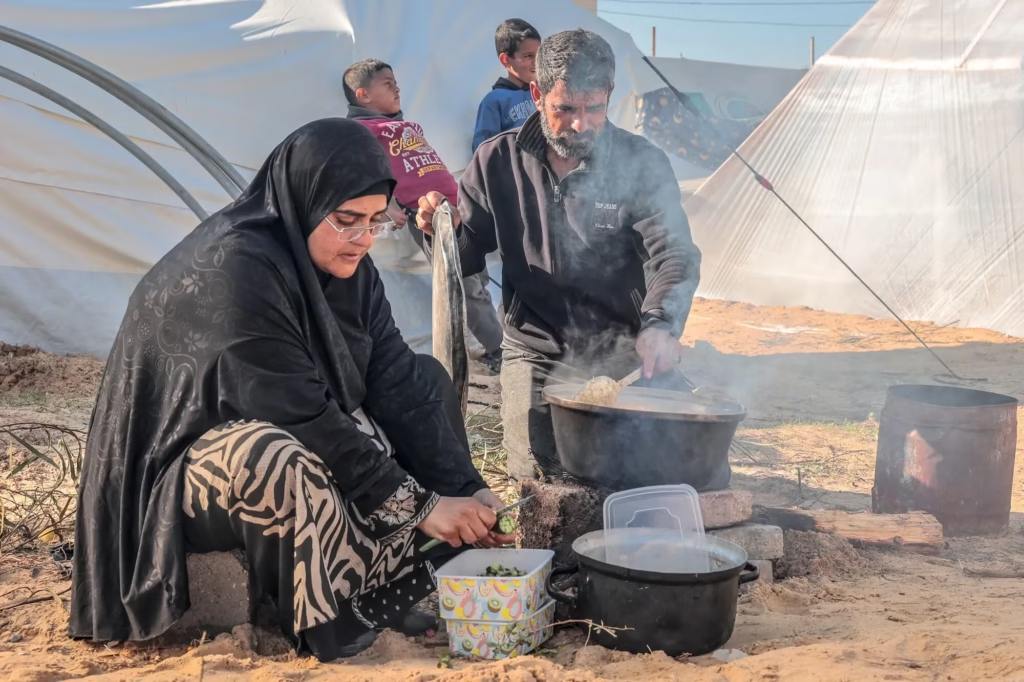
For families already living in tents after losing their homes, the situation is especially fragile.
Alaa Abu Rakba, a 43-year-old father of four, now supports his family by selling meat from a small stall outside the tent where they live after their house was destroyed.
When the crossings closed, his business was immediately disrupted. Despite his limited resources, he rushed to buy basic supplies like flour, sugar, and cooking oil before prices rose further.
“We learned our lesson from the last time,” he said.
“I would rather face the sounds of war again than experience another famine,” he added. “I never want to reach a point where I cannot feed my children for days.”