Gaza Herald — Nearly four months after a fragile ceasefire came into effect, Gaza’s farmland is stirring back to life, but cautiously. The stillness blanketing the fields does not signal recovery. Instead, it reflects a temporary pause between cycles of destruction.
Despite overwhelming devastation, farmers have begun returning to land that once sustained their families but now lies in ruins. Armed with little more than hand tools and memories of fertile harvests, they are attempting to rebuild what war has erased. Many cling to cautious hope that a newly anticipated Gaza administrative body, expected to begin work soon, might provide long-awaited support to those struggling to survive amid the destruction.
Farming with memory, not machinery
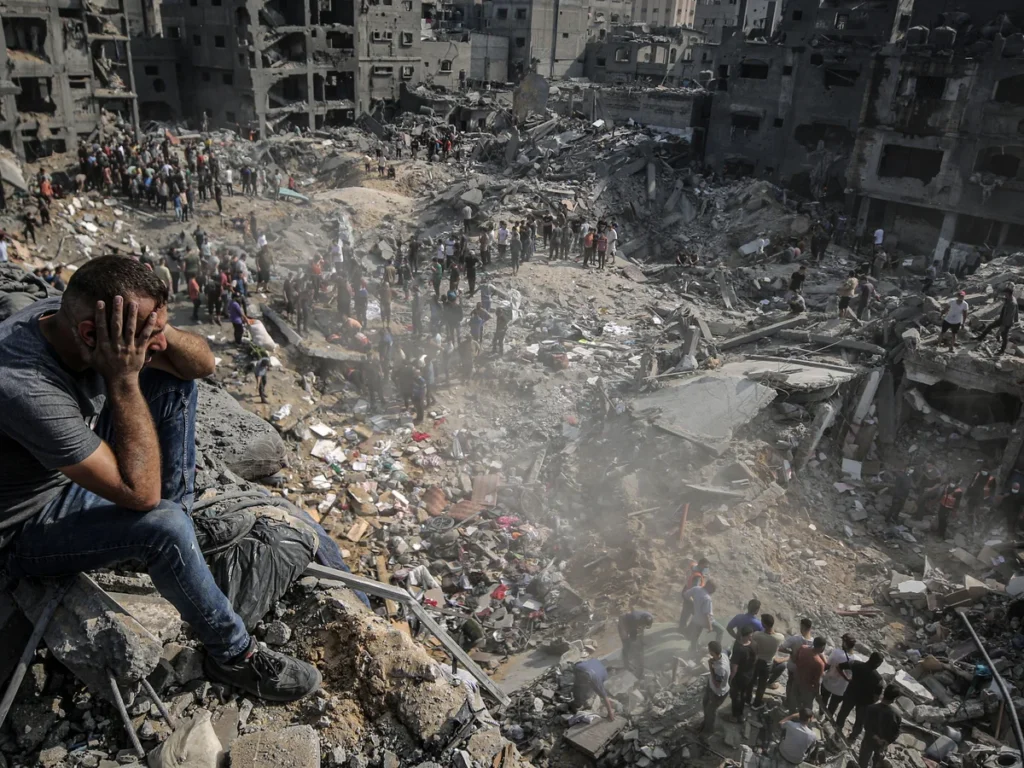
Mahmoud Al-Ghoul, 55, stands on what remains of his farmland in Gaza City. Once rich with vegetables, the soil is now buried beneath ash, debris, and invasive weeds. His gaze searches the ground as if trying to recover what has been lost.
“We were forced to leave in October 2023 when the war began,” he says. “This land was everything to us, our food, our income, our survival.”
When he returned months later, the transformation was devastating. His farmland had been reduced to rubble.
“Now, after two years of war and a ceasefire, we don’t know how we can continue,” he says quietly. “What are we supposed to do?”
With no money to hire heavy equipment, Mahmoud has been forced to rely on axes and shovels to clear the land manually.
“We simply don’t have the resources,” he says. “But we have no choice except to try.”
His experience reflects the broader reality facing Gaza’s farmers. Even fields that escaped bombardment were often bulldozed, and irrigation systems, wells, and greenhouses have been destroyed. Farming, once a stable livelihood, has become physically exhausting and uncertain labor.
Between survival and collapse
For Gaza’s agricultural community, the ceasefire has offered only a brief reprieve, not a path to recovery.
Farmers now face enormous barriers: devastated land, scarce supplies, and soaring costs. Yet many continue working, driven by necessity and identity. For them, abandoning the land would mean losing both livelihood and purpose.
In Khan Younis, farmer Ahmad Abu Brika, 42, is attempting to revive soil damaged by bombardment. Without machinery or basic materials, progress is painfully slow.
“We are trying everything,” he says. “But without equipment, there is only so much we can do.”
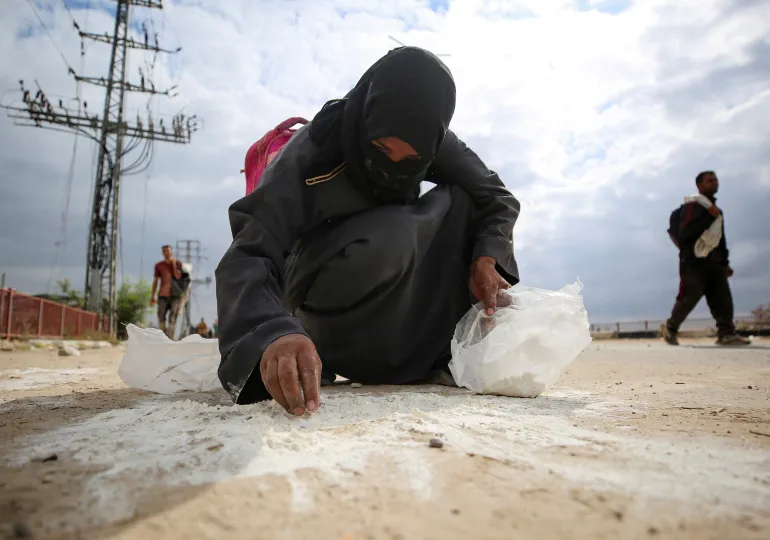
Even essential supplies such as seeds, irrigation pipes, and pesticides are unavailable, or priced far beyond reach.
“This land once provided everything we needed,” he says. “Now we cannot even afford to plant.”
Each day brings exhausting manual labor, yet stopping is not an option.
“To stop,” he says, “would mean surrendering to hunger.”
Prices surge as support disappears
In central Gaza, farmer Khalil Al-Haj, 50, faces another obstacle: extreme inflation.
“The costs today are beyond reason,” he says.
He points to dramatic price increases. Irrigation pipes that once cost 50 shekels now cost 1,000. Seed costs have increased dozens of times over. Even basic farming has become financially impossible.
Without external support, Khalil warns, the entire agricultural sector risks collapse.
“Farmers are essential to the economy and food supply,” he says. “If agriculture disappears, everything else follows.”
Even fuel for irrigation systems is unavailable, forcing farmers to depend entirely on rainfall.
A sector nearly erased
The scale of destruction is staggering. According to official estimates, between 90 and 95 percent of Gaza’s agricultural land has been damaged or destroyed.
More than 1,100 wells have been lost, along with hundreds of kilometers of irrigation networks and thousands of greenhouses. Financial losses exceed $2.2 billion.
The destruction has crippled Gaza’s food production capacity and contributed to severe food insecurity.
Yet some farmers refuse to give up.
In northern Gaza, farmer Yousef Salem, 60, continues working despite losing both his home and farmland.
“They tried to destroy everything,” he says. “But they will not uproot us.”
His daughters have begun growing crops near their destroyed home, a small but powerful act of resilience.
“This land is part of who we are,” he says.
Recovery depends on reconstruction
Agricultural officials say meaningful recovery will require more than determination. Reconstruction, access to equipment, and the removal of restrictions on essential supplies are critical.
Without heavy machinery, irrigation systems, and consistent fuel, recovery efforts remain severely limited.
Agriculture, experts emphasize, is not a secondary sector. It is central to Gaza’s food security and economic survival.
Until reconstruction begins in full, Gaza’s farmers will continue working by hand, fighting not only to restore their land, but to preserve their future.