Gaza Herald_ Israel’s Supreme Court has issued a temporary injunction allowing dozens of international humanitarian organizations to continue working in the Gaza Strip and other occupied Palestinian territories, suspending a government decision that would have barred their operations over new registration requirements.
In a ruling issued on Friday, the court froze the planned ban while it reviews a petition filed by 17 international aid agencies challenging the Israeli government’s move. The injunction enables the organizations to maintain most of their activities as legal proceedings continue.
Israel had announced it would prohibit 37 aid groups from operating in Gaza, the occupied West Bank, and occupied East Jerusalem starting March 1. Humanitarian experts warned that the measure could have severe and potentially devastating consequences for Palestinians already facing catastrophic conditions after months of war and siege.
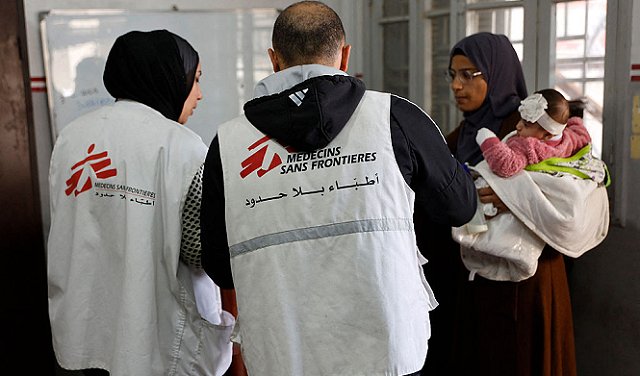
Among the affected organisations are Doctors Without Borders (MSF), Oxfam, the Norwegian Refugee Council, and CARE. Israeli authorities notified these groups in December that their Israeli registrations had expired, giving them 60 days to renew and to submit detailed personal information about their Palestinian staff.
The organisations argue that complying with these demands would place Palestinian employees at risk of retaliation, violate the principle of humanitarian neutrality, and breach European data protection laws.
Following the court’s decision, Shaina Low, a communications adviser for the Norwegian Refugee Council, welcomed the injunction but cautioned that it did not resolve the broader crisis facing aid operations.
“The injunction pauses immediate closure. It does not restore visas, reopen access, or resolve the wider restrictions that continue to affect aid delivery,” Low said, stressing that conditions in Gaza remain catastrophic and that humanitarian needs in the West Bank are continuing to grow.
Similarly, Athena Rayburn, executive director of the Association of International Development Agencies, said aid groups were still waiting to see how the ruling would be implemented in practice. She warned that the situation inside Gaza remained “catastrophic,” with no guarantee that the injunction would translate into improved operational access.
Israeli attacks continue despite aid ruling
The court decision came as Israeli military attacks continued across the Gaza Strip. At least six Palestinians were killed on Friday in Israeli drone strikes targeting two police posts in the Bureij refugee camp in central Gaza and the al-Mawasi area of Khan Younis in the south.
Medical sources at Nasser Medical Complex reported receiving four bodies and several wounded people after an Israeli strike hit a police checkpoint at the al-Maslakh intersection in al-Mawasi. Some of the injured were said to be in critical condition.
In a separate attack in central Gaza, two Palestinians were killed, and others were injured when an Israeli drone targeted a police post at the entrance to the Bureij refugee camp.
The attacks were condemned by Hamas, which said the strikes undermined mediation efforts during what has been described as a ceasefire phase, one Israel has violated almost daily since October.
Observers say the continued targeting of police infrastructure reflects Israel’s stated refusal to allow the reorganization of basic civilian services in Gaza, including policing and public order, further deepening the humanitarian collapse and complicating any prospects for stabilization or recovery.
As legal battles over aid operations unfold in Israeli courts, Palestinians in Gaza continue to face relentless violence, restricted humanitarian access, and the systematic dismantling of the structures needed to sustain daily life.