Gaza Herald _For the third consecutive year, the Gaza Strip is welcoming the month of Ramadan under the shadow of an ongoing war and unprecedented humanitarian and economic consequences that have persisted since October 7, 2023.
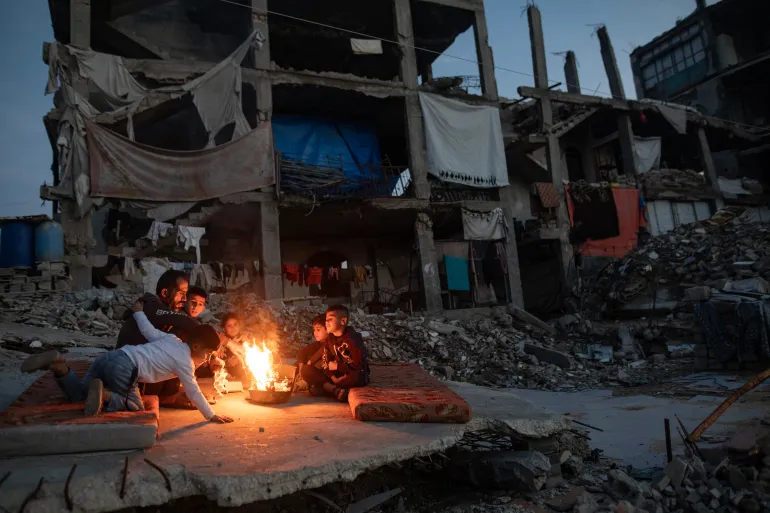
A month once defined by decorated streets, crowded markets, and the scent of freshly made qatayef has now become synonymous with tents, unemployment, incomplete meals, and memories of homes reduced to rubble.
Preparations no longer begin weeks in advance, store shelves are no longer filled with apricot drinks and premium dates, and neighborhoods are no longer illuminated with lanterns and festive lights.
In Gaza today, the primary question has become: how can we secure food for iftar before thinking about its traditions?
Commerce Rising from Beneath the Tents
In Khan Younis, Zaher al-Qudra stands in front of what remains of his “al-Qudra Supermarket,” now reduced to a modest setup inside a tent covered with plastic sheets along the coastal al-Rashid Street. Before the war, his store was among the largest in the area, near the European Hospital, with shelves stocked full of Ramadan goods and doors crowded with customers.
Al-Qudra recalls those days, saying Ramadan was like a “national and religious celebration,” when sales increased and commercial activity flourished. But in May last year, everything changed. Intense bombardment struck the area, and powerful missiles fell near his home. He then received a call ordering him to evacuate within minutes. After he fled, what remained of his home and business was destroyed.
He estimates his losses at around $2 million, in addition to a long period of unemployment. Despite attempts to restart, the challenges remain overwhelming.
Essential Ramadan goods are still scarce, prices fluctuate sharply, and rain and wind damage merchandise stored in tents. Electricity outages and poor refrigeration further worsen the situation.
“We are trying to endure, but every day brings new risks,” he said. “We fear the return of bombing, and we fear losing what little we have left.”
Tables Sustained by Charity Kitchens
On the other side of the crisis, displaced families face even harsher realities. Shaimaa Abu Hammam, 35, from Jabalia in northern Gaza, fled with her family to the south.
She said she has not been able to prepare for Ramadan as she once did.
“We live day by day. Today we eat and thank God, but tomorrow is uncertain,” she said.
She explained that soaring prices have made it impossible to buy even basic items such as yogurt and dates for suhoor. Her family now relies on meals from charity kitchens, while the lack of cooking gas and the difficulty of lighting fires inside tents create additional barriers.
“My only wish is that the month passes safely, and that my husband finds work so my children can feel that Ramadan is still Ramadan,” she added.
Ayman Mihna, 57, a retired employee displaced from Rafah to the Mawasi area of Khan Younis, said his salary, which once covered his needs, is no longer sufficient due to irregular payments and rising costs.
“We used to live a simple but stable life,” he said. “Today, we depend on aid. Ramadan will not change our reality—we have been fasting involuntarily for months.”
Ramadan Without Abdullah
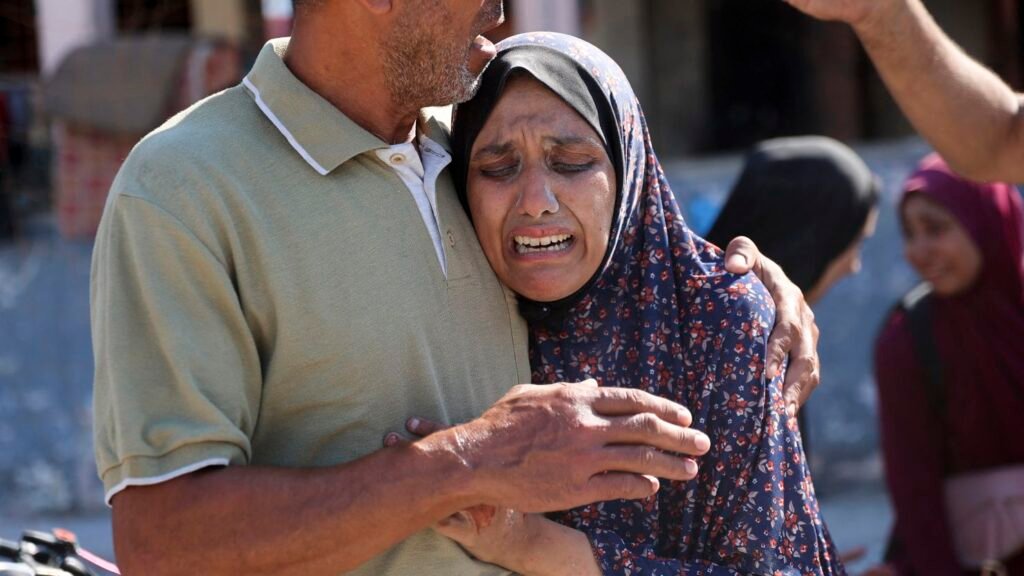
Beyond economic hardship, the pain of loss weighs even more heavily.
Fuad Thabet from Deir al-Balah is observing his first Ramadan since his son Abdullah was killed in an airstrike that targeted a camp on the last day of Ramadan last year.
“Abdullah dreamed of Eid. He was counting the days to buy new clothes for his sisters,” Thabet said. “On the last day of Ramadan, he left and never returned. From that moment, everything changed.”
He paused before adding, “The table feels incomplete, and his voice is gone. We fast and pray, but the grief is beyond words.”
For him, Ramadan is no longer a time of preparation for celebration, but a season of remembering the day his family was shattered.
A Father Who Lost His Only Support
Munir Abu al-Atta carries double grief. He lost both of his sons in the early days of the war when an airstrike hit al-Salam Mosque in Deir al-Balah. He described them as his only support in life.
“They were all I had,” he said in a voice filled with pain. “At every sunset call to prayer, I remember their voices rushing to break the fast. Now I sit alone. Ramadan used to bring us together, now it reminds me of their absence every moment.”
He said the pain does not only return during Ramadan, but intensifies, because the month was always about family, warmth, and togetherness, things that are now gone.
Economic Collapse and Vanishing Purchasing Power
Economic expert Maher al-Tabba said this year’s Ramadan comes amid a comprehensive economic collapse. The war, which has lasted more than two years, has pushed unemployment rates to around 80 percent and driven poverty to unprecedented levels. The economy has contracted sharply, directly impacting people’s purchasing power.
He noted that prices of some goods have increased by more than 300 percent compared to pre-war levels, while markets suffer from severe stagnation due to lack of liquidity and weak consumer demand.
He added that families now limit spending strictly to essential needs, making Ramadan an additional burden rather than a season of economic activity.