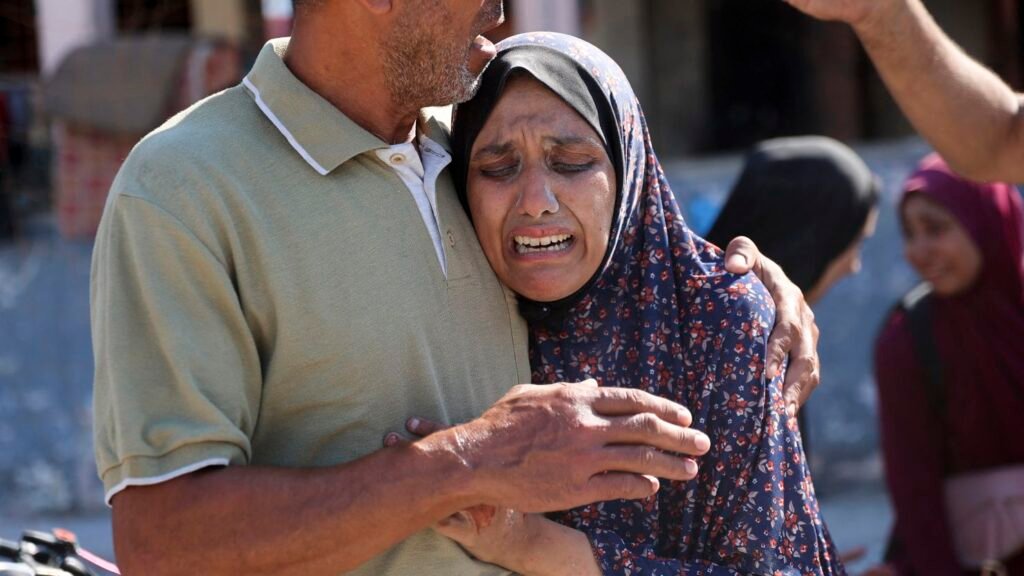
Gaza Herald _The conditions imposed on Gaza’s displaced population reveal a humanitarian collapse that goes far beyond homelessness. Families who have already lost their homes, safety, and loved ones are now forced to live on top of rotting garbage, surrounded by disease, vermin, and unexploded weapons. These conditions are not simply the byproduct of war, but the result of systematic destruction and restrictions that have made basic human survival itself a daily struggle.
Displacement Into Filth and Disease
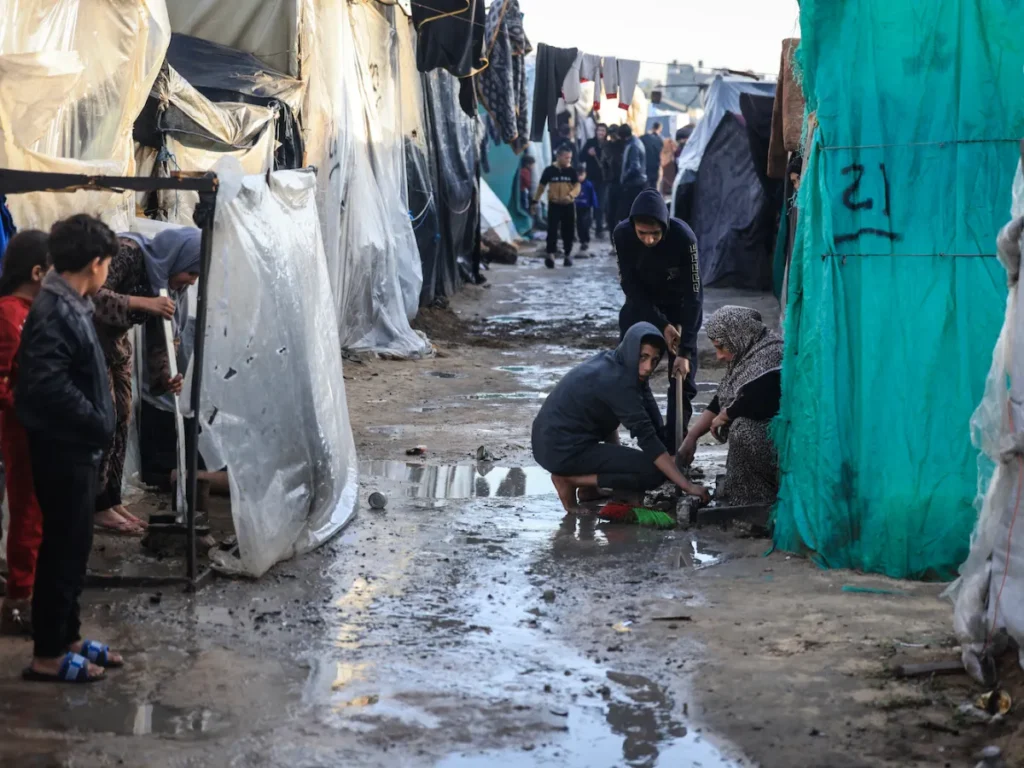
In central Gaza City, hundreds of displaced families have been forced to establish makeshift shelters directly on and beside a massive landfill at the al-Taawun camp. Located between Yarmouk Stadium and al-Sahaba Street, the site has become home to approximately 765 families who were driven from their homes during Israel’s war on Gaza.
The camp is overwhelmed by piles of decaying waste, where the boundaries between living space and garbage have disappeared. Families now face constant exposure to disease, pests, and deeply distressing living conditions.
Fayez al-Jadi, a father who has been displaced repeatedly since the war began, described the severe toll on his family. He explained that rats chew through tents and crawl over people as they sleep. His 18-month-old daughter has already suffered repeated illnesses, including gastrointestinal infections, vomiting, diarrhea, and malnutrition. He said his only wish is for a small patch of clean land where his family can live with basic dignity.
Health conditions across the camp have deteriorated rapidly. With no clean water, sewage infrastructure, or sanitation services, infections such as scabies have spread widely among the camp’s roughly 4,000 residents. Infants and children are among the most vulnerable.
One mother described how her six-month-old baby suffers from constant itching from severe skin infections, unable to sleep as insects crawl over him at night. Despite attempts to obtain treatment, the surrounding conditions make recovery nearly impossible.
Another displaced grandmother explained that medical creams and treatments have proven ineffective because families remain surrounded by contamination. She also noted that Gaza’s collapsing healthcare system has left displaced residents with limited access to treatment, as hospitals lack both capacity and essential medicines.
Environmental Collapse and Growing Safety Threats
The humanitarian crisis in al-Taawun reflects a broader environmental breakdown affecting Gaza City. Waste accumulation has reached catastrophic levels, with hundreds of thousands of tons of garbage piling up due to the destruction of infrastructure and restricted access to main disposal sites.
Municipal officials report that Israeli forces have blocked access to Gaza’s primary landfill, forcing waste to accumulate in densely populated civilian areas. At the same time, municipal services have been severely weakened by damaged equipment, fuel shortages, and ongoing security risks, making effective waste management impossible.
As a result, displaced families now live in areas that pose both biological and physical threats.
In addition to disease and contamination, unexploded ordnance remains scattered throughout the waste sites. One displaced resident described living with his family next to an unexploded tank shell, which could detonate at any moment under extreme heat. The constant presence of stray dogs, snakes, and vermin adds further danger, especially for children.
Residents described nights filled with fear, as animals roam freely through the camp, pushing against tents and threatening families. Many parents remain awake throughout the night to protect their children.
Food insecurity has also worsened conditions. Some residents reported being forced to eat food that had already been contaminated by rats, highlighting the extreme level of deprivation facing displaced families.
For thousands living in al-Taawun camp, daily life has become a continuous struggle for survival. Their situation reflects the wider humanitarian devastation in Gaza, where displacement, environmental collapse, and insecurity have combined to create conditions that threaten both physical survival and human dignity.