Gaza Herald_ In the first three months of Israel’s genocidal war on Gaza in 2023, Gaza’s health authorities officially recorded just four deaths caused by starvation. By 2024, that figure had climbed to 49. But it was in 2025, when the siege reached its most suffocating stage, that the toll surged dramatically, with 422 people dying from starvation in a single year.
This marked a staggering 760 percent increase in starvation-related deaths in just twelve months, underscoring how hunger was not incidental to the war, but deliberately engineered.
In August 2025, UN Special Rapporteur on the Right to Food Michael Fakhri explained that the world’s primary tool for assessing famine, the Integrated Food Security Phase Classification (IPC), is inherently cautious and often slow to declare famine conditions.
“The reality on the ground was unequivocal,” Fakhri said. “We raised the alarm as soon as we began seeing children die.” He stressed that Gaza had met the strict technical criteria for famine long before official acknowledgment became politically possible.
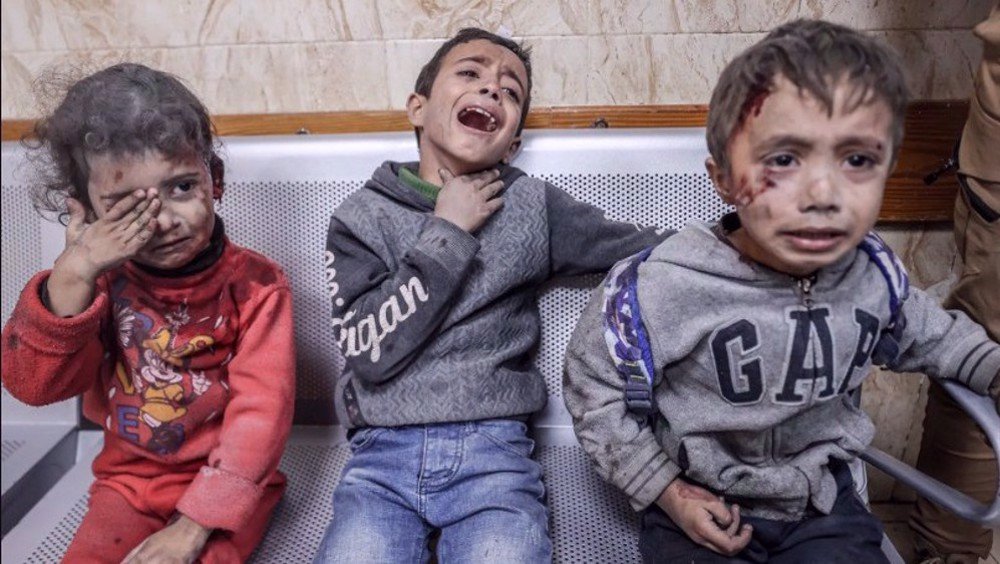
Figures released by Gaza’s Health Ministry revealed the human cost in stark terms: 40.63 percent of those who died from starvation were elderly people over the age of 60, while 34.74 percent were children. In 2025 alone, cases of severe malnutrition among children under five skyrocketed, from 2,754 in January to 14,383 by August.
Legal and humanitarian experts emphasized that what unfolded in Gaza was not merely “food insecurity.” It satisfied the formal, technical definition of famine, a classification that is often delayed not by evidence, but by political obstruction.
“In the human rights community, we don’t wait that long,” Fakhri explained. “We don’t need to quantify pain, suffering, and death endlessly. When a parent is holding a child, whose body is wasting away, that tells you an entire community is under attack.”
Anatomy of a strategy
Palestinians in Gaza and across the occupied Palestinian territory have long accused successive Israeli governments of pursuing a deliberate policy that weaponizes food and humanitarian aid.
Palestinian researcher and commentator on Israeli affairs Suleiman Basharat traces this strategy back to the blockade imposed on Gaza in 2007. “It was built on the idea of starvation and the systematic narrowing of daily life,” he said.
The doctrine was bluntly summarized in 2006 by Dov Weisglass, an adviser to the Israeli prime minister, who stated that the objective was “to put the Palestinians on a diet, but not to make them die of hunger.” Basharat argues that the 2023 war marked a shift from long-term “management” of Gaza to outright “elimination.”
From the outset of the genocidal campaign, senior Israeli officials made their intentions unmistakably clear. Then, Defence Minister Yoav Gallant announced a complete siege on Gaza, dehumanizing its population as “human animals.” His rhetoric was echoed by far-right Finance Minister Bezalel Smotrich, who openly argued that blocking aid to Gaza was “justified and moral,” even if it meant starving millions.
The policy was implemented with ruthless precision. Before the war began in 2023, the United Nations estimated that around 500 aid and food trucks per day were required to meet Gaza’s basic needs. During the war, however, an average of just 19 trucks per day were allowed into the Strip, a 96 percent reduction that some Israeli media dubbed a “calorie collapse.”
- The Calorie Collapse: Aid deliveries fell from 500 trucks daily to an average of 19.
- The Thirst War: Water availability dropped from 84 litres per person per day to just 3 litres.
- Scorched Earth: Agricultural infrastructure was systematically destroyed. By August 2025, an estimated 90 percent of farmland had been razed, 2,500 chicken farms destroyed, killing 36 million birds, and Gaza’s fishing port obliterated.
“If Israel chose to act differently, every child in Gaza could eat breakfast tomorrow,” observed famine expert Alex de Waal. “All that is required is opening the gates.”
Hunger beyond food
Food was not the only weapon. Water supplies were also deliberately choked. Human rights organizations reported that even 100 days into the so-called “ceasefire,” Gaza remained intentionally deprived of water, forcing aid groups to scavenge and improvise under an illegal blockade.
At the same time, Israel pursued a scorched-earth policy against Gaza’s ability to feed itself. By August 2025, Israeli forces had destroyed the overwhelming majority of agricultural land, particularly in areas near the security barrier in the north, east, and south of the Strip.
Mohammed Abu Odeh, spokesperson for Gaza’s Ministry of Agriculture, warned that the destruction and military control of farmland would devastate food supply chains for nearly two million people, locking Gaza into permanent dependency.
The illusion of aid
Palestinian officials and analysts argue that Israel not only restricted aid, but also manipulated how it was delivered. Various alternative mechanisms were introduced, often bypassing established humanitarian systems.
Political analyst Abdullah Aqrabawi said that Israel and the United States attempted to impose parallel aid structures, such as the Gaza Humanitarian Foundation, which collapsed amid chaos and bloodshed. Hundreds of Palestinians were killed while attempting to access food at these sites.
“The US brought a floating pier and private contractors, and it failed,” Aqrabawi said. He described these initiatives as attempts to empower select groups or families to distribute aid, to isolate the Palestinian resistance rather than feed the population.
Re-engineering society through hunger
Analysts argue that starvation was not used solely as a military pressure tactic, but as a tool to reshape Palestinian society itself.
“The objective was to break the resistance by crushing the social base that sustains it,” Basharat explained. He said Israel sought to “re-engineer the Palestinian human being” into someone whose entire mental energy is consumed by survival, leaving no space for political thought or collective resistance.
Policies pushing Palestinians out of Gaza were often wrapped in deceptive language, such as promoting “voluntary migration.” Israeli affairs expert Mohannad Mustafa rejected the term outright. “You starve people, destroy their homes and infrastructure, and then ask if they want to leave,” he said. “That is forced displacement, not choice.”
Israeli and international rights activists have repeatedly highlighted how Prime Minister Benjamin Netanyahu’s policies aimed to pressure Palestinians in Gaza and the West Bank to abandon their land.
Alice Rothchild, an activist with Jewish Voice for Peace, described these practices as “humiliating mechanics.” She detailed how starving civilians were forced to walk long distances to aid points, only to be herded into fenced areas to receive food. “It is all part of an effort to destroy Gaza itself,” she said.
A future defined by hunger
Today, despite talk of a ceasefire that is repeatedly violated by Israeli attacks, Gaza’s agricultural backbone has been shattered. The Strip remains entirely dependent on external aid, granting Israel enduring control over the population’s most basic means of survival.
The 475 officially recorded starvation deaths are widely understood to represent only a fraction of the real toll.
For many Palestinians, the war may be described as “paused” in diplomatic language. In reality, a generation now faces a future shaped by manufactured hunger, serious physical damage, and lasting psychological and political scars, wounds that may take decades to heal, if they are allowed to heal at all.