Gaza Herald_ Two former Palestinian detainees have come forward with harrowing testimonies describing severe sexual violence and torture inside Israeli prisons, adding to mounting evidence of systemic abuse against Palestinian prisoners.
Editor’s note: This article contains disturbing accounts of sexual violence.
When Sami al-Sai was taken to a prison clinic inside an Israeli detention facility, the sounds of screaming echoed through the corridors. Other prisoners, he said, were being tortured nearby.
Al-Sai, a Palestinian journalist, had long heard accounts of abuse inside Israeli jails before his arrest in February 2024. Yet nothing, he said, prepared him for what he personally endured.
After a brief medical check, a doctor turned to the guards and declared him fit. Moments later, al-Sai says, he was dragged into another room. There, over the course of nearly an hour, he was beaten, humiliated, and sexually assaulted while blindfolded. Israeli guards, he said, watched, laughed, and may have filmed the assault.
For more than a year after the incident, al-Sai remained silent. Following his release in June, he decided to speak publicly.
“It’s extremely hard to talk about,” he told Middle East Eye. “But remaining silent is even worse.”
Al-Sai said he chose to come forward to expose what Palestinian detainees are subjected to inside Israeli prisons, stressing that his experience was not an exception.
“What happened to me is nothing compared to what others suffered,” he said. “It is just a small part of a much larger reality.”
While he has since spoken to local media and public audiences in the occupied West Bank, his interview with Middle East Eye marked the first time he shared his testimony on camera with international media, which he did with full consent.
Another former detainee, who requested anonymity, also spoke to Middle East Eye, recounting sexual assault involving the use of a dog, along with other forms of extreme abuse.
These testimonies reinforce longstanding concerns raised by human rights organizations regarding the systematic mistreatment of Palestinians in Israeli custody.
Earlier this year, a United Nations inquiry accused Israel of employing sexual violence and sexualized torture as a deliberate method of war aimed at dominating and dehumanizing Palestinians. Israeli rights group B’Tselem has similarly described the prison system as a “network of torture camps,” documenting repeated instances of sexual abuse, including assaults carried out by multiple guards.
In 2024, Israel’s Channel 12 aired leaked footage that appeared to show Israeli soldiers sexually assaulting a Palestinian detainee.
In response to questions from Middle East Eye, the Israeli Prison Service said it “categorically rejected” the allegations.
Arrest, Detention, and “Reception Parties”
Al-Sai, 44, a father from Tulkarm, has worked as a journalist in the occupied West Bank for years. Israeli forces arrested him on 23 February 2024 during a wave of raids following the October 2023 war in Gaza.
He was held for 16 months under administrative detention, a system that allows Israel to imprison Palestinians without charge or trial based on secret evidence.
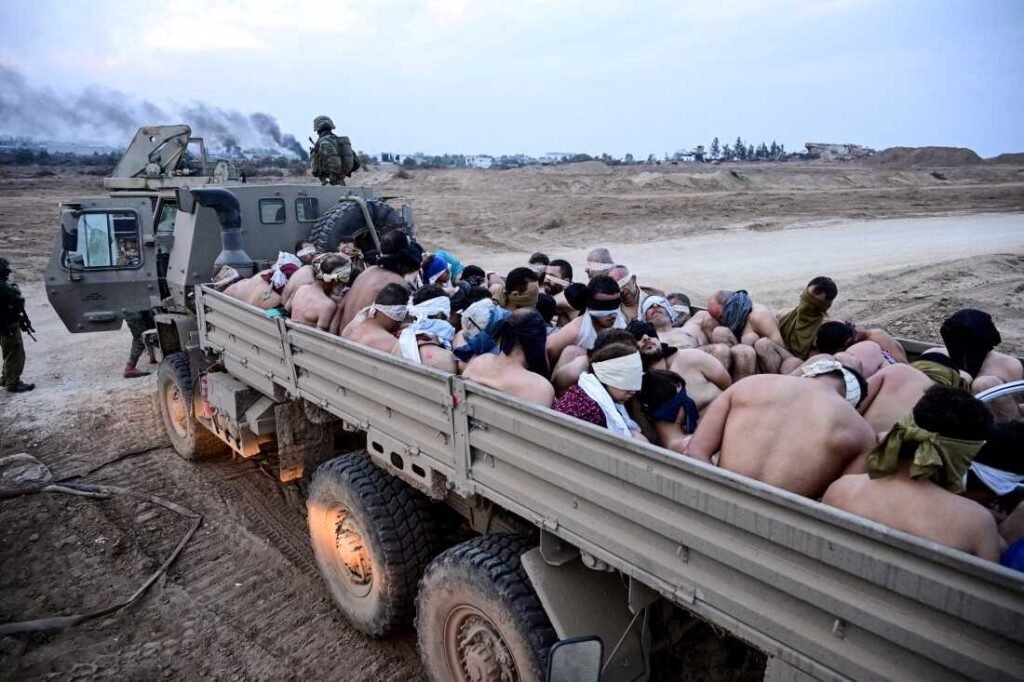
After nearly three weeks in military custody, al-Sai was transferred to Megiddo Prison. He arrived handcuffed and blindfolded, hearing guards threaten other detainees in Arabic.
Inside the prison clinic, he said guards accused him of belonging to Hamas and issued repeated threats. After a short medical examination, he was again blindfolded and led through corridors before being thrown to the ground.
What followed, al-Sai said, was a violent sexual assault accompanied by severe beatings and verbal threats. Guards mocked his profession as a journalist and threatened violence against his family.
He later learned from other detainees that such assaults are commonly referred to by prisoners as a “reception party,” a brutal initiation many face upon arrival.
In the days that followed, al-Sai began quietly asking other prisoners about their experiences. What he heard, particularly from detainees from Gaza, shocked him.
“We had never imagined this level of cruelty,” he said. “Not even in the worst stories.”
According to al-Sai, the vast majority of abuse was carried out by Israeli Prison Service guards, including reports of sexual assault involving dogs.
“They Used a Dog”
Halim Salem, a pseudonym used to protect his identity, described a similar pattern of abuse during his detention.
Salem said guards stormed his cell before dawn, forced prisoners to the floor, and tied them face down. He was taken to an area without cameras, beaten, stripped, and assaulted.
He said guards then brought in a dog, which was used to sexually assault him as guards watched and beat him when he screamed.
Afterwards, Salem said he was left outside in freezing temperatures for hours, wearing only underwear.
He described his year in detention as a process of slow destruction marked by starvation, humiliation, medical neglect, and overcrowding. Food was severely restricted, hygiene supplies were rationed, and illness was widespread.
Vitamin deficiencies caused serious health issues among prisoners, including nerve damage and immune collapse, he said.
Political Cover and Impunity
Salem also recounted an incident during a visit by Israel’s national security minister, Itamar Ben Gvir, to Ofer Prison in July 2024. He said guards assaulted prisoners in multiple rooms during the visit, acting on Ben Gvir’s instructions.
“I saw him laughing and gesturing,” Salem said. “Like a director.”
Ben Gvir’s office has been contacted for comment. The Israeli Prison Service said the allegations “do not reflect its conduct” and claimed detainee rights are upheld.
Sara Qudah, regional director of the Committee to Protect Journalists, described al-Sai’s allegations as deeply alarming and consistent with testimonies from other detained journalists.
“These grave allegations point to a systemic pattern of abuse and demand independent investigations and accountability,” she said.
Breaking the Silence
Both men said the aftermath of detention has been deeply traumatic. They remained silent for months out of fear, shame, and concern for their families.
Salem said his children did not recognise him when he returned home. Al-Sai learned only after his release that his wife had given birth while he was detained.
Despite the pain, both men decided to speak publicly.
Since October 2023, Israeli forces have detained more than 20,000 Palestinians. Rights groups report routine abuse, including sexual violence, starvation, beatings, and medical neglect. At least 110 detainees are known to have died in custody.
Even after the ceasefire in Gaza, Palestinian organisations say abuse inside Israeli prisons continues.
“We are real people,” Salem said. “Living testimony. The world must see this.”
Al-Sai agreed. “This occupation depends on lies,” he said. “So we must tell the truth. This is what our suffering looks like.”