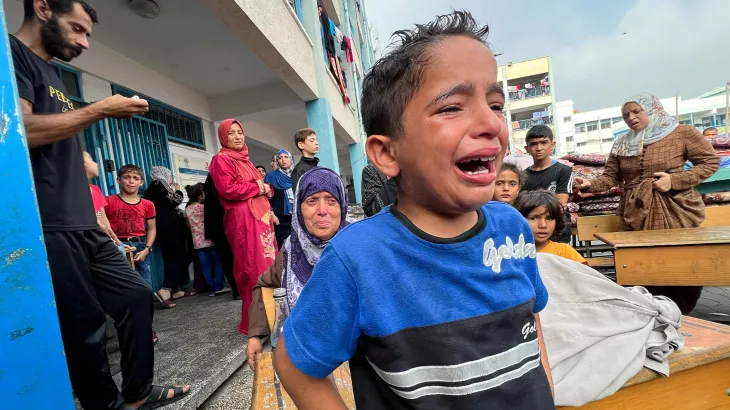
Gaza Herald – Gaza marks International Workers’ Day under conditions of severe economic collapse, as the prolonged Israeli genocidal war that began in October 2023 continues to dismantle the territory’s labour market and productive capacity. With widespread destruction of infrastructure and industry, work has largely ceased to function as a stable source of income, leaving hundreds of thousands without employment.
According to the General Federation of Palestinian Trade Unions, approximately 550,000 workers are currently unemployed, representing nearly 38% of the total labour force in the Palestinian territories. Total financial losses among workers are estimated at more than $9 billion, underscoring the depth of economic devastation.
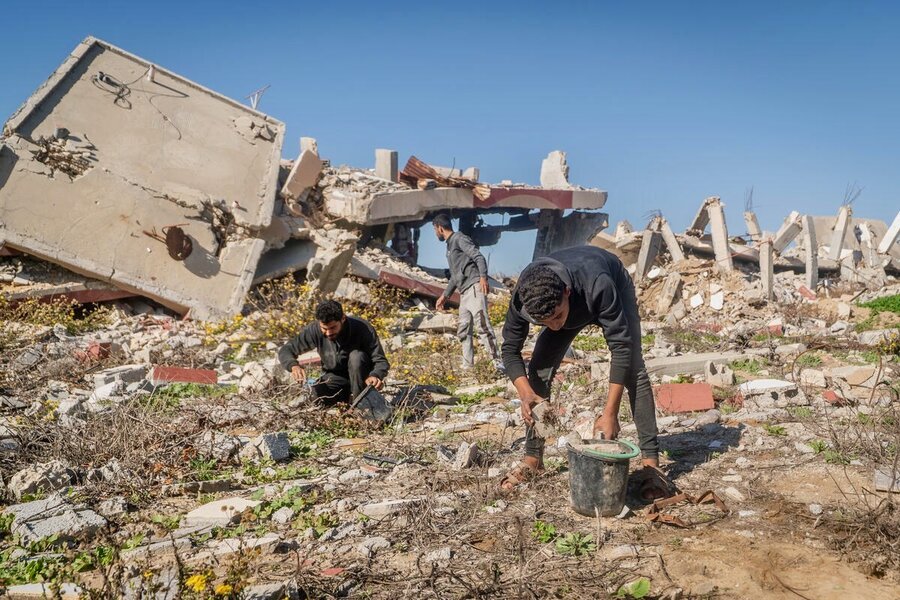
Local assessments indicate that around 90% of Gaza’s infrastructure has been destroyed or severely damaged, producing an estimated 70 million tons of rubble. The scale of destruction has effectively erased much of the territory’s economic base and transformed large areas into non-functional zones.
The Ministry of Labour reports that roughly 37,000 commercial establishments have been completely destroyed, resulting in the loss of tens of thousands of jobs across multiple sectors. Key industries, including construction, agriculture, transport, and manufacturing, have largely stopped operating.
Employment data shows major disruption across the economy: around 40,000 construction workers, 35,000 agricultural workers, 40,000 metal industry workers, 20,000 transport workers, 10,000 tailoring workers, 5,000 tourism workers, and 4,000 fishermen have been affected, pushing unemployment close to half a million people.
The Palestinian Central Bureau of Statistics reports unemployment in Gaza at approximately 68% during the genocide period, while labour force participation has dropped to around 25%, compared with about 40% before the genocide. Youth exclusion from education, employment, or training has reached 74%. Unemployment among university graduates stands at 79%, while it reaches about 92% among women.
The economic contraction has been equally severe. Estimates suggest Gaza’s GDP has fallen by roughly 83%-84%, effectively wiping out decades of development gains. Some analysts describe the situation as widespread structural unemployment exceeding 90% in certain areas.
Economist Dr. Amin Abu Aisha notes that Gaza previously maintained partial self-sufficiency in certain agricultural goods, but the war has led to sharp price increases, declining incomes, and the near-total disruption of production and trade. He warns that rebuilding the economy will require many years under current conditions.
Business sector representatives highlight a parallel collapse in private enterprise. Ali Al-Hayek points to severe restrictions on raw materials, energy shortages, and infrastructure destruction as key factors paralyzing industrial and commercial activity, warning of accelerating poverty and job losses.
As formal employment disappears, survival-based work has expanded. Engineers, traders, and displaced workers have shifted to informal activities such as charging mobile phones via solar panels, selling goods from rubble, or salvaging building materials from destroyed neighborhoods to generate minimal income.
Women have been particularly affected, with the destruction of small workshops eliminating income sources for many families. The loss of home-based and small-scale enterprises has deepened economic vulnerability among already marginalized groups.
The crisis is not confined to Gaza. In the occupied West Bank, unemployment has risen to approximately 280,000 people, reaching about 28%, driven by downturns in construction, industry, and transport sectors.
Overall, Gaza’s labour market has shifted from a structured economic system to a survival economy, where employment is no longer defined by stability or growth but by the ability to secure basic needs in conditions of prolonged collapse and limited recovery prospects.