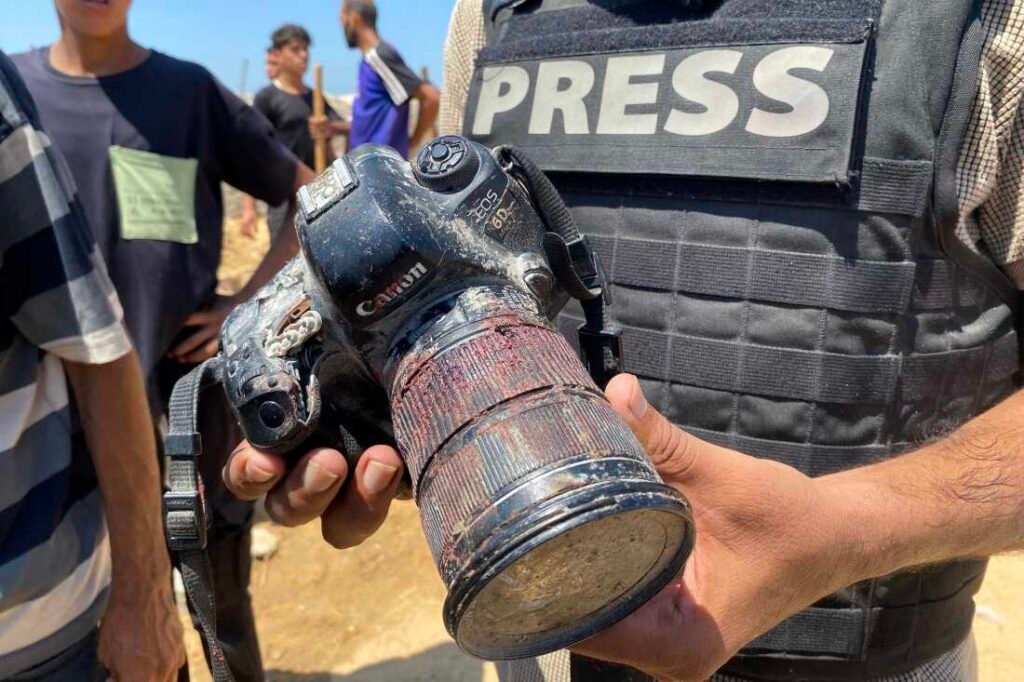
Gaza Herald – Global media organizations and major news agencies have called on Israeli authorities to lift restrictions preventing foreign journalists from entering the Gaza Strip, citing the urgent need for independent, on-the-ground reporting amid ongoing developments.
In a joint statement, executives from leading international outlets, including the BBC, CNN, Reuters, the German Press Agency, and The Washington Post, emphasized that direct field presence is essential for verifying information, engaging with civilians, and accurately documenting events as they unfold.
They noted that Israel has barred foreign journalists from accessing Gaza since the beginning of the Israeli war in October 2023, despite the implementation of a ceasefire agreement on October 10, 2025. Editors from more than 22 media institutions stated that repeated efforts to initiate dialogue with Israeli authorities regarding these restrictions have gone unanswered.
Israeli occupation has defended the ban by citing security concerns, including the risk of exposing troop locations and the designation of Gaza as an active combat zone. However, media leaders argue that the relative reduction in large-scale military attacks under the ceasefire undermines these justifications. They also pointed out that humanitarian workers are permitted entry and exit under regulated conditions, questioning why journalists remain excluded.
Meanwhile, Gaza’s Government Media Office reported that Israeli occupation forces committed 377 violations of the ceasefire agreement during April alone, resulting in 111 killed and 376 injuries. The same report indicated that only 4,503 aid trucks entered Gaza out of the 18,000 stipulated in the agreement, just 25% of the expected volume.
Fuel deliveries have also fallen significantly short, with only 187 trucks entering compared to the agreed 1,500, or roughly 12%. Officials warn that these shortages are exacerbating the humanitarian crisis and disrupting essential services, particularly in the health, water, and energy sectors.
Authorities in Gaza described the situation as a systematic obstruction of aid flows, depriving civilians of basic necessities and undermining the already fragile ceasefire. They called on international mediators to pressure Israel to fully implement the agreement, ensure consistent aid delivery, and reopen border crossings.
According to Gaza’s Ministry of Health, at least 824 Palestinians have been killed and 2,316 injured since the ceasefire took effect over six months ago. The total death toll since October 2023 has reached approximately 72,601, with more than 172,000 wounded, alongside widespread destruction of homes and infrastructure across the territory.