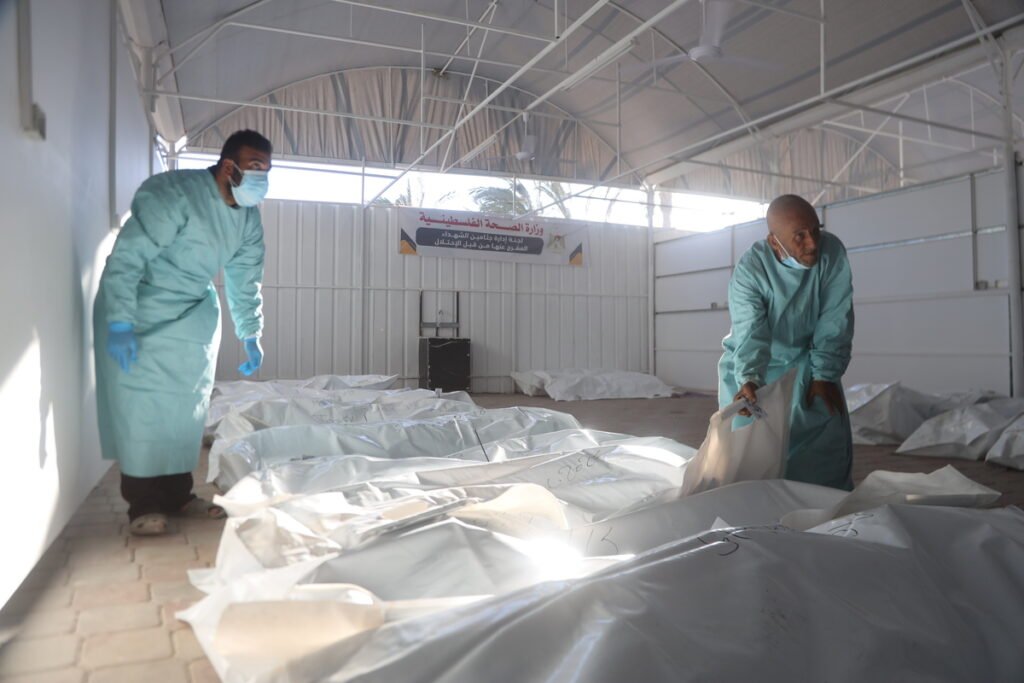
Gaza Herald — Civil Defense teams in Gaza on Saturday began an extensive and painstaking operation to recover the bodies of 55 Palestinians killed during Israeli attacks, whose remains are still buried beneath the rubble of destroyed residential buildings in the southern city of Khan Younis.
According to local authorities, the martyrs are believed to be trapped under the debris of 13 homes that were completely leveled during Israel’s military assault on the city. The recovery efforts are being carried out amid massive destruction, limited heavy machinery, and severe shortages of fuel and equipment, forcing rescue crews to rely heavily on manual labor.
Civil Defense officials said the operation is expected to take several days, as teams carefully sift through collapsed concrete slabs, twisted steel, and debris to reach those buried beneath. The process is complicated by structural instability, raising fears of further collapses that threaten the lives of rescuers.
Earlier this week, Civil Defense teams, working in coordination with international humanitarian organizations, recovered the remains of dozens of members of the Salem family from beneath the rubble of a home belonging to the Abu Ramadan family in Gaza City’s al-Rimal neighborhood. The bodies had remained buried for nearly two years following an Israeli strike that wiped out multiple families in a single attack.
Local officials estimate that more than 9,000 Palestinians are still buried under the ruins of destroyed homes across the Gaza Strip, a grim testament to the scale of devastation caused by Israel’s ongoing war on Gaza. Many families continue to wait in anguish, hoping to recover the remains of loved ones for proper burial, a right denied to them for months or even years.
The recovery operations come as Gaza grapples with the aftermath of unprecedented destruction. Entire neighborhoods have been flattened, leaving behind vast fields of rubble that conceal both human remains and unexploded ordnance. Civil Defense crews warn that the lack of advanced equipment and the ongoing restrictions on the entry of rescue machinery are severely hampering efforts to retrieve bodies and clear debris.
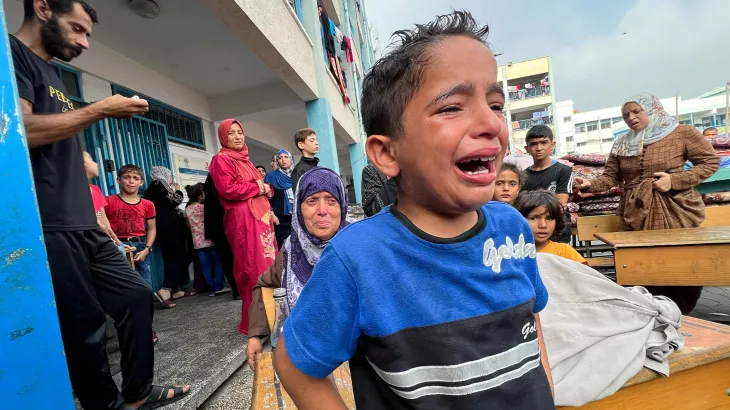
For families of the martyrs, the recovery process represents a painful but necessary step toward closure. Relatives often gather near the sites of collapsed homes, watching silently as rescue teams dig through the ruins, hoping to finally bring their loved ones home for burial in accordance with religious and cultural traditions.
Human rights groups have repeatedly stressed that the thousands of bodies still trapped beneath the rubble are not merely statistics, but victims of systematic attacks on civilian areas. They argue that the inability to recover the dead reflects both the scale of Israel’s bombardment and the continued humanitarian restrictions imposed on Gaza.
As recovery efforts continue in Khan Younis and other parts of the enclave, Gaza’s Civil Defense has renewed its calls for urgent international assistance, including the entry of heavy rescue equipment, forensic support, and protective gear. Officials warn that without such support, thousands of martyrs may remain buried beneath the ruins indefinitely, deepening the humanitarian and moral crisis facing Gaza.
The ongoing retrieval of bodies stands as a stark reminder that even after the bombs fall silent, the consequences of Israel’s war continue to claim time, dignity, and peace from Gaza’s people.