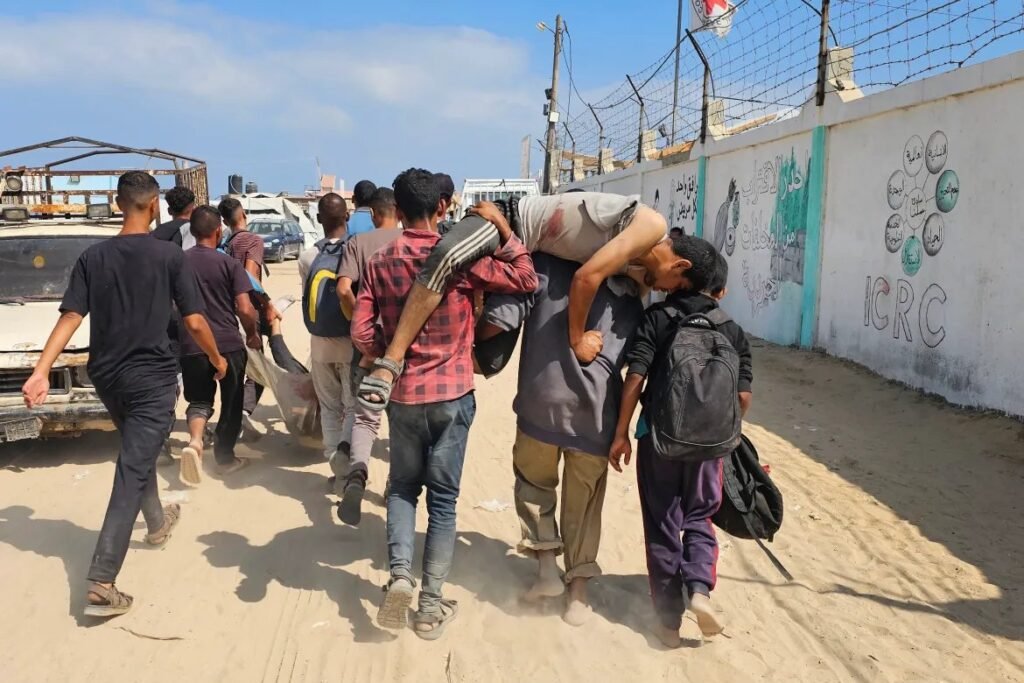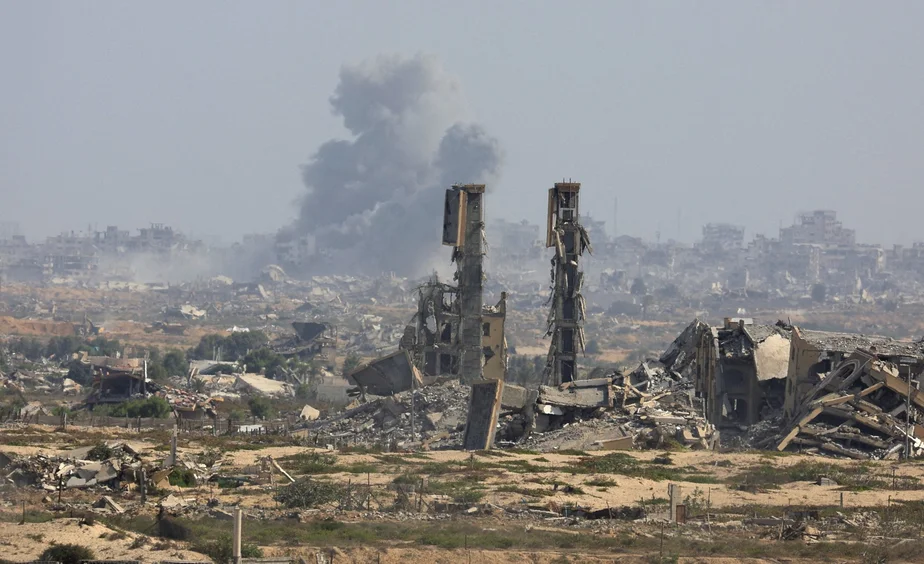
Gaza Herald_ Amid the overwhelming devastation that now defines life in the Gaza Strip, where an estimated 81 percent of buildings have been damaged or reduced to rubble, a small yet determined community of Palestinian tech workers is fighting to preserve what remains of Gaza’s digital life. From tents, displacement camps, and partially collapsed shelters, coders, computer technicians, and freelance digital workers continue to work under extreme conditions, refusing to be severed from a world Israel’s war has sought to cut them off from.
Under the shadow of Israel’s ongoing genocidal assault, Gaza’s young programmers have transformed digital skills into tools of survival. With electricity scarce and internet access unreliable or nonexistent, many people work offline for days or even weeks. Code is written by hand in notebooks, projects are stored on damaged laptops powered by improvised solar panels, and files are uploaded only during rare moments when a weak signal briefly appears. In those short windows of connectivity, work is sent to clients abroad, often without knowing whether contracts still exist.
“In a place where everything is taken from you, this work gives you a reason to keep going,” said Shaima Abu Al Atta, a software developer working from a displacement camp. “We are always looking for another way to connect, another solution. Without this, we wouldn’t just be physically surviving; we would die inside.”
A Tech Community Almost Erased
Before October 2023, Gaza had a small but active technology sector. Innovation hubs hosted training programs and coding boot camps, while hundreds of freelancers earned an income by working remotely for international companies. That fragile ecosystem has since been nearly wiped out. Buildings that once housed shared workspaces, startups, and collaborative projects have been flattened, along with the infrastructure that sustained them.
Shareef Naim, an engineer who previously managed a technology hub in Gaza, described the scale of the destruction. His center once hosted more than a dozen programmers, many holding contracts with companies abroad. “The team was productive and growing,” he said. “Now the building is gone.” Despite the devastation, some former team members continue attempting to work from tents and emergency shelters, relying on laptops salvaged from the ruins.
Electricity, Equipment, and Daily Struggle
For computer repair technicians like A’aed Shamaly, keeping devices functional has become a daily battle. “Electricity is the biggest challenge,” he said. Power, when available, is unstable and prone to frequent interruptions. Costs have skyrocketed to nearly $12 per kilowatt, compared with around $1.50 for 10 kilowatts before the war.
Spare parts are almost impossible to obtain, forcing technicians to scavenge components from broken devices pulled from bombed buildings. This makes even basic repairs a matter of improvisation and endurance, as Gaza’s remaining digital tools slowly wear down with no realistic way to replace them.
Digital Siege and Collective Consequences
The destruction of Gaza’s telecommunications infrastructure has been systematic and devastating. According to the United Nations Satellite Centre, nearly 200,000 structures across the Strip have been damaged, with more than 123,000 destroyed. The Palestinian Central Bureau of Statistics reports that Israeli forces have deliberately targeted telecommunications networks, leaving 64 percent of mobile phone towers out of service as of early April 2025. In Rafah, coverage has collapsed to just 27 percent, down from near total access before the war.
Internet monitoring group NetBlocks has documented repeated outages throughout the conflict, including a near-total communications blackout in January 2024 that lasted several days. Activists argue these shutdowns are part of a broader strategy to isolate Gaza, restrict the flow of information, and obscure the realities of life under bombardment.
Israel has long imposed technological restrictions on Gaza, limiting mobile networks to outdated 2G services while allowing faster 4G technology in the occupied West Bank. The war has intensified this digital apartheid, driving Gaza’s telecommunications sector toward collapse. Its estimated value has fallen from $13 million in 2023 to just $1.5 million in 2024, an 89 percent decline. Total losses are believed to exceed $500 million, while reconstruction costs are projected to reach at least $90 million.
The impact extends far beyond the tech sector. Even before the war, unemployment in Gaza exceeded 79 percent, making remote digital work a vital source of income. Today, unreliable connectivity has pushed many freelancers into joblessness, just as Israel’s siege and starvation policies have driven food prices to unbearable levels.
The telecommunications collapse has also crippled essential services. Banking systems have been disrupted, preventing money transfers and leaving families unable to access cash. Healthcare has suffered severe consequences, with the World Health Organization documenting deaths linked to the inability to contact emergency services during communications blackouts.
Even during the fragile ceasefire that took effect in October 2025, Israel has continued to block the entry of vital repair equipment needed to restore Gaza’s digital infrastructure. Analysts say these restrictions are part of a deliberate policy aimed at maintaining control over Palestinian communications and suppressing the transmission of information beyond Gaza’s borders.
As ceasefire efforts falter and Israeli officials threaten a return to full-scale war, Gaza’s digital future remains deeply uncertain. Yet amid the ruins, Gaza’s tech workers persist, coding from rubble, repairing devices with salvaged parts, and refusing to allow the digital voice of their besieged homeland to be silenced.