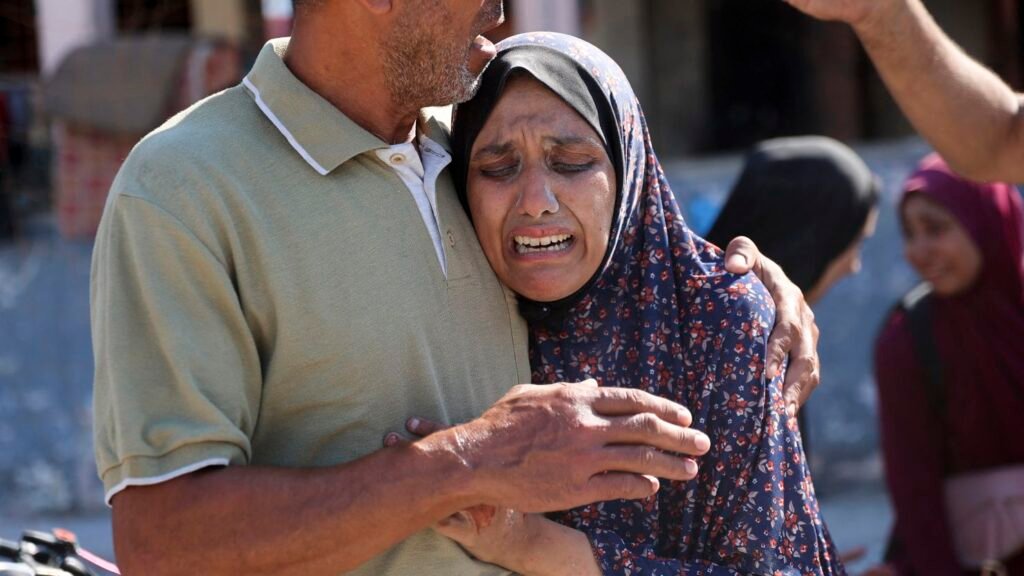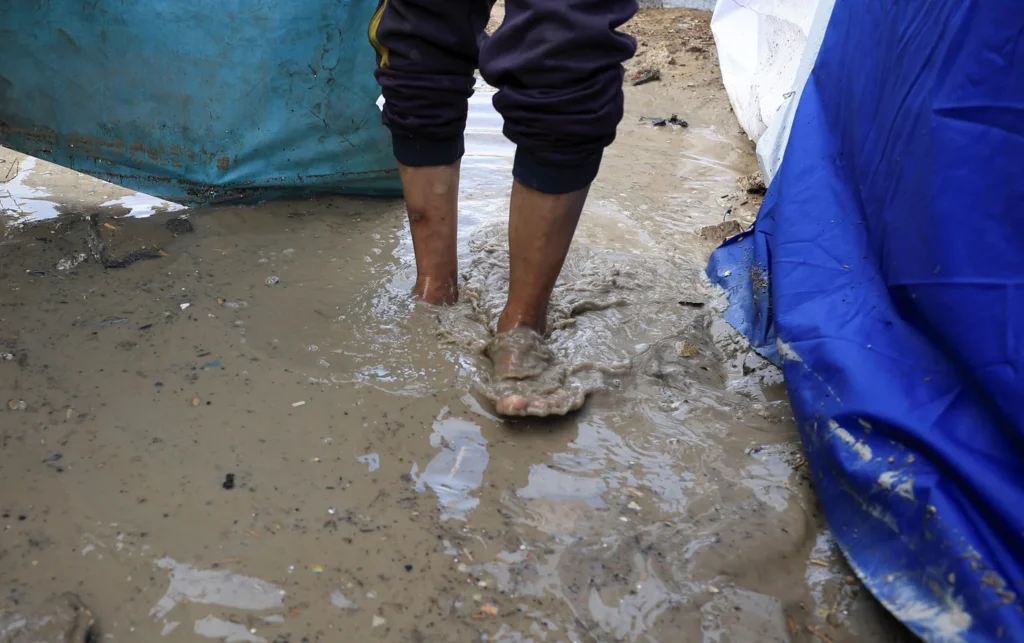
Gaza Herald_ Gaza’s humanitarian crisis deepens as heavy rainfall inundates the tents of thousands of displaced Palestinians, raising fears of “catastrophic consequences” for nearly two million people still living without proper shelter. With winter approaching, the ongoing blockade and restrictions on aid continue to leave families exposed to deadly conditions.
Flooded Camps and Rising Risks
Early on Friday, displaced families in makeshift camps across Gaza woke to find their tents flooded, local reports indicated. The Palestinian Civil Defence has urged residents to take precautions against the worsening storms, while the Meteorological Department issued flash flood warnings for low-lying areas and valleys throughout Gaza and the occupied West Bank. Strong winds, heavy rain, and thunderstorms are expected to persist in the coming days.
UNRWA spokesperson Adnan Abu Hasna emphasized that the approaching storm “will have catastrophic consequences for displaced people in the Gaza Strip.” In southern Gaza’s al-Mawasi area alone, more than 900,000 displaced residents live in tents, according to municipal authorities, who stressed the urgent need for equipment to construct barriers against flooding. Hundreds of thousands more are living under similar precarious conditions across the Strip, often in cramped shelters with limited access to basic services.
Impact of the War and Ongoing Aid Restrictions
During its two-year military campaign, Israel destroyed or damaged 83 percent of Gaza’s structures, including schools, hospitals, and homes, leaving residents with little recourse during displacement. The Global Shelter Cluster reports that over 282,000 homes have been razed or rendered uninhabitable.
Although a ceasefire was implemented last month, Israel continues to restrict the entry of essential shelter materials and equipment needed for reconstruction. Under the agreement with Hamas, Israel was obligated to permit the delivery of hundreds of thousands of tents and mobile shelters for families who lost their homes. However, the blockade persists: only around 150 aid trucks enter Gaza daily, far below the 600 trucks agreed upon to address urgent humanitarian needs.
As Gaza braces for further storms, the humanitarian situation remains dire, with displaced families at high risk of illness, injury, and further loss. The combination of destroyed infrastructure, insufficient winter aid, and ongoing restrictions underscores the urgent need for full access to shelters, equipment, and humanitarian assistance to prevent a winter catastrophe in the Gaza Strip.