
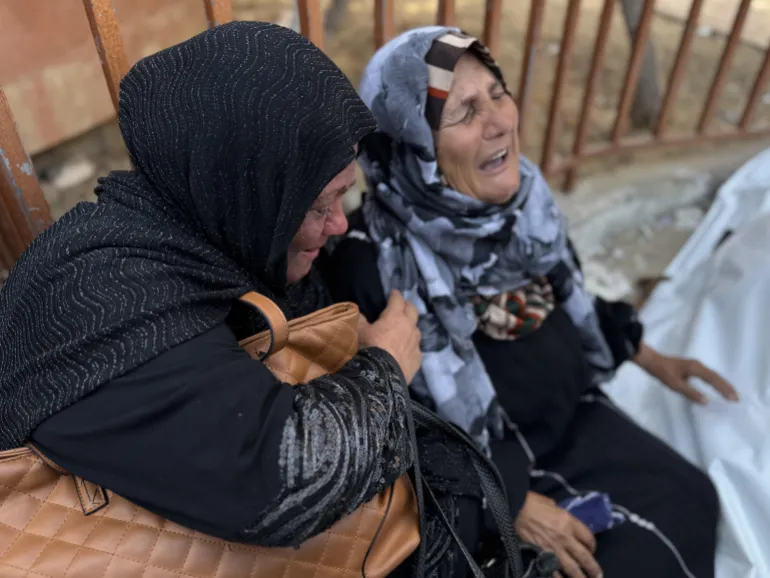
Gaza Herald_ As I prepare to begin training Gaza’s doctors and mental health professionals in a World Health Organization initiative aimed at bridging the gap between mental health needs and available resources, a question haunts me: can the Palestinian enclave be healed? Our goal is to strengthen Gaza’s shattered medical system, integrating mental health into primary care and empowering non-specialists to recognize and respond to psychological distress. But Gaza is more than a broken healthcare system; it is a society gasping for breath, its skyline shattered, its soil layered with grief.
Around $70 billion is reportedly needed to rebuild hospitals, homes, schools, and other infrastructure crushed by repeated bombardments. Yet no economist can account for the invisible destruction: the psychological and moral disintegration of a society stripped of hope. Gaza’s wounds are both visible and invisible rubble and trauma entwined. Gaza City has become a single, massive wound whose healing cannot be confined to medical interventions or reduced to sterile “recovery plans” or psychosocial programs. What Gaza requires is a process, both material and moral, a radical reordering of conscience, not merely reconstruction contracts.
Profound Losses
Approximately 90 percent of Gaza’s housing has been damaged or destroyed. Hospitals and clinics have been deliberately targeted. Roads, water networks, universities, archives, mosques, and cemeteries lie flattened. Yet the deepest losses are human: children missing from classrooms, trembling hands that once built, and mothers too fearful to give life in a world that kills its infants. Trauma in Gaza is not an accident; it is the outcome of deliberate, systematic political violence. Its aftermath is the corrosion of dignity, trust, and the normalization of the unbearable.
Even after ceasefires, Gaza’s psychological wounds are renewed daily by siege, deprivation, and humiliation. Mental health support, divorced from justice, treats symptoms while ignoring causes. Humanitarian aid, when stripped of moral engagement, risks becoming a machinery of domination. Hunger becomes a weapon, “aid” transforms into bait, and survival is conditioned on submission. True trauma-informed care in Gaza cannot adopt apolitical frameworks imported from elsewhere; it must name the perpetrators, uphold the agency of survivors, and reject false equivalence between victim and oppressor.
Therapy of Routine
While accountability is pursued, Gaza cannot wait. Immediate assistance with food, water, shelter, and medical care is a right, not charity. Recovery must go hand-in-hand with restoring everyday life: reopening schools, reuniting families, and bringing health centers back into service. Establishing routine is a therapeutic act: writing a name on paper, finding a safe space for children, or nurturing hope are all acts of restoration. Yet none of this can endure without justice. Rebuilding without reckoning is akin to bandaging a wound that is still being stabbed. Lessons from Iraq and Afghanistan show that when reconstruction is outsourced to those who profit from destruction, domination persists under a new guise. Gaza must not become another laboratory of neoliberal recovery.
The Moral Reckoning
History provides a haunting precedent. After World War II, the Nuremberg Trials were not merely legal tribunals; they were moral processes aimed at both punishing perpetrators and reaffirming the boundaries of human conscience. In Gaza, the question remains: will there be a similar reckoning? Will truth be spoken, responsibility named, and the dignity of the dead restored so that survivors can breathe again? Until this occurs, every reconstruction plan and condolence speech remains incomplete. Healing begins with truth, matures through justice, and culminates in solidarity.
Gaza’s recovery must mirror the moral repair that accompanied Europe’s postwar reconstruction. Palestinians need solidarity that is informed, courageous, and ethically grounded. They call on the world to reject neutrality, to speak clearly about genocide and settler colonialism, and to dismantle the systems that perpetuate their suffering. Healing Gaza is not simply a task for doctors; it is a call to restore humanity itself.
Gaza can be healed, but not by the same hands that wounded her. True recovery demands engagement with Gaza’s suffering and its truth. Aid packages, recovery funds, and rehabilitation programs cannot replace accountability or justice. Amid the ruins of Gaza, the real question is not whether the Palestinian territory can recover it is whether the world can recover its moral vision. Only by answering that question can Gaza, and the conscience of humanity, begin to breathe again.

