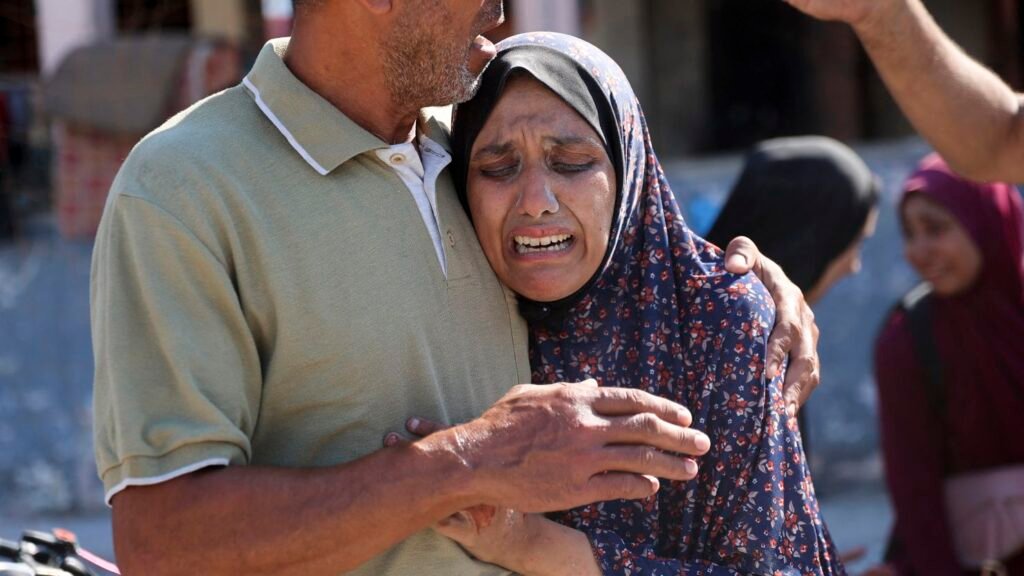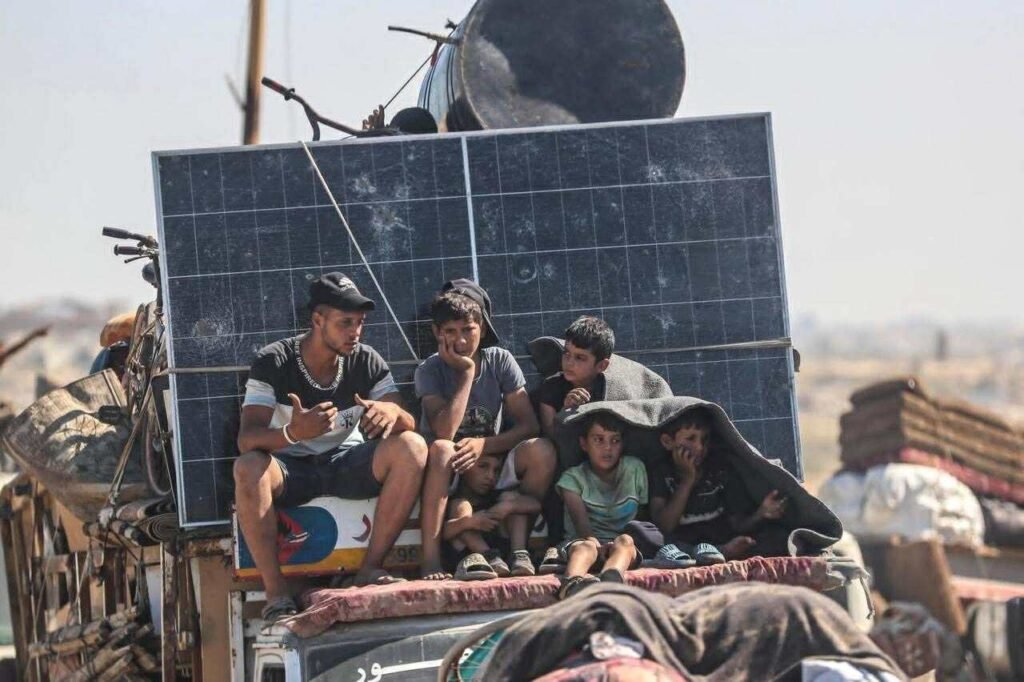
Gaza Herald _ Two years after Israel’s genocidal campaign turned Gaza into a wasteland, tens of thousands of displaced Palestinians are making their way back north not to homes, but to ruins. Their return is both an act of defiance and mourning, a desperate attempt to reclaim what remains of their lives after the occupation’s relentless bombardment erased entire neighborhoods and generations. What greets them now is not the sound of life, but the silence of devastation.
In Gaza City and across the north, Palestinians returning home after two years of genocidal bombardment are met with a landscape of ruin, a place where survival no longer means living, but merely enduring.
Entire neighborhoods have been erased, reduced to shattered concrete, twisted steel, and dust. Families walking or driving back to what once were their homes now find nothing but the ghosts of their past, roofs collapsed, walls caved in, streets buried under rubble.
The devastation is so complete that even pitching a tent is a challenge. With the ground consumed by debris, many set up makeshift shelters in the middle of the roads, risking their lives as cars weave through the destruction.
Children wander among the ruins, their small hands brushing through dust and debris, searching for fragments of memory: a cooking pot, a torn school bag, a family photo. Each discovery is a reminder of a life stolen, of a home that no longer exists.
Water, food, and shelter have become luxuries. Residents depend on water trucks that often arrive late, bring too little, or deliver water too salty or contaminated to drink. Markets are slowly reopening, but even the simplest items are priced beyond reach. For those who have gone years without income, even three dollars might as well be a fortune.
Yet, beyond the hunger and thirst, what truly defines Gaza today is the collective trauma. Every face carries the weight of loss not only of homes and possessions, but of entire families buried beneath the rubble. The return to Gaza City is not a homecoming; it is a reckoning with what has been stolen, and a testament to a people still standing amid the ruins of their world.
For Palestinians, the return is not the end of suffering but the reaffirmation of identity. Amid the wreckage and sorrow, they plant the seeds of renewal, cleaning, rebuilding, and refusing to leave the land that bears their history. Gaza’s ruins speak not only of what has been destroyed, but of a people who refuse to vanish. In the heart of this devastation, life, fragile yet unbroken, insists on beginning again.