Gaza Herald — As Israel and Hamas carried out their latest exchange of captives under U.S. President Donald Trump’s controversial 20-point Gaza ceasefire plan, Western media once again revealed a familiar and troubling pattern, one that centers Israeli pain while marginalizing Palestinian suffering.
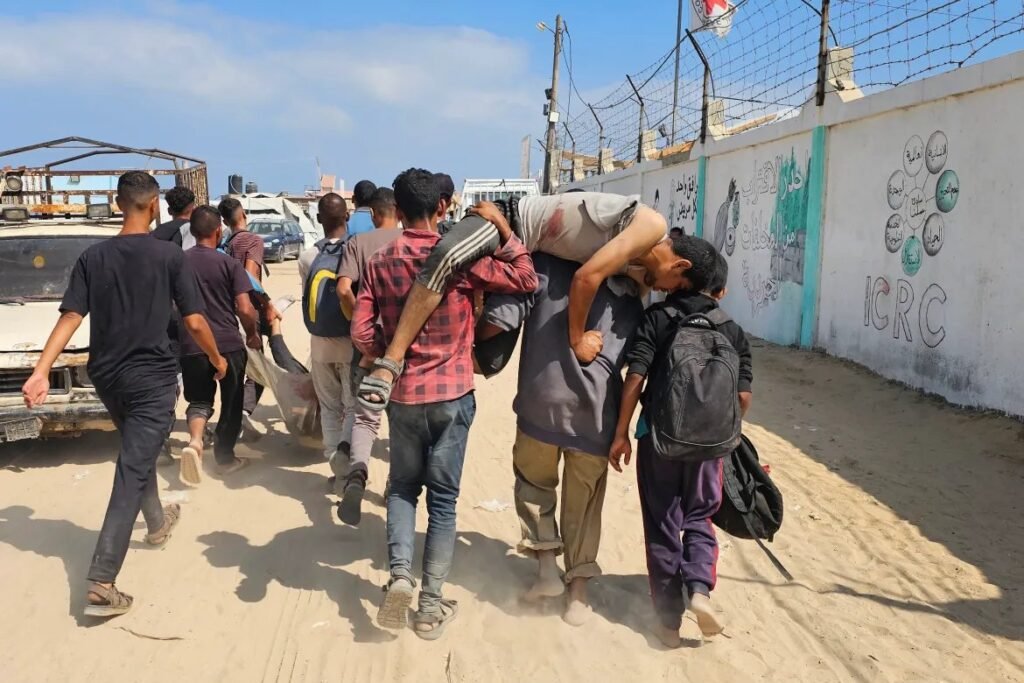
Across major outlets from The BBC and The New York Times to Reuters, AFP, CNN, and The Washington Post, coverage overwhelmingly humanized Israeli captives, detailing their names, families, and emotional reunions while Palestinians were reduced to anonymous figures in the background, stripped of context, dignity, and history.
For instance, seven of eight AFP social media posts focused solely on Israeli captives. Reuters published a 36-photo gallery: 26 images celebrated Israeli captives and national joy, while only nine depicted Palestinians. The BBC ran personal features under the headline “Who are the released hostages?” but offered no parallel story for Palestinian detainees or their families. CNN led with “Hostage families reunited as Trump is cheered in Israeli parliament,” omitting any mention of Palestinians released in the same exchange.
Even the structure of reporting revealed this hierarchy. The Washington Post’s “key developments” list began with Trump’s speech and Israeli narratives, relegating Palestinians to a single closing bullet point, a small line that mirrored a much larger, decades-long erasure in Western journalism. This systematic imbalance does not simply reflect bias; it sustains a worldview where Israel’s actions are normalized and Palestinian humanity is made invisible.
The Hidden Dead
Since Trump unveiled his ceasefire plan, headlines have fixated on Hamas’s obligation to return the remains of 28 Israeli captives. Yet few have noted Israel’s own obligation under Article 5 of that same plan to return the bodies of 420 Palestinians it continues to withhold.
According to Israeli rights group B’Tselem, Israel’s ongoing policy of retaining Palestinian bodies is a deliberate form of political leverage, a “long-standing practice” that turns the dead into bargaining chips. More than 600 Palestinian bodies are believed to be stored in Israeli morgues or what are grimly known as “cemeteries of numbers.” Yet this systematic dehumanization rarely earns even a footnote in Western coverage.
The Language of Power
Language, too, reveals the asymmetry. Israelis held in Gaza are universally described as “hostages,” a term consistent with international law and imbued with moral sympathy. Palestinians, on the other hand, including thousands detained without charge or trial, among them women, children, and the elderly, are labeled “prisoners” or “detainees.”
This is not merely semantics. The words chosen define who is seen as a victim and who as a suspect. Many Palestinians arrested since October 7, 2023, were civilians seized during mass raids, held as political leverage by international standards; they, too, could be described as hostages. But Western media rarely uses that term, reinforcing an implicit hierarchy of worth: Israeli pain is personal and tragic, while Palestinian pain is statistical and abstract.
The Erased Context
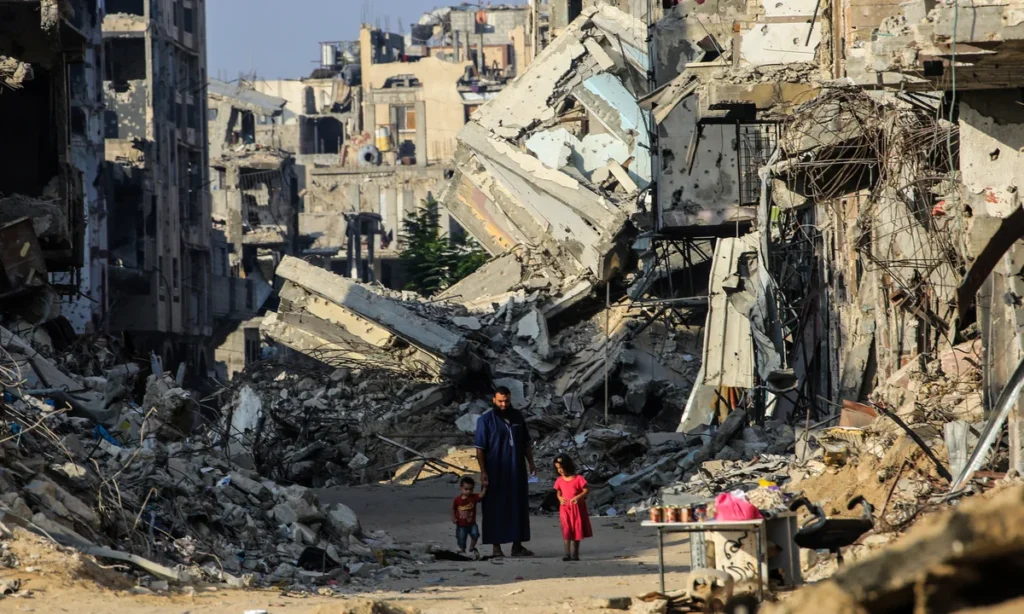
Western coverage of the ceasefire also continued its long tradition of erasing the structural context behind Palestinian resistance. Few outlets mentioned Israel’s illegal occupation, the 17-year siege on Gaza, or the genocide allegations facing Israeli officials at the International Criminal Court.
When background was included, it almost always began with October 7, as if history began with Palestinian violence, not decades of dispossession, blockade, and apartheid. Even when reporting the same event, coverage differed sharply: Israeli celebrations were framed as “a nation’s relief,” while Palestinian gatherings were met with tear gas and an Israeli crackdown that only The Guardian briefly mentioned.
The message was clear: Palestinian grief remains unworthy of public space.
A Crisis of Credibility
This persistent asymmetry has created more than moral imbalance; it has produced a full-blown crisis of credibility for Western media. During the first two weeks of Israel’s 2023 war on Gaza, outlets published four times as many emotionally driven stories about Israeli victims as Palestinian ones, even as the Palestinian death toll more than doubled Israel’s.
That pattern is no longer invisible. Across the West, especially among younger audiences, faith in mainstream media has plummeted as solidarity with Palestinians rises. Journalists themselves are rebelling from The New York Times to The BBC, hundreds have signed open letters condemning institutional double standards and the silencing of Palestinian perspectives.
The reckoning is already underway. What remains to be seen is whether Western newsrooms will acknowledge their complicity in perpetuating a hierarchy of grief or whether they will continue to reproduce it in the next round of suffering.
For Gaza’s people, who have lived two years of genocide under the world’s gaze, the truth is not abstract. Every word matter, because every erasure kills twice: first the body, then the memory.