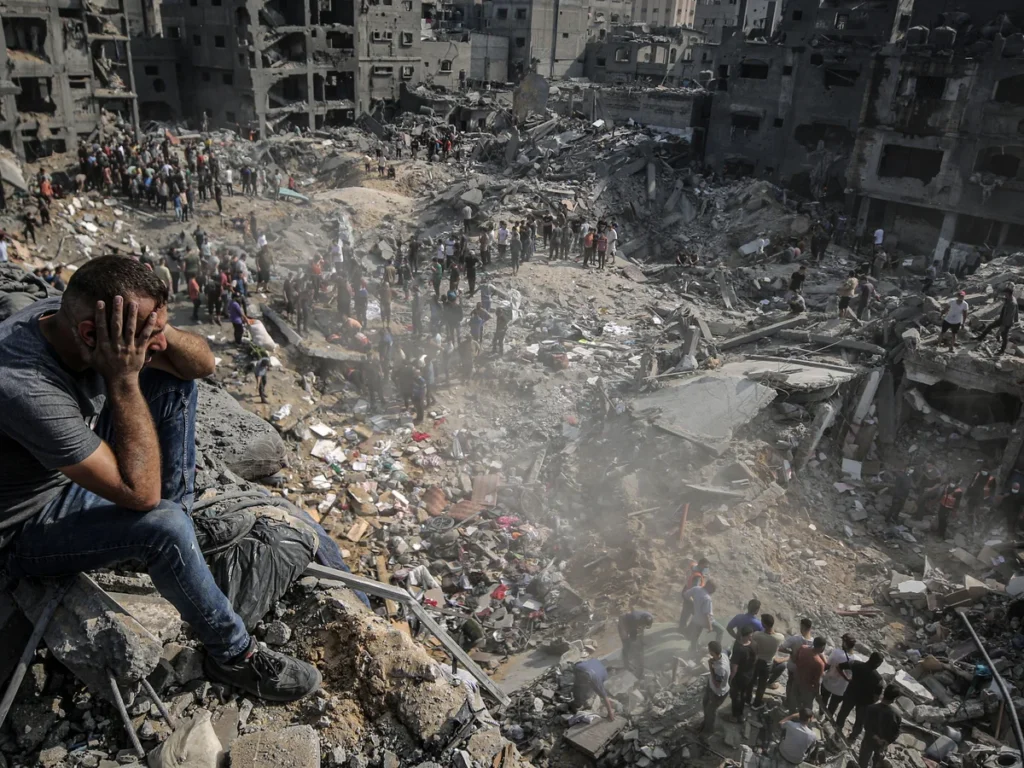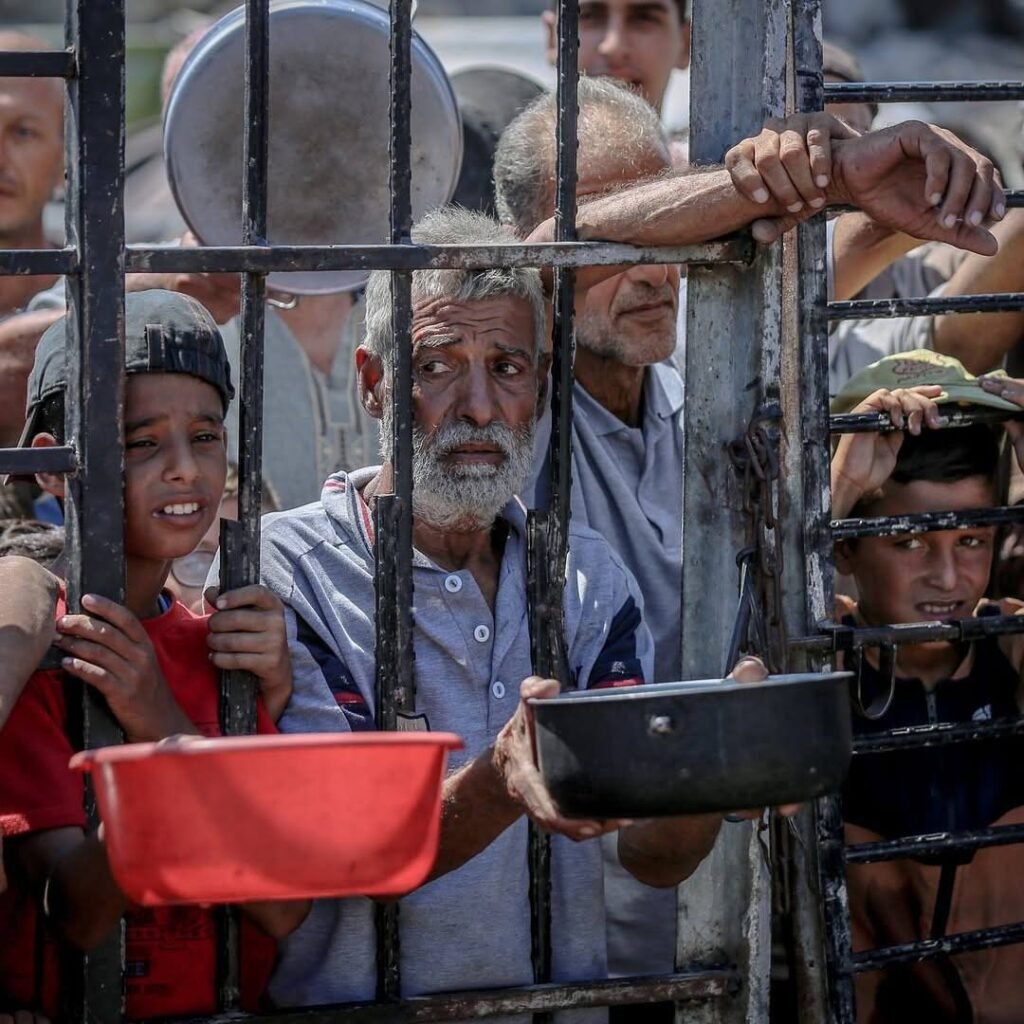
Gaza Herald — Days after the ceasefire between Hamas and Israel was declared, Gaza remains trapped in silence, not the peace of safety, but the suffocating quiet of starvation and collapse.
The promise of relief, long awaited by two million exhausted civilians, has failed to materialize. Humanitarian aid, which should have flooded the besieged enclave, continues to trickle in under the control and discretion of the occupying power. The result: Gaza’s ailing children, the most fragile victims of this war, are still “desperately waiting for help.”
Fuel Crisis Deepens
According to humanitarian agencies, fewer than 300 aid trucks are entering Gaza daily, less than half the minimum number required to meet basic survival needs. Of those, many carry commercial products instead of essential humanitarian supplies. Families, stripped of income, savings, and access to banking, are unable to purchase what is sold in the markets. The truce has not restored life; it has simply reshaped Gaza’s suffering into new forms of deprivation.
In the ruins of Gaza City, at the Patient’s Friends Benevolent Society (PFBS) hospital, doctors are treating children whose bodies bear the marks of two years of siege, bombing, and famine. Fuel shortages threaten to shut down the few remaining machines that still function.
“We are still waiting for medical and humanitarian aid to reach our hospital,” said pediatrician Dr. Musab Farwana. “Every day that passes without it means more children die. When aid finally arrives, perhaps things will improve, but right now, we are operating on the edge of collapse.”
Among the patients is baby Ruqayya, her frail frame wrapped in cloth as her mother, Randa, watches helplessly. “I can no longer feed her,” Randa said. “I have no food myself. She is starving.” The hospital lacks milk, nutritional supplements, and even basic medicine. Doctors say she is “on the brink of death.”
Two years of relentless Israeli bombardment have decimated Gaza’s medical infrastructure. More than 38 hospitals and dozens of clinics have been destroyed or forced to close, hundreds of health workers have been killed, and the blockade has cut off even the simplest humanitarian supplies. The once-bustling health sector now functions only in fragments, improvised tents, candlelit wards, and hospital corridors lined with malnourished children.
Hospitals Remain Overwhelmed
The ceasefire agreement was supposed to end the siege and restore aid access. Instead, Israel continues to strangle the flow of supplies, denying fuel and restricting food and medicine under the pretext of “security vetting.” Rafah crossing, Gaza’s only gateway to Egypt and the world, remains closed. Israeli authorities have publicly stated that no aid will enter through Rafah, insisting all shipments pass through the Karem Abu Salem (Kerem Shalom) crossing, which remains under Israeli control.
This control extends beyond borders; it dictates survival itself. In the markets, commercial trucks carrying non-essential goods have replaced food and medicine. Yet most Gazans have no income, no banking system, and no power to buy anything. The ceasefire has not lifted the siege; it has institutionalized it.
At the same time, hospitals such as al-Shifa and al-Ahli remain overwhelmed. Al-Quds Hospital is only partially functional after an Israeli strike damaged its oxygen station. It now depends on small oxygen cylinders that could run out within days. Doctors warn that thousands of children and chronically ill patients, including those with heart disease, cancer, and diabetes, have gone untreated for months.
Tahani Hassouna, holding her infant daughter Alma at PFBS hospital, said she spends every hour praying for the borders to reopen. Alma suffers from a severe heart condition. “She cannot gain weight. She cannot breathe without oxygen,” Tahani said. “Every day, I hope we can leave for surgery abroad, but the borders are closed. We are trapped.”
Health Crisis Worsens
Medical professionals across Gaza describe the situation as beyond catastrophic. “We have entered a phase of total collapse,” said a hospital administrator in Gaza City. “The ceasefire did not bring aid. It only brought false hope. Our patients are starving while the world applauds a peace that does not exist.”
The blockade’s impact extends far beyond the hospital wards. With water systems destroyed and fuel scarce, disease spreads rapidly. Children already weakened by hunger now face outbreaks of diarrhea, respiratory infections, and other preventable illnesses. Aid agencies warn that famine is tightening its grip, with one in four children now acutely malnourished and starvation spreading across the Strip.
International organizations have called for an immediate and unconditional flow of aid, but Israel’s restrictions remain unchanged. The occupying power continues to decide when and if Gaza’s children will eat, drink, or receive medicine.
The so-called ceasefire has not brought peace. It has brought the quiet continuation of war by other means — the slow suffocation of a people denied even the right to heal.
For Gaza’s sick and starving children, help has yet to come. And until the siege is lifted, the ceasefire remains nothing more than another word for endurance in the shadow of occupation.