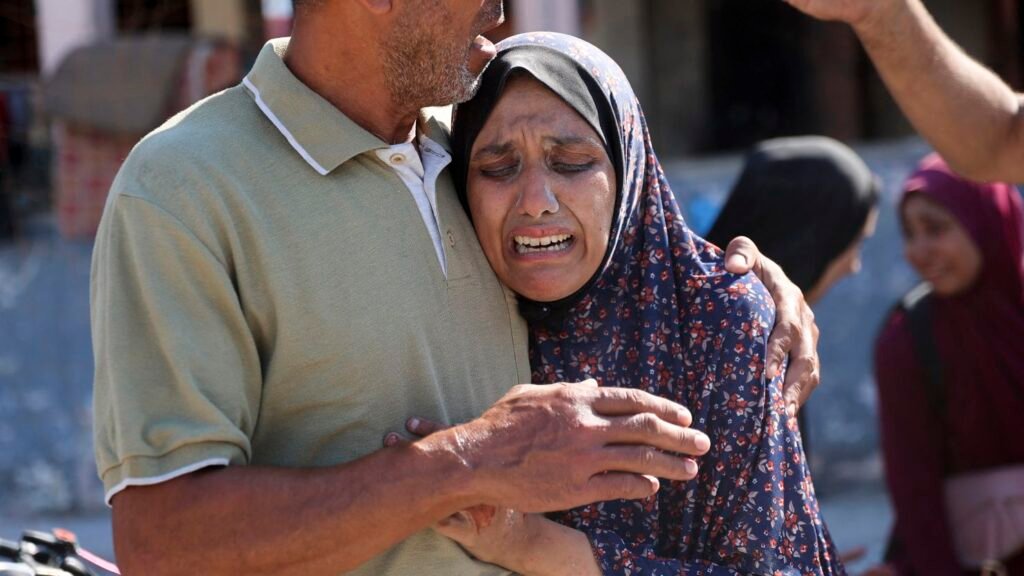
Gaza Herald- Thousands of Palestinian families are making their way back to Gaza City and the northern governorates, walking for hours through the wreckage of war in the wake of a ceasefire agreement reached in Sharm el-Sheikh, Egypt.
With fuel and transportation in short supply, long convoys of exhausted returnees move north along Rashid and Salah al-Din Streets, determined to reclaim what remains of their homes. Some have walked as far as 15 kilometers from Khan Yunis, describing the journey as grueling but necessary.
The Civil Defense said that around half a million Palestinians have returned to Gaza City and the northern Gaza Strip since the truce took effect, as the full extent of Israel’s destruction across the enclave becomes clear.
In the central and eastern areas of Khan Yunis, large numbers of displaced residents have also begun returning following the withdrawal of Israeli forces. Many found their neighborhoods flattened and were forced to erect makeshift tents over the rubble of their destroyed homes.
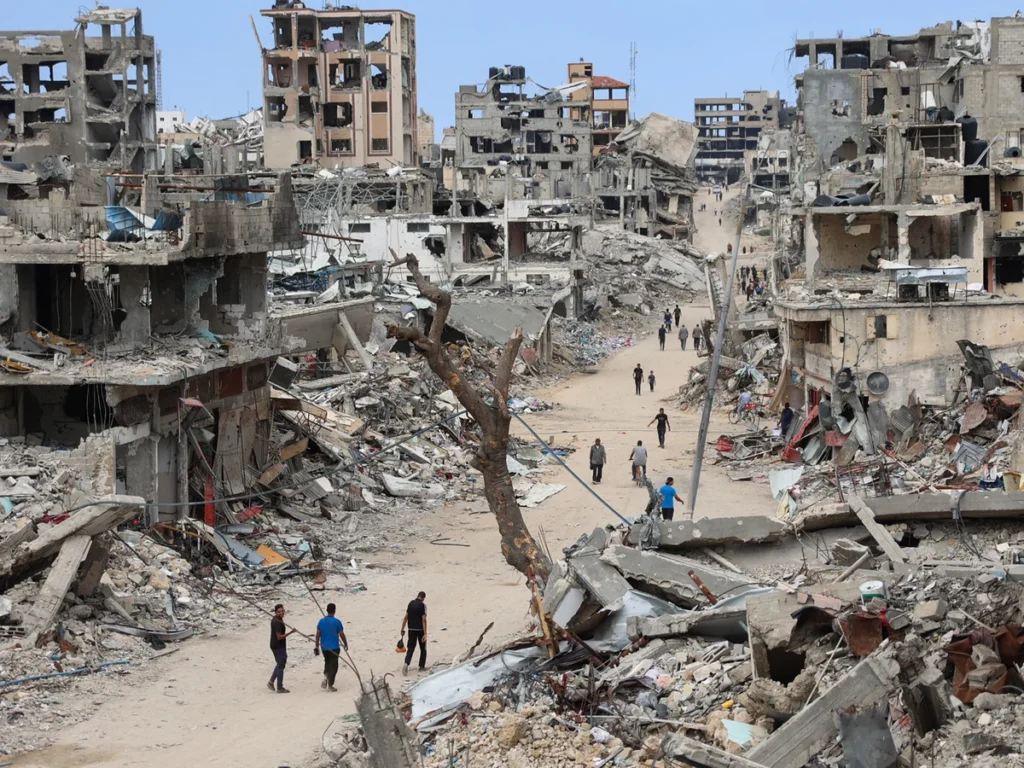
What they are returning to is almost unrecognizable. The Government Media Office in Gaza confirmed that more than 90% of civilian infrastructure and 300,000 housing units have been destroyed during the war. Amjad Shawa, head of the Palestinian Non-Governmental Organizations Network, said 1.5 million residents of the Gaza Strip have lost their homes entirely.
Aerial footage shows vast tracts of land where neighborhoods once stood, now reduced to endless stretches of rubble. There is no electricity, no running water, and no functioning infrastructure.
Amid the devastation, local authorities in Gaza City have begun clearing roads to enable movement and humanitarian access. Images show bulldozers removing debris from major streets, though the work is slow and arduous given the scale of destruction.
The Gaza government said that over 5,000 field, service, and humanitarian missions were carried out within 24 hours as part of an emergency plan to restore life gradually across the Strip.
A Gaza Municipality spokesperson told Al Jazeera that the immediate priorities include “securing water, opening streets, collecting waste, and addressing sewage problems”, all critical tasks in preventing a humanitarian catastrophe.
The return of residents also revives painful memories. Many described walking through streets lined with skeletal buildings and shattered infrastructure, recognizing the ruins of their homes only by fragments of walls or household debris.
At the start of the war, Israel’s occupation forces had ordered mass evacuations from northern Gaza, forcing residents to flee south under bombardment. A brief return was permitted during a short-lived ceasefire in January, but Israel again ordered a complete evacuation of Gaza City before its September ground invasion.