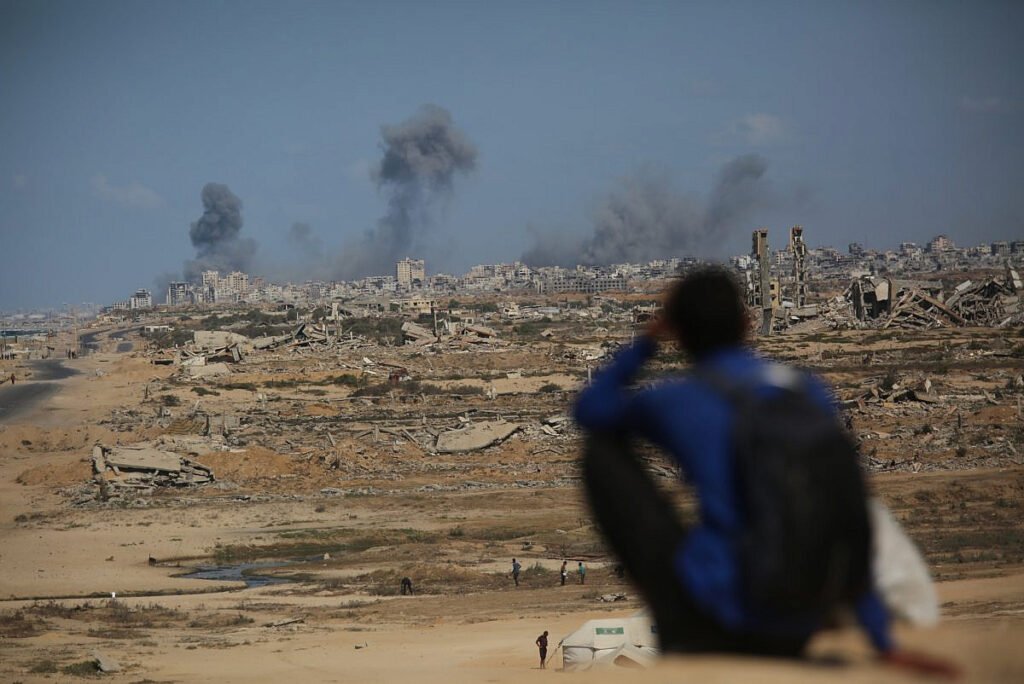
Gaza Herald_ Over the past two years of Israel’s genocidal war on the Gaza Strip, its military campaign has taken many forms, from relentless airstrikes and artillery bombardment to large-scale ground operations that left entire neighborhoods in ruins. Since October 7, 2023, Israel’s main ground offensives have focused on the northern and southern parts of Gaza, particularly in Gaza City, Khan Younis, and Rafah, using tanks, armored vehicles, and overwhelming firepower to push deeper into the besieged enclave.
The First Ground Operation
The first major ground operation began on October 27, 2023, marking the start of Israel’s longest and most destructive campaign inside Gaza. For months, until March 2024, Israeli forces concentrated their attacks on northern Gaza and Gaza City, claiming they aimed to “eliminate Hamas” and “rescue hostages.”
Tanks and infantry units surrounded Jabalia and Beit Hanoun camps, while the Shujaiya Operation became one of the deadliest since 2014. In January 2024, the Israeli military announced control over 65% of the territory, yet Palestinian resistance fighters continued to strike back with ambushes and explosive traps. On one day alone, 24 Israeli soldiers were killed in Shujaiya, one of the deadliest single-day losses for Israel during the war.
Khan Younis Operation
Among the fiercest stages of the ground war were the three major Khan Younis Operations, the first in December 2023, the second in May 2024, and the third in July 2024. During these operations, the Israeli army destroyed an estimated 68% of Gaza’s farmland and rendered half of the hospitals in southern Gaza nonfunctional. Despite heavy bombardments and sweeping raids, Israeli troops suffered dozens of casualties amid strong resistance from Palestinian fighters.
Rafah Operation
Israel’s assault on Rafah marked another devastating chapter in its campaign, lasting from May to August 2024. The operation’s declared objective was to seize control of Gaza’s southern border, particularly the Rafah crossing with Egypt. Israeli forces advanced along the Morag axis, establishing what they called a “security zone” that now cuts deep into Gaza.
The assault involved the destruction of tunnels, roads, and residential areas, alongside mass evacuation orders affecting nearly 1.5 million displaced civilians — most of whom had already fled from other parts of Gaza.
Gideon’s Chariots Operation
On May 4, 2024, the Israeli government approved a new phase of the war — Operation Gideon’s Chariots aimed at expanding Israel’s control over three-quarters of Gaza. The campaign, launched on May 16, involved simultaneous ground incursions into central and southern Gaza, with heavy air raids flattening entire apartment towers in Gaza City. By August, Israeli forces had seized roughly 75% of the Strip but failed to achieve their declared goals of eliminating the resistance.
Gideon’s Chariots II
A second wave of the operation was approved on August 20, 2024, by Israel’s Defense Minister Yisrael Katz, focusing on the heart of Gaza City. Beginning in early September, Israeli troops invaded neighborhoods including Al-Zaytoun and Sheikh Radwan, destroying over 30 towers and more than 500 structures.
Hundreds of thousands of trapped civilians were ordered to evacuate once again, as Israeli forces announced control over 40% of Gaza City by September 4. Tens of thousands of reservists were deployed, many of whom were killed or wounded in resistance ambushes.
By mid-September, Israel launched the main phase of its ground offensive in Gaza City, targeting what it claimed were 3,000 Hamas fighters still active within the ruins of the city.
As Israel intensifies its ground operations and expands its control deeper into Gaza’s shattered landscape, many wonders whether these will be the last of such assaults, especially after President Trump’s proposed plan for Gaza’s “postwar governance.” For the exhausted and displaced residents of the Strip, who have endured two years of relentless bombardment and the loss of nearly everything they once called home, the question carries both fear and fragile hope.
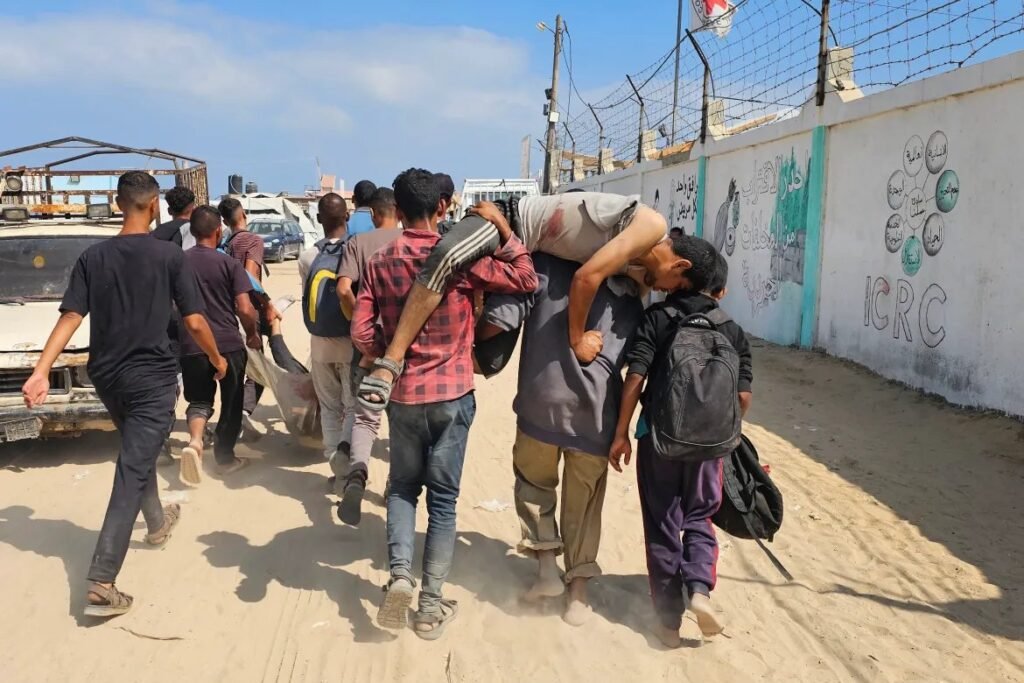
In the camps of Gaza, families discuss peace in hushed tones as drones hover above. Children wonder about the future of their ruined homes, and elders reflect on whether the world will act to halt this recurring violence. After two years of conflict and hardship, Gazans seek not sympathy but assurance that the next chapter will bring reconstruction, not another round of war.