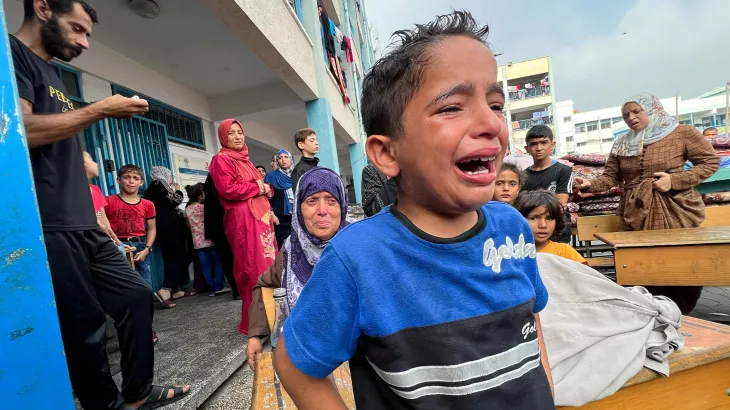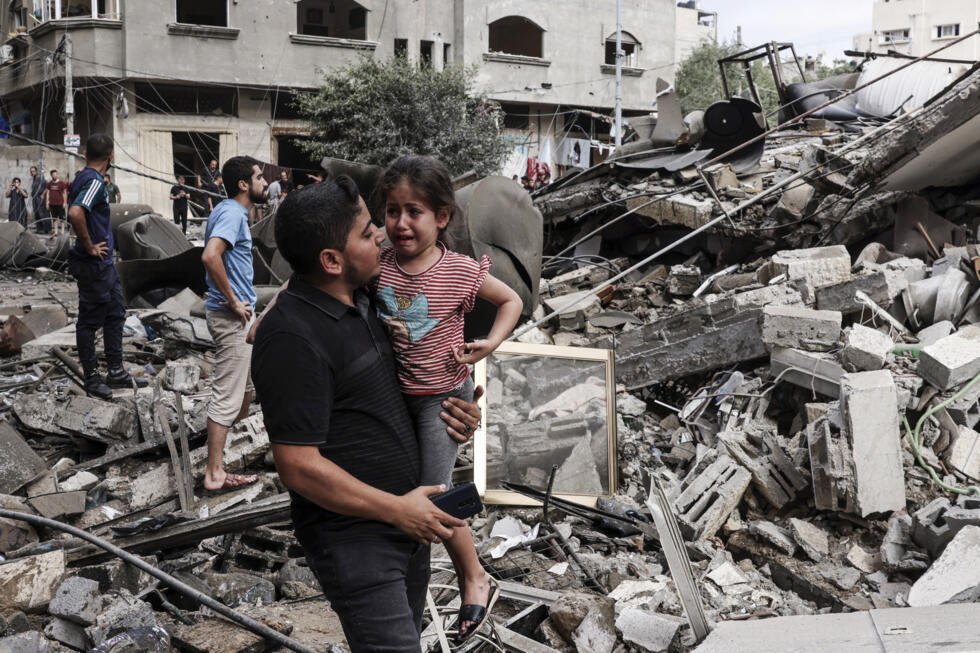
Gaza Herald- Well-informed sources deeply involved with the Palestinian negotiating team in Doha have shared with Gaza Herald exclusive updates, pointing to critical shifts in the ongoing ceasefire discussions, which may alter the course of the war in Gaza.
The Palestinian delegation officially submitted its response to the proposed ceasefire framework after a series of intense meetings, both formal and informal with international mediators. These mediators relayed the proposals to the Israeli side, which was represented in Doha by a limited delegation lacking decision-making authority. All critical decisions were referred back to Israeli negotiator Ron Dermer, who remains in Tel Aviv and Washington, causing notable delays in the talks.
Five Core Issues Dominate Negotiations
Contrary to early speculation, the discussions have not centered around the number of prisoners or the timing of release, as those matters had been previously resolved. Instead, negotiations are focused on five key files: humanitarian aid, Israeli military redeployment, the Rafah border crossing, guarantees against renewed hostilities, and the structure of the prisoner exchange.
Ongoing Debate Over Humanitarian Aid Mechanism
One of the most sensitive points of contention was the mechanism for delivering humanitarian aid. Israel sought to revoke the protocol agreed upon on January 19 and instead proposed involving the “Gaza Humanitarian Foundation” an organization widely criticized for enabling policies that worsened Gaza’s starvation crisis. The Palestinian delegation categorically rejected this change, insisting on reinstating the January 19 mechanism, which allows aid to enter through neutral and internationally supervised channels. After several days of deadlock, the Israeli side backed down, and this concession was reflected in the Palestinian response.
Israeli Redeployment Maps Face Rejection
Israel presented three separate maps suggesting varying levels of continued control inside Gaza. The first proposed retaining nearly half of the territory, preventing over a million displaced Palestinians from returning to their homes. The second reduced Israeli control to one-third of the Strip, introducing a “Mirage Corridor” to concentrate civilians in one zone for aid access while isolating the rest. Both maps were immediately rejected. A third version proposed Israeli control over 22% of Gaza, including key urban areas like Rafah, Shujaiya, Zeitoun, Beit Hanoun, and Jabalia. The Palestinian side submitted a revised version of this map, which mediators believe may be acceptable to Israel.
Guarantees Demanded Against Resumption of War
The Palestinian delegation has called for strong, enforceable guarantees that hostilities will not resume for at least 60 days. Even if final terms are not reached during this period, negotiations should continue under an active ceasefire. Although verbal support for this condition was reportedly given by figures such as Donald Trump and international mediators, the Palestinian side remains wary of Israel’s willingness to comply without formal enforcement mechanisms.
Rafah Crossing Must Reopen, Delegation Insists
The draft ceasefire proposal currently omits any mention of the Rafah border crossing, implying that it would remain closed. The Palestinian delegation objected to this omission, demanding that Rafah be reopened in both directions. This is considered critical to evacuating thousands of wounded individuals and allowing residents to either return or leave the Strip. This condition was formally included in the Palestinian response.
Prisoner Exchange Adjusted, Awaiting Reply
While no direct sessions were held on the prisoner exchange issue, the Palestinian team submitted a new formula based on the rank and importance of the remaining Israeli captives. A reply from Israel is still pending.
Slow Progress Amid Political Delays
The pace of negotiations remains slow, with some sources attributing the delays to internal Israeli political considerations, including Prime Minister Benjamin Netanyahu’s preference to stall until the Knesset enters its summer recess. Despite this, the general mood remains cautiously optimistic. If agreement is reached on the remaining files, implementation of the ceasefire framework could begin swiftly.
A Fragile Window for Peace
One insider described the talks as “more exhausting than bargaining over a cow,” expressing frustration over the unnecessarily prolonged process. Yet even after months of bloodshed and suffering, the possibility of relief remains. Every hour of delay adds to the human toll, but the narrow window for peace is still however tenuously open.