Gaza Herald – The recent treatment of the Freedom Flotilla activists, alongside the accelerating violence in Gaza and the occupied Palestinian territory, is not an isolated incident. It is part of a broader and increasingly visible pattern that exposes the structural logic underpinning Israeli policy: domination enforced through humiliation and control maintained through collective punishment.
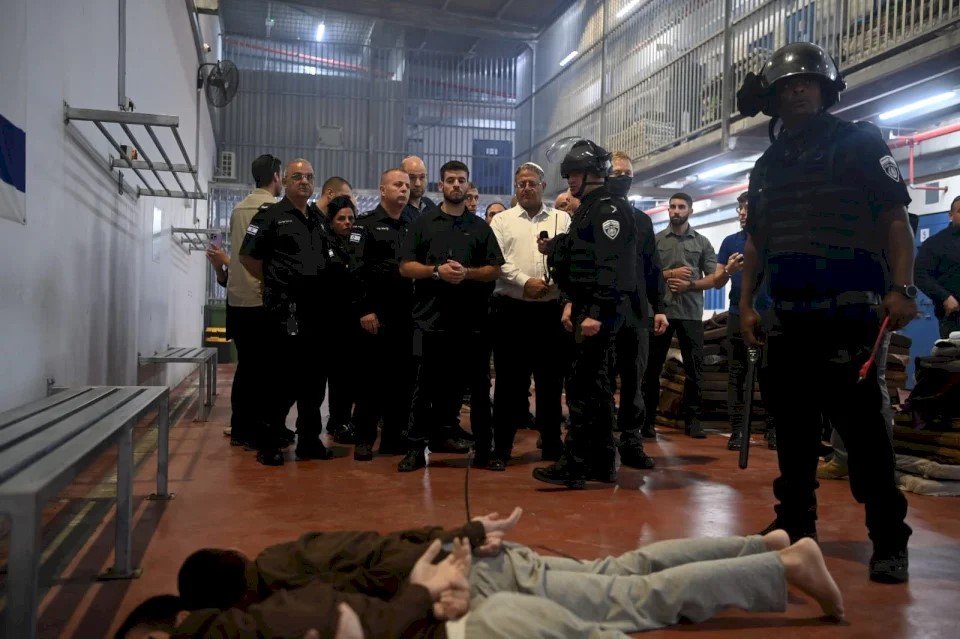
What unfolded on the intercepted humanitarian vessels, civilian activists detained in international waters, restrained, and publicly degraded under the supervision of senior political figures, has triggered diplomatic backlash across Europe. Yet the significance of the event goes far beyond a single episode of abuse. It has functioned as a moment of exposure, stripping away the carefully managed narrative that has long framed Israel’s security operations as lawful or restrained.
For years, Palestinian testimonies, human rights reports, and documentation from international organizations have described systematic practices of degradation in detention facilities, including administrative detention without charge, prolonged isolation, and medical neglect. These accounts were frequently marginalized, contested, or politically deflected. What has changed is not the existence of these practices, but their visibility. When similar patterns are captured on camera involving foreign activists.
This is where the current crisis becomes politically consequential. The issue is no longer confined to Gaza or the occupied West Bank, as regional wars are managed through diplomatic language. It is now increasingly framed within Western public discourse as a question of accountability, legality, and moral consistency. The gap between declared commitments to human rights and the lived reality documented on the ground has become harder to sustain.
At the core of this shift lies a deeper structural reality: the normalization of coercive power as an administrative tool. Gaza’s blockade, repeated military campaigns, and the fragmentation of Palestinian space into controlled zones are not episodic responses to security threats, but part of a long-term system of spatial and demographic engineering. Within this framework, attack is not an aberration; it is an instrument of governance.
The same logic extends into the treatment of detainees and activists. Whether in prisons or at sea, the pattern remains consistent: the removal of agency, the imposition of physical and psychological control, and the public demonstration of dominance. When such practices are displayed openly, they cease to function as hidden mechanisms of control and instead become reputational liabilities.
International reactions, summoning ambassadors, issuing condemnations, and expressing concern, signal discomfort, but they remain insufficient in the face of a documented and expanding record of abuses. Without meaningful accountability mechanisms, these responses risk becoming symbolic gestures that fail to alter the underlying system.
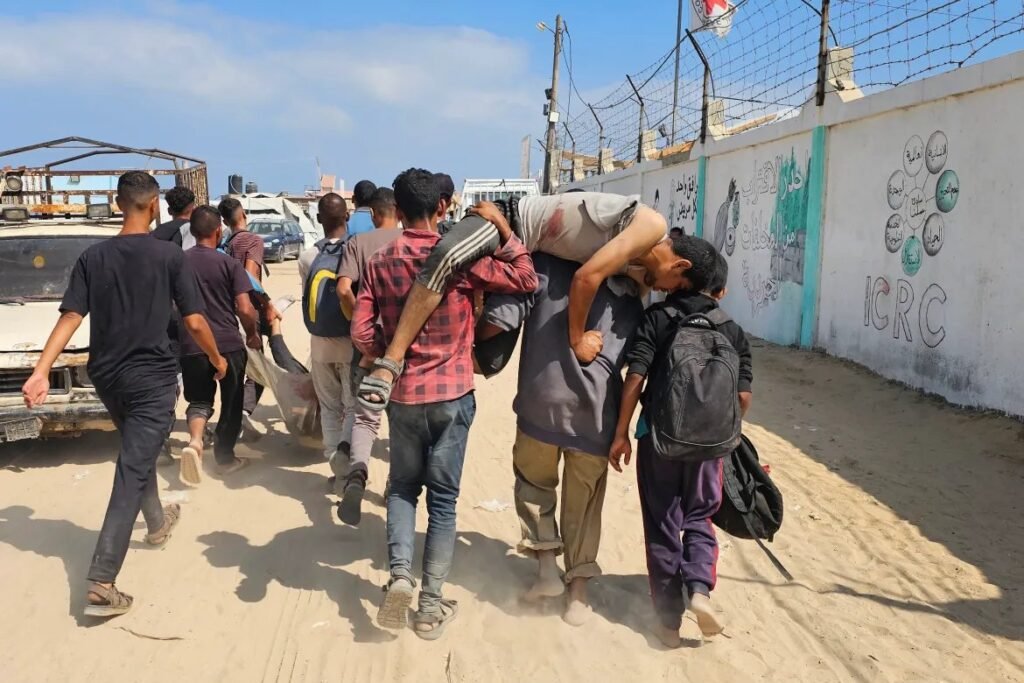
Meanwhile, Gaza continues to experience sustained bombardment, displacement, and infrastructural collapse. Civilian casualties, including children, are not collateral anomalies within this context but predictable outcomes of a military approach that treats densely populated civilian space as a battlefield without meaningful restraint. The humanitarian consequences are not incidental; they are structurally produced.
What is increasingly difficult to ignore is the convergence of multiple narratives into a single global perception. Prisoner testimonies, activist experiences, investigative journalism, and live-streamed destruction have begun to reinforce each other rather than exist as isolated accounts. This convergence has eroded the long-standing informational asymmetry that once insulated Israeli policy from sustained international scrutiny.
As a result, the question is shifting. It is no longer limited to how Israel is perceived, but whether its practices can remain reconciled with the legal and moral frameworks it claims to operate within. The tension between strategic alliances and human rights obligations is becoming more visible, especially within Western societies where public opinion is increasingly shaped by direct visual evidence rather than institutional mediation.
The Freedom Flotilla incident did not create this transformation. It accelerated it. It forced a confrontation between narrative and image, between official discourse and recorded reality. And in doing so, it revealed a deeper crisis: not merely of image management, but of legitimacy itself.
What is unfolding is not a temporary diplomatic dispute. It is a widening gap between power and accountability, between military dominance and moral authority. And as long as that gap remains unresolved, each new incident will not be treated as an exception but as further confirmation of a system already under global reassessment.