Gaza Herald – In a scene that signals a further escalation in the treatment of civilian activists, far-right Israeli National Security Minister Itamar Ben Gvir was seen inside a detention facility at the port of Ashdod, where activists from the “Global Sumud Flotilla” were brought after their vessels were intercepted at sea.
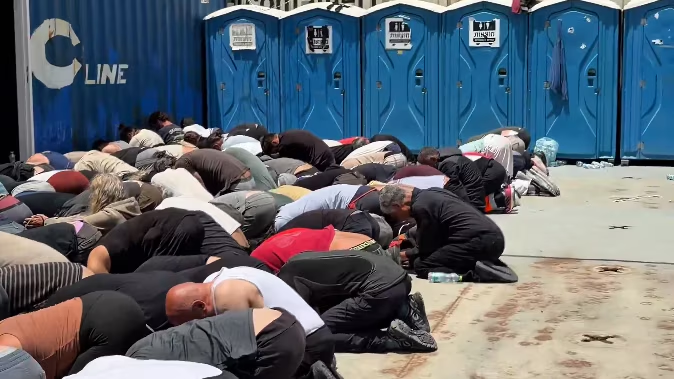
According to circulated footage, the incident went beyond standard detention procedures and appeared to take the form of a public display of humiliation. The activists were shown handcuffed, blindfolded, and lying on the ground, while Ben Gvir walked among them and made provocative remarks that were widely interpreted as an attempt to normalize and institutionalize degrading treatment as part of the security attack.
Video recordings also document an assault by one of the accompanying soldiers on a female activist after she reportedly chanted slogans in solidarity with Gaza. This raises additional concerns regarding the use of force to suppress expression even within detention sites, and about compliance with minimum standards for the protection of detainees.
These developments followed the interception of civilian vessels belonging to the flotilla while en route to Gaza. Hundreds of activists were forcibly removed from the ships in international waters and transferred to Israeli-controlled territory, an action that has triggered serious legal questions regarding freedom of navigation and the limits of the use of force beyond a state’s territorial waters.
Legal experts note that the interception of civilian vessels engaged in humanitarian activity in international waters does not fall under standard exceptions permitting such enforcement measures. This has led to widespread debate over the legality of the operation, particularly given the absence of immediate and transparent judicial procedures for those detained.
The forced transfer and detention of civilians without a clear legal process may constitute arbitrary detention and degrading treatment under established principles of international law, both of which are prohibited under any circumstances, including during war.
The visible political presence at the detention site and the public nature of the alleged humiliation reflect a shift in the handling of such attacks from a limited security procedure to a performative display of power. This raises further concerns about the erosion of legal constraints governing the treatment of civilians.
The incident comes amid ongoing restrictions on the Gaza Strip and a deepening humanitarian crisis, with repeated warnings that the targeting of civilian and humanitarian initiatives further exacerbates conditions on the ground and undermines efforts to alleviate the impact of the blockade.