
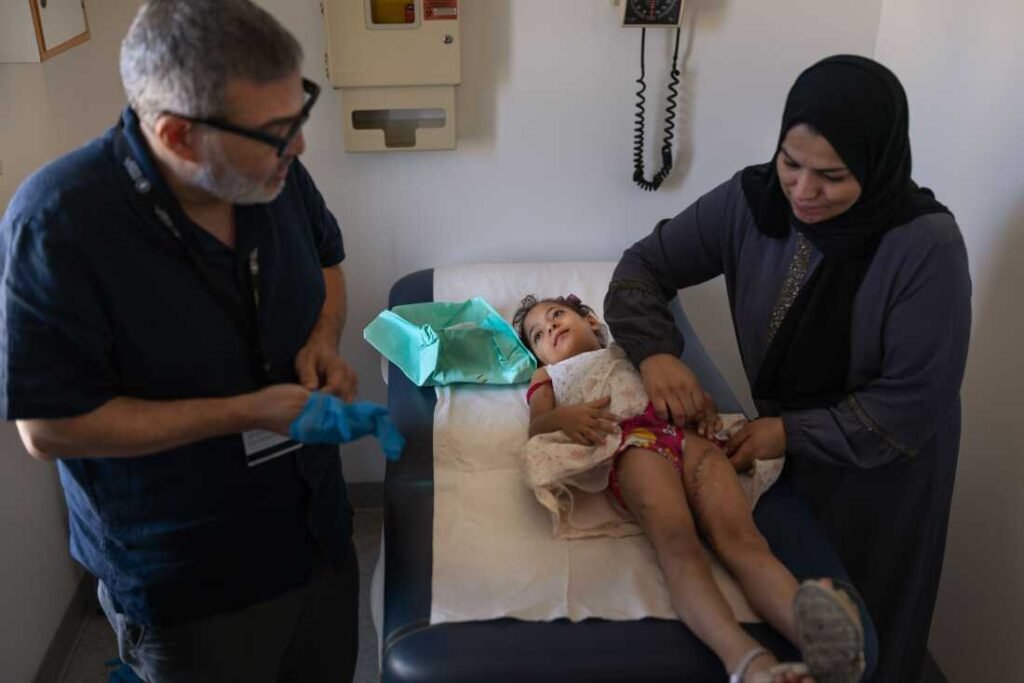
Gaza Herald – Palestinian surgeon Ghassan Abu Sitta works tirelessly in operating rooms at the American University Medical Center in Beirut, trying to save children whose bodies were shattered by Israeli airstrikes, as the Israeli war in Lebanon spreads and casualties rise, especially among the children.
In the pediatric intensive care unit, critically injured children from across the country are treated while families wait outside, anxious and hopeful. Abu Sitta describes the injuries as “extremely severe,” ranging from amputated limbs and head wounds to shrapnel in eyes and faces, often requiring multiple surgeries for a single child.
Abu Sitta’s career in war zones began during the Gulf War in 1991. He later worked in Gaza during the First Intifada, and in southern Lebanon, Iraq, and Yemen, returning to Gaza during each wave of war. Comparing today’s situation in Lebanon to Gaza, he calls it a “miniature version,” though the number of casualties remains lower. He stresses that no one can truly adapt to the suffering of children: “A child should never become just another number in the casualty count.”
Lebanon’s health infrastructure has also been hit hard. Four hospitals, including a pediatric intensive care unit, have been forced out of service due to airstrikes or evacuation orders. Targeting of ambulances has made transporting injured children extremely risky, often limited to daylight hours, compounding the medical challenges.
To address the long-term impact, Abu Sitta founded the “Ghassan Abu Sitta Children’s Fund” in 2024, providing ongoing medical and psychological care for children from Gaza and Lebanon after they leave the hospital. He emphasizes that the damage goes beyond physical injuries: entire families have been destroyed, leaving children orphaned and in urgent need of long-term support.
Abu Sitta recounts cases of children who lost parents and siblings in the first days of war, suffering amputations and severe trauma. “These cases require continuous care,” he says. “Who will look after them once they leave the hospital?” He concludes that the consequences of war extend far beyond the body, dismantling the very foundations of family and childhood.

