Gaza Herald_ Across two different battlefields, a striking pattern has emerged in Israel’s military narrative. Whether in Gaza or in Iran, attacks that damage hospitals and medical facilities are repeatedly followed by the same justification: claims that armed groups or military command centers were operating inside or near those medical sites. During Israel’s devastating war on Gaza, this argument was used repeatedly to rationalize strikes on hospitals that international humanitarian law clearly protects. Months later, similar explanations are now being offered after Israeli airstrikes damaged medical facilities in Iran.
For many observers, Gaza has already exposed the weakness of these claims. The systematic destruction of Gaza’s healthcare infrastructure, alongside the immense civilian toll, raised serious questions about Israel’s adherence to the laws of war. Now, as Iranian hospitals report damage from Israeli strikes, critics say the same narrative is being deployed again, reinforcing concerns that medical neutrality is increasingly ignored when it conflicts with Israel’s military objectives.
Hospitals Under Fire in Gaza
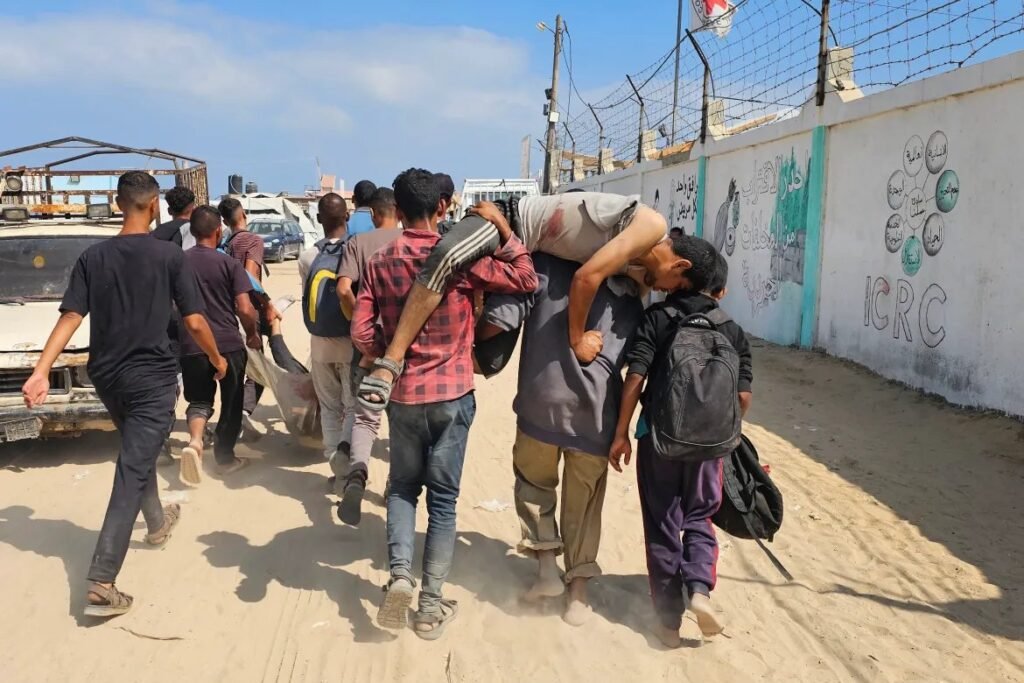
The war in Gaza provided some of the clearest and most tragic evidence of how hospitals have become entangled in Israel’s military operations. Throughout the conflict, Israeli officials repeatedly asserted that Palestinian armed groups were using hospitals as operational hubs or command centers.
Yet inside Gaza’s hospitals, medical staff described a far different reality. Doctors and nurses worked under relentless bombardment, treating waves of wounded civilians while struggling to keep facilities functioning amid shortages of electricity, fuel, and medical supplies.
Healthcare workers recount scenes that remain seared into their memories. Colleagues who began their shifts together in the morning were sometimes brought back hours later as injured patients, or were killed outright when Israeli strikes hit hospital buildings. In some cases, medical staff buried their own coworkers before returning to the operating rooms to continue treating the wounded.
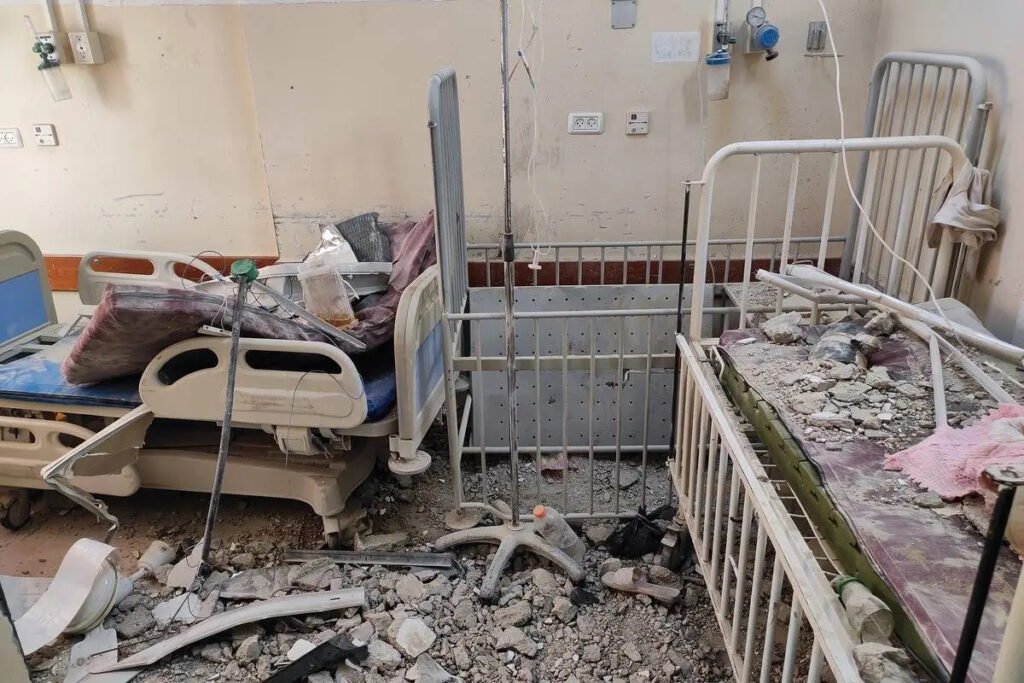
One physician described how surgical teams were forced to abandon operating theaters and rush to overcrowded emergency wards to help manage the endless flow of casualties. During one such moment, a massive explosion shook the hospital. An Israeli strike had hit directly, damaging the inpatient ward and the surgical department.
A ward run by Doctors Without Borders (MSF) was among those struck, leaving everyone inside wounded. Three doctors were killed in the attack, along with a patient and the patient’s companion. For those who survived, the trauma was immediate and lasting.
Despite the devastation, the wounded kept arriving. Doctors who had just buried colleagues returned to work within minutes, knowing there was no one else to take their place.
For Gaza’s medical workers, the war erased any illusion that hospitals were protected spaces. Fear became a permanent presence. Even inside operating rooms, the threat of another strike loomed overhead.
A Similar Narrative Emerges in Iran
Recent escalations between Iran and Israel in early 2026 have now placed Iranian medical facilities under similar pressure. Several hospitals and clinics in Iran have reported damage following Israeli airstrikes, raising fresh alarm among humanitarian organizations.
According to the World Health Organization, at least thirteen incidents affecting healthcare infrastructure in Iran had been verified by early March 2026. Some facilities were struck directly, while others suffered damage from nearby explosions.
One of the most widely reported incidents occurred in Tehran on March 1, when airstrikes hit areas surrounding Gandhi Street. The blasts caused extensive damage to Gandhi Hospital, a major medical center in the capital. Video footage captured nurses rushing to evacuate newborn infants from incubators while smoke filled the hospital complex.
Other medical institutions were also affected. In Tehran, Motahari Hospital and Khatam Hospital reportedly sustained damage, along with the headquarters of the Iranian Red Crescent Society. In the western city of Kermanshah, Farabi Hospital was reported in local media to have been severely damaged during the strikes.
Specialized healthcare facilities were not spared. An IVF clinic in Tehran was reportedly devastated, while a maternal and neonatal clinic in Kermanshah was said to have been destroyed.
Medical personnel were among the casualties. Reports indicate that at least six doctors, four nurses, and four members of the Red Crescent lost their lives during these incidents.
As in Gaza, Israeli officials maintained that their intended targets were military installations, including command centers of Iran’s Islamic Revolutionary Guard Corps and facilities linked to missile development. According to these statements, any damage to hospitals or other civilian structures occurred because those facilities were located near military infrastructure.
A Pattern of Justification
The similarities between the narratives surrounding Gaza and those now emerging in Iran are difficult to ignore. In both contexts, hospitals have been damaged or destroyed during Israeli military operations, and in both cases, Israeli officials have argued that nearby military activity justified the strikes.
Critics argue that Gaza demonstrated how such claims can become a blanket justification for attacks on civilian infrastructure. Throughout the war, hospitals in Gaza were repeatedly targeted or surrounded by Israeli forces, often accompanied by allegations that armed groups were using the facilities as bases of operation.
Yet the scale of destruction inflicted on Gaza’s healthcare system, combined with testimonies from doctors, humanitarian organizations, and international observers, has raised profound doubts about those claims. Entire hospital complexes were rendered inoperable, medical staff were killed, and patients were forced to flee facilities that were meant to be protected under international law.
Now, as similar explanations accompany strikes affecting hospitals in Iran, critics say the pattern suggests a broader policy rather than isolated incidents.
The Erosion of Medical Neutrality
International humanitarian law treats hospitals and medical personnel as protected entities, even during the most intense armed conflicts. These protections are meant to ensure that civilians and the wounded can receive care without fear that healthcare facilities themselves will become targets.
The experiences of Gaza’s medical workers and now the reports emerging from Iran raise troubling questions about whether those protections are being respected in practice.
For many observers, the devastation of Gaza’s healthcare system has already demonstrated how fragile those legal protections can become when military strategy overrides humanitarian principles. The repetition of similar narratives in different conflicts suggests that the issue is not merely a matter of battlefield confusion but a deeper challenge to the norms designed to safeguard civilians in war.
As long as those norms remain unenforced, critics warn, hospitals may continue to be drawn into the front lines of modern warfare, leaving doctors, nurses, and patients to pay the price.