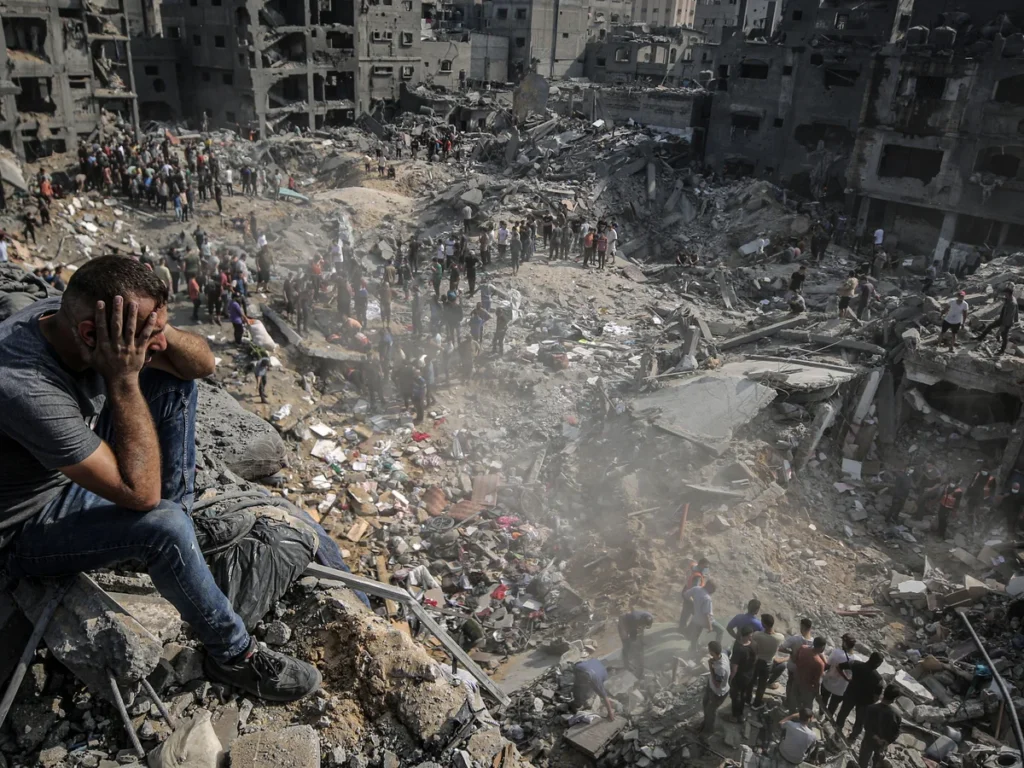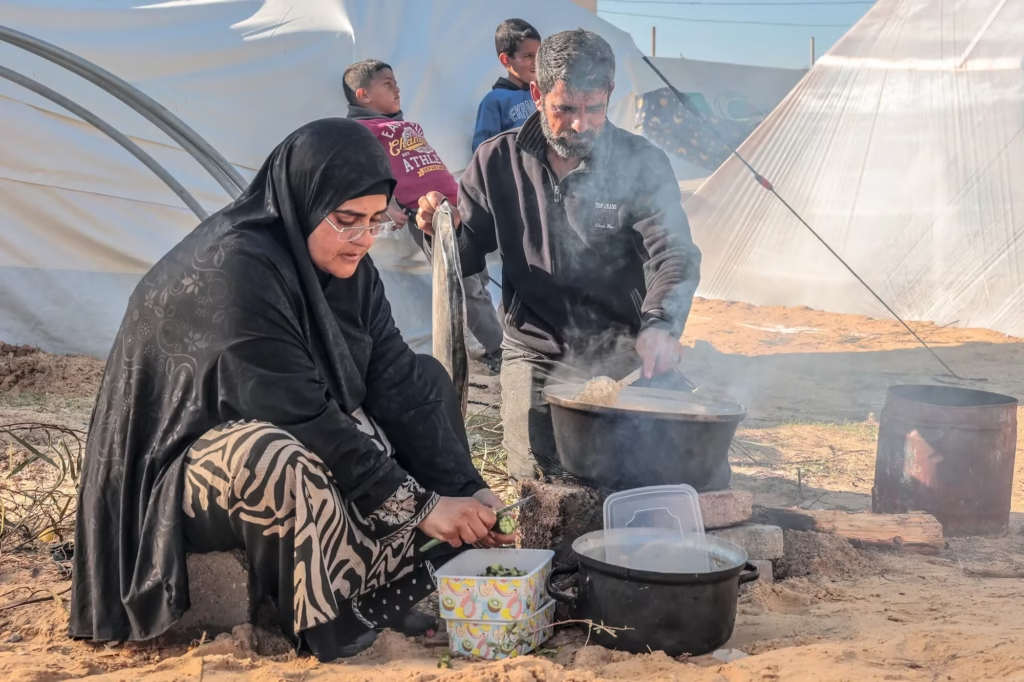
Gaza Herald – Civilians of Gaza are struggling to put food on the table in Ramadan as border closures and regional conflict intensify an already fragile humanitarian situation. Markets report soaring prices, while essential staples like flour, cooking oil, and fresh produce are disappearing from shelves, leaving families scrambling to secure daily meals.
The crisis began in late February when Israel closed all crossings into Gaza amid joint military operations targeting Iran, halting the flow of food, fuel, and medical supplies. Although the Karem Abu Salem crossing reopened partially for aid trucks, the Rafah crossing with Egypt remains fully closed, severely restricting access to critical resources.
Aid agencies say the current supply of trucks entering Gaza is less than a third of what is needed. The World Health Organization estimates that only about 200 trucks are arriving each day, compared with 600 required to meet basic humanitarian needs. Thousands of patients, including children and people with chronic illnesses, are still waiting for evacuation and emergency medical care.
Food prices have spiked dramatically in local markets. A kilogram of tomatoes now costs nearly $4, up from $1.50 a month ago. Other vegetables and staples have become nearly unaffordable for many families, while some essential items have vanished entirely from shelves, pushing households into daily uncertainty over how to feed themselves.
The United Nations reported that these shortages have ripple effects across Gaza. Fuel rationing has limited water production and suspended waste collection. Hospitals are running critically low on supplies, making it impossible to provide consistent medical care, while families struggle to maintain basic hygiene and cooking routines.
Humanitarian organizations warn that if border restrictions continue, Gaza could face a complete breakdown of food and medical aid. Without reliable corridors for assistance, rations may be reduced, leaving over two million civilians vulnerable to hunger, disease, and worsening living conditions as the regional conflict continues to impact the Strip.